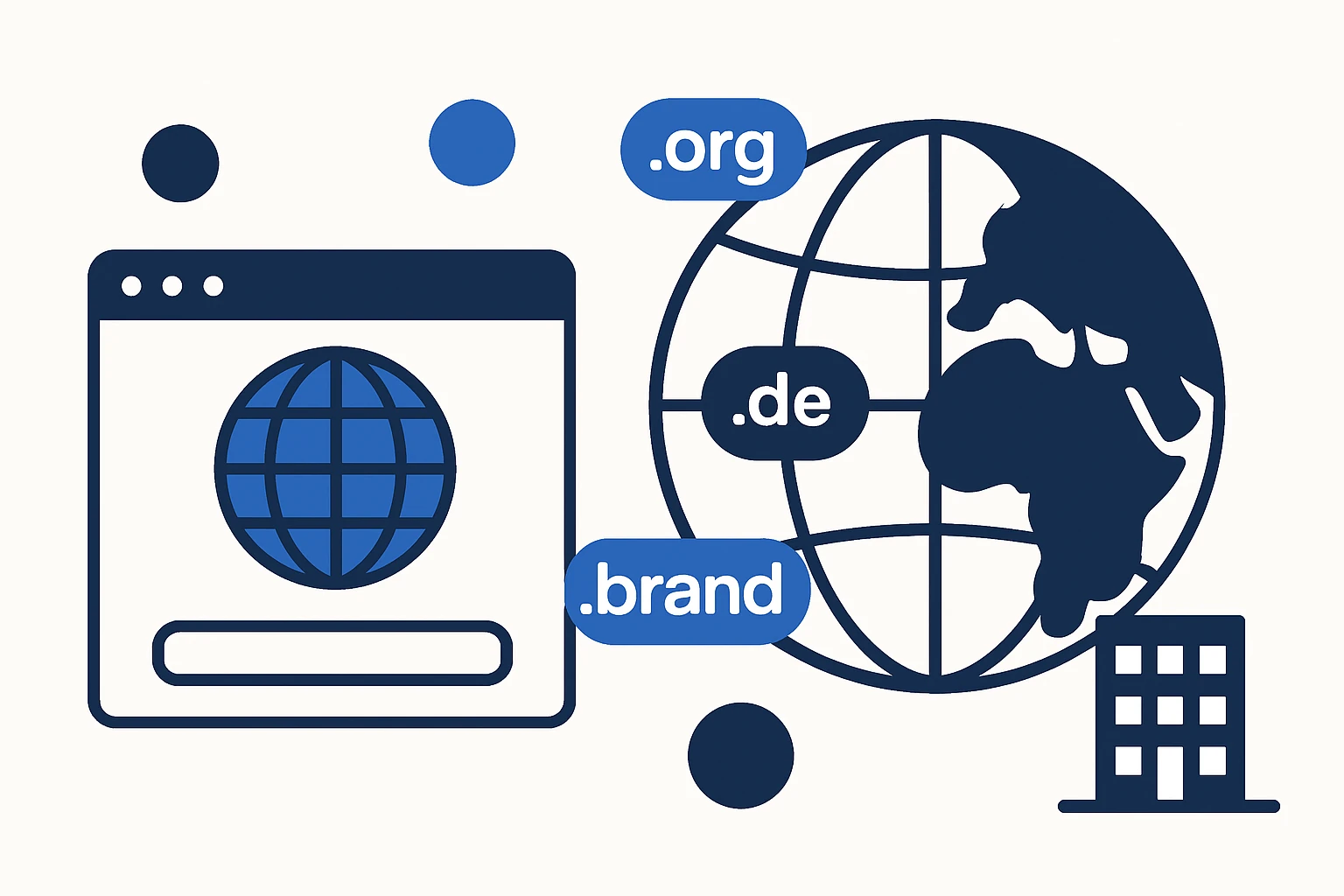

Introduction: The domain extension decision that shapes global reach
Choosing the right domain extension is more than a branding choice - it’s a strategic decision that can affect discovery, trust, SEO, and cross‑border reach. For organizations with a global footprint, the decision often pits a country code TLD (ccTLD) against a generic TLD (gTLD), or even a brand TLD that signals a corporate identity. The 2026 round of ICANN’s New gTLD Program underscores the continued expansion of the namespace, aiming to increase competition and choice in the domain name system (DNS). This article offers a practical framework to navigate that landscape, grounded in industry data and real‑world trade‑offs. The New gTLD Program is the program that governs those rounds and the rules for applying to new gTLDs.
To ground the discussion in current realities, consider the latest insights from CENTR, which tracks global TLD trends across legacy gTLDs, new gTLDs, and ccTLDs. The report highlights how adoption of security and privacy standards, like DNSSEC, is evolving and how market dynamics influence pricing and availability. CENTR’s Global TLD Market Report (February 2024) synthesizes these trends and is a useful baseline for decision making.
Understanding the TLD landscape: gTLDs, ccTLDs, and brand/named TLDs
Domain extensions fall into a few broad buckets, each with distinct strategic signals:
- gTLDs (generic top‑level domains): Examples include .com, .org, .net, and newer strings like .shop or .tech. They’re typically most recognizable in global markets and can be effective for branding when a universal audience is the target. ICANN’s New gTLD Program provides the framework and anticipates ongoing rounds to expand options for global brands and services.
- ccTLDs (country code top‑level domains): These are country‑delegated extensions like .us, .de, .uk, and others. They often convey local relevance, trust, and regulatory alignment with a given market. CENTR’s market analysis suggests ccTLDs retain substantial market share in many regions, driven by local registrants and regulatory ecosystems.
- Brand TLDs (brand‑specific, e.g., .google, .microsoft): These are corporate or product line extensions used to reinforce a brand and protect identifiers online. They require careful governance and clear DNS policies but can be powerful for brand strategy and security.
For context, ICANN’s ongoing work on the 2026 round demonstrates that the DNS is still evolving - new strings, policy clarifications, and evaluation processes continue to shape which extensions become viable options for organizations. Learn more about the New gTLD Program.
From a data perspective, CENTR’s analyses emphasize how market dynamics, governance, and security adoption intersect with extension choices. The report highlights key observations on pricing, DNSSEC adoption, and market shares across regions, which can materially influence the total cost of ownership and security posture of a domain portfolio. CENTR – Global TLD Market Report.
A practical framework for choosing TLDs
To move beyond generic advice, use a compact decision framework that translates business goals into a portfolio strategy. The framework below is designed for teams evaluating TLD options in a structured way, with explicit trade‑offs and measurable outcomes. It is informed by industry practices and data‑driven observations from industry bodies.
TLD Decision Framework (5 steps)
- Define geography and audience: Map primary markets and audience expectations. If performance and trust hinge on a local signal, ccTLDs can support local search, regulatory alignment, and user perception. For global reach, a strong gTLD like .com or a branded TLD may perform better in cross‑border contexts.
- Align with brand and SEO strategy: Decide whether the goal is to signal a global brand, local market focus, or a product family. Consider how extensions interact with branding, brand protection, and future product lines.
- Assess technical and policy constraints: Review DNS requirements, WHOIS/privacy considerations, DNSSEC readiness, and any local regulatory constraints (e.g., data localization). Verifying DNS security readiness is increasingly important as security standards mature. Verisign DNSSEC guidance.
- Evaluate costs and renewal risk: Consider registration and renewal pricing (and potential price changes over time), as well as renewal risk for portfolio stability. Industry data shows that registrar pricing can vary by region and TLD type, influencing long‑term total cost of ownership.
- Plan governance and risk management: Establish clear DNS management policies, renewal reminders, and security controls (DNSSEC deployment, DNS backups, monitoring). This reduces operational risk as the portfolio grows.
Tip: a structured grid can help document this framework and keep stakeholders aligned across legal, marketing, and IT teams. If you’re building a local-market inventory, research‑oriented downloads from specialist providers can speed up decisions. For example, WebAtLa hosts targeted TLD lists by country and TLD family, including Ireland’s .ie page, which can be a practical way to scale local signals in a portfolio. Ireland .ie domain list and the broader directory at WebAtLa’s TLD directory provide concrete, sourceable references for portfolio planning.
Practical use cases and patterns
Different business scenarios benefit from different TLD strategies. Here are three common patterns observed in today’s ecosystems:
- Global consumer brands: A global brand benefits from a strong global gTLD portfolio (e.g., .com) supplemented by a branded TLD for product lines (e.g., .brand) and a carefully chosen set of ccTLDs where local markets demand a local signal. This approach supports international SEO norms and brand protection while reducing user confusion.
- Local leaders expanding globally: Companies anchored in a single country might deploy a ccTLD to serve core markets while adopting a global gTLD to capture international traffic and e‑commerce growth. The balance of local trust and global reach often depends on regional search behavior and regulatory considerations.
- Technology platforms and startups: For technology platforms, a mix of new gTLDs and brand TLDs can signal a pioneering stance and openness to new markets. Execution requires a robust DNS governance model and scalable security practices to protect the namespace as the portfolio grows.
In all cases, the portfolio should support growth while maintaining a coherent brand story and a manageable operational footprint. ICANN’s ongoing program‑level activity emphasizes that the namespace will continue to evolve, with new opportunities and requirements for registrants. ICANN – New gTLD Program.
DNS, security, and performance considerations
Security and performance are increasingly central to TLD strategy. DNSSEC, a security extension for DNS, helps protect against certain types of DNS‑level attacks and is gaining traction among registries and registrants. The CENTR market report highlights DNSSEC adoption as part of the broader security posture of modern domain portfolios, underscoring its role in reducing risk for users and brands. CENTR – Global TLD Market Report. For organizations seeking practical guidance on DNSSEC deployment, Verisign provides implementation guidance and policy considerations. Verisign DNSSEC Guidance.
Market data and what it means for your decisions
Industry data from CENTR shows that European ccTLDs command a substantial portion of registrations and that the market is influenced by pricing dynamics and security adoption. The report notes that DNSSEC adoption has grown and SSL usage among websites remains a critical quality signal for users. These datapoints matter when deciding whether to emphasize local signals through ccTLDs or to prioritize global reach with gTLDs. CENTR – Global TLD Market Report.
Limitations and common mistakes to avoid
- Overreliance on a single TLD to solve all branding, SEO, and localization needs. A diversified portfolio often yields better resilience and reach.
- Underestimating renewal costs and portfolio maintenance. TLD pricing can vary by registrar and region, plan for multi‑year budgets.
- Neglecting DNS governance and security. In practice, many portfolios overlook DNSSEC deployment, DNS monitoring, and regular renewals - risks that can erode user trust.
- Failing to align TLD choices with regulatory environments in key markets. ccTLDs can carry localized expectations about privacy and data handling.
Conclusion: A disciplined, data‑driven approach to TLD strategy
Domain extensions are not a trivial checkbox in a branding playbook. They are a critical axis of geographic signaling, user trust, and technical risk. A disciplined approach - combining a clear geography plan, brand and SEO alignment, governance and security checks, and a realistic view of costs - helps teams balance opportunity and risk as the namespace continues to expand. As ICANN’s 2026 Round progress demonstrates, the DNS remains a dynamic frontier with new extensions and evolving requirements. A well‑designed TLD portfolio can unlock local relevance, global reach, and stronger brand protection when supported by solid governance and security practices. For teams exploring country‑specific research materials or downloadable domain lists, WebAtLa offers country‑ and TLD‑specific inventories that can accelerate planning. Ireland .ie domain list and the broader WebAtLa’s TLD directory provide practical references as you shape your strategy.