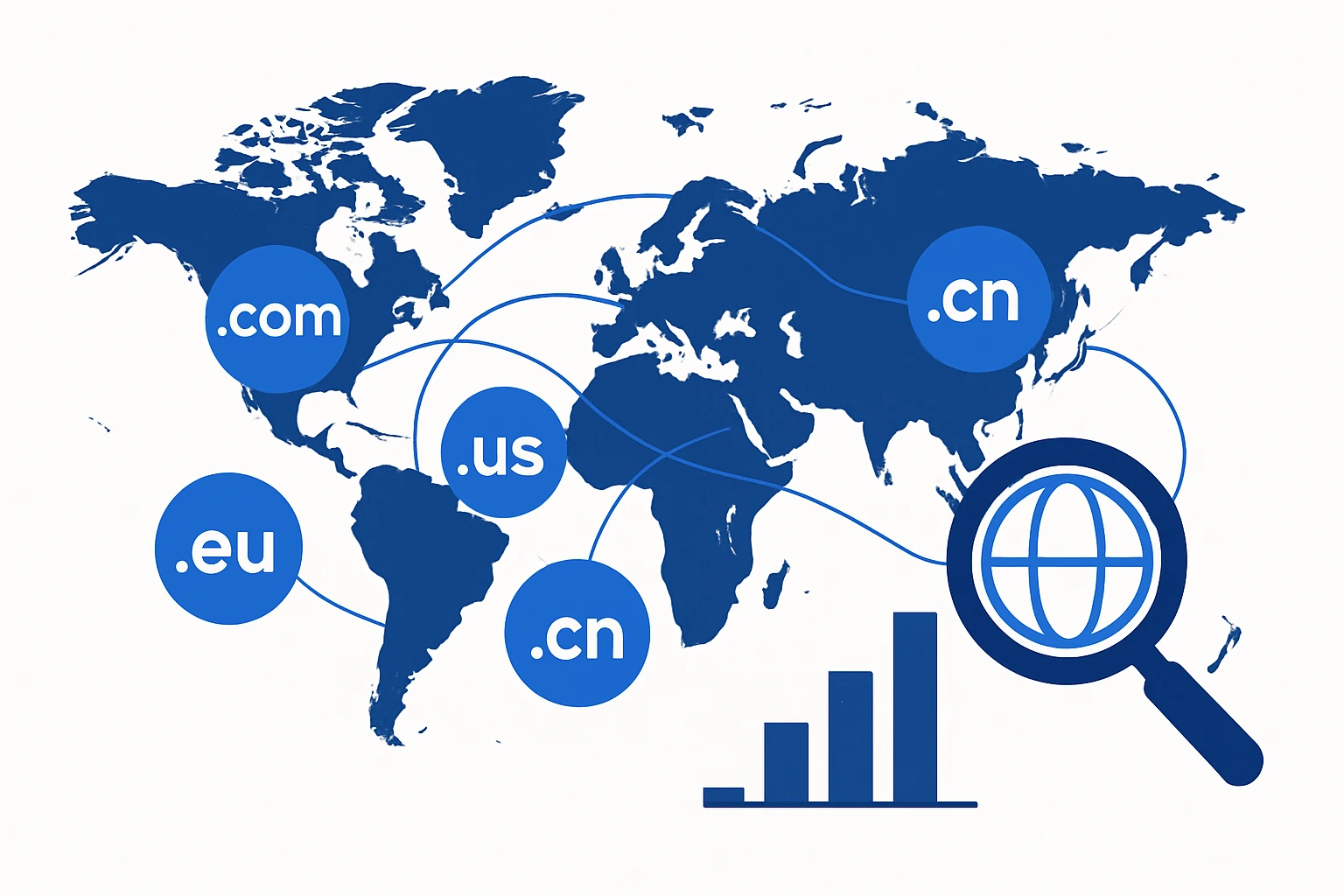
In a world where brands grow beyond borders, choosing the right domain extension is not merely a branding decision - it is a strategic lever for trust, localization, and search visibility. This article, written for HostingFlow’s audience and aligned with the publisher’s focus on a global domain data landscape, offers a practical framework to navigate the Domain Extensions landscape. We’ll dissect the major categories (gTLDs, ccTLDs, and new gTLDs), explain how to read a comprehensive tld database, and outline a decision process you can apply when planning international expansions.
Understanding the Domain Extensions Landscape
Top-level domains (TLDs) come in several flavors, each with distinct implications for reach, governance, and risk:
- Generic top-level domains (gTLDs) such as .com, .org, and newer cohorts like .tech or .shop. They are broadly used and often favored for global brands seeking broad recognition.
- Country code top-level domains (ccTLDs) such as .us, .uk, or .de, typically tied to a country or territory and often preferred for country-specific targeting and local trust.
- New gTLDs introduced under ICANN’s New gTLD Program, expanding the namespace with strings in multiple languages and specialized branding (for example, .pizza, .bank, or industry-specific variants).
Authoritative data helps frame the scale and trajectory of these categories. For example, Verisign’s Domain Name Industry Brief (DNIB) tracks global registrations across all TLDs and shows steady growth in total domain counts, with ccTLDs contributing a substantial share of registrations worldwide. In Q1 2025, the global total reached 368.4 million domains, up from the prior quarter, underscoring ongoing demand across both gTLDs and ccTLDs. Verisign DNIB Q1 2025. Per the same DNIB reporting, ccTLDs alone accounted for about 143.4 million registrations globally as of the latest quarter, highlighting the importance of country-focused domains for regional strategy. DNIB ccTLDs data (Q2 2025 context).
In addition to current counts, ICANN’s New gTLD Program pages provide context on policy developments and the timing of future rounds. The program has evolved since its inception in 2012, with the industry anticipating the next application window in 2026 as part of ongoing policy work and community input. New gTLD Program - About. For a broader governance perspective on how the root zone and TLDs are managed, see IANA’s Root Zone Database, the definitive registry of all delegated TLDs, which underpins global DNS operations. Root Zone Database.
Reading and Validating a TLD Database: What Really Matters
To make informed domain-extension decisions, you need to look beyond catchy names and consider how the data is organized and what it implies for your goals. The IANA Root Zone Database provides the authoritative list of all TLDs in the root zone and is complemented by DNIB’s quarterly data on volumes, renewal rates, and usage trends. Relying on these sources helps you answer questions like: which ccTLDs are growing fastest, where are new gTLDs gaining traction, and how does overall DNS traffic influence risk and cost? See IANA’s Root Zone Database and the DNIB for quarterly updates. Root Zone Database • Verisign DNIB Q1 2025.
A Practical Decision Framework for Choosing Domain Extensions
Below is a compact framework you can use to weigh TLD options in a structured way. This is a practical synthesis drawn from industry data and governance context, not a marketing pitch.
| Decision Criterion | What to Consider | Impact / How to Use |
|---|---|---|
| Market reach vs localization | Global audience with local adaptation needs, consider gTLDs for broad reach and ccTLDs for local trust and localization | Balance broad recognition with regional relevance. Use a primary gTLD complemented by targeted ccTLDs where you have a strong local market. |
| SEO and brand protection | Search signals can differ by region, brand protection requires registering alternatives to prevent brand squatting or typos | Invest in a core set of extensions and monitor potential conflicts, implement canonical URLs and proper hreflang signals across extensions. |
| Regulatory and governance considerations | ccTLDs often have local registry rules and sometimes unofficial policies, gTLDs are regulated under ICANN contracts | Factor in compliance and renewal risk, prefer registries with stable governance and transparent fee structures. |
| Cost and maintenance burden | Annual fees, renewal risk, and security requirements vary by TLD, new gTLDs may carry premium pricing | Plan multi-year budgets and prioritize extensions that deliver clear ROI, avoid over-fragmentation without clear purpose. |
| DNS stability and operational risk | Registry reliability, DNSSEC support, and transfer policies differ across TLDs | Check DNS features and renewal policies, prefer extensions from registries with strong uptime history and robust abuse-mitigation practices. |
| Future growth and roadmap | New gTLDs open avenues for unique branding, but come with learning curves and potential fragmentation | Keep an eye on policy developments and potential next-round windows, assess alignment with long-term brand strategy. |
Structured data like this can be adapted to your company’s growth plan. For organizations pursuing global branding, a light-touch approach to initial extensions combined with a longer tail strategy for protection often yields the best balance between reach and risk.
Structured Resources to Guide Your Decisions
To build a practical inventory of domain extensions and related data, you’ll want authoritative catalogs and reliable ownership information. The following resources are useful starting points:
- WebAtla TLD catalogs - list of domains by TLDs to quickly assess availability and scale of options.
- RDAP & WHOIS Database - ownership and registration data to assess brand risk and domain acquisition opportunities.
- For broader context, rely on trusted industry data such as the DNIB and ICANN’s guidance on new gTLDs.
How to Leverage a Domain Extensions Database: A Quick-Start Plan
- Audit your current portfolio: Identify existing registrations by TLD and map them to geographic markets and languages served. This reveals gaps and potential over-concentration in a single tld.
- Define a target extension set: Start with a core global reach TLD (a primary gTLD) and a focused set of ccTLDs that map to key markets. Then consider a small number of strategic new gTLDs if they align with brand or product niches.
- Evaluate ownership risk and opportunities: Use the RDAP & WHOIS data to identify potential brand-conflict domains, typo-squats, or regional registrations you might want to secure to protect your brand. See the RDAP & WHOIS Database in the client’s catalog for a local-language look at ownership data.
- Assess DNS and operational readiness: Ensure DNSSEC support, registrant stability, and renewal transparency across extensions you plan to use. This reduces the chance of service disruption in key markets.
- Create a phased rollout plan: Begin with high-ROI extensions and incrementally expand to additional ccTLDs or new gTLDs as you gain confidence, measure impact, and complete brand protection sweeps.
Limitations, Trade-offs, and Common Mistakes
Even with a robust domain extensions database, there are limits and pitfalls to watch for:
- Overemphasizing breadth over depth: A large number of extensions can complicate brand governance and security. Focus on a core set that covers the markets you actually serve.
- Underestimating local nuance: ccTLDs are not always “one-size-fits-all” - local search behavior, language, and cultural context can affect how a domain performs. Pair TLD decisions with local content and SEO signals.
- Neglecting DNS and renewal risk: Some extensions carry higher renewal costs or more opaque governance. Build budgets with a realistic renewal risk assessment and a plan for renewals across the portfolio.
- Stale data: The domain namespace evolves quickly. Relying on outdated lists can lead to missed opportunities or unaddressed risks. Use reputable sources (IANA for root-zone accuracy, DNIB for market context) and refresh regularly.
For ongoing governance and policy context, keep an eye on developments from ICANN, which provides updates on new gTLDs and rounds, including expected timelines for future application windows. New gTLD Program - About.
Conclusion: A Pragmatic Path Through the TLD Maze
Understanding the domain extensions landscape is essential for any organization seeking international growth, brand protection, and sustainable SEO. A disciplined approach - anchored by authoritative data from IANA and Verisign, informed by ICANN’s new-gTLD program context, and supplemented by practical resources like WebAtla’s TLD catalogs - enables you to design a TLD strategy that aligns with business goals and regulatory realities. By starting with a core set of extensions and expanding thoughtfully, you balance reach with manageability, reduce risk, and create a durable foundation for global digital presence. For teams that need to map a global domain inventory quickly, combining a domain extensions database with real ownership data and DNS readiness is the most reliable path toward a resilient, scalable online footprint.