Introduction: the real work behind a reputable domain extensions database
For hosting providers, e-commerce platforms, and digital publishers, a global, well-curated list of domain extensions is not just a convenience - it's a strategic asset. The internet's namespace is expanding unevenly: traditional gTLDs (generic top-level domains) coexist with tens of thousands of ccTLDs (country-code top-level domains) and more recently a wave of new gTLDs, many of which target specific industries or languages. A reliable domain extensions database helps with DNS routing, localization strategy, risk assessment, and demand forecasting. It also frames conversations with customers about branding, compliance, and regional reach.
Understanding the landscape: what the major TLD categories mean for hosting and DNS
Top-level domains fall into a few broad categories that every hosting operation should understand:
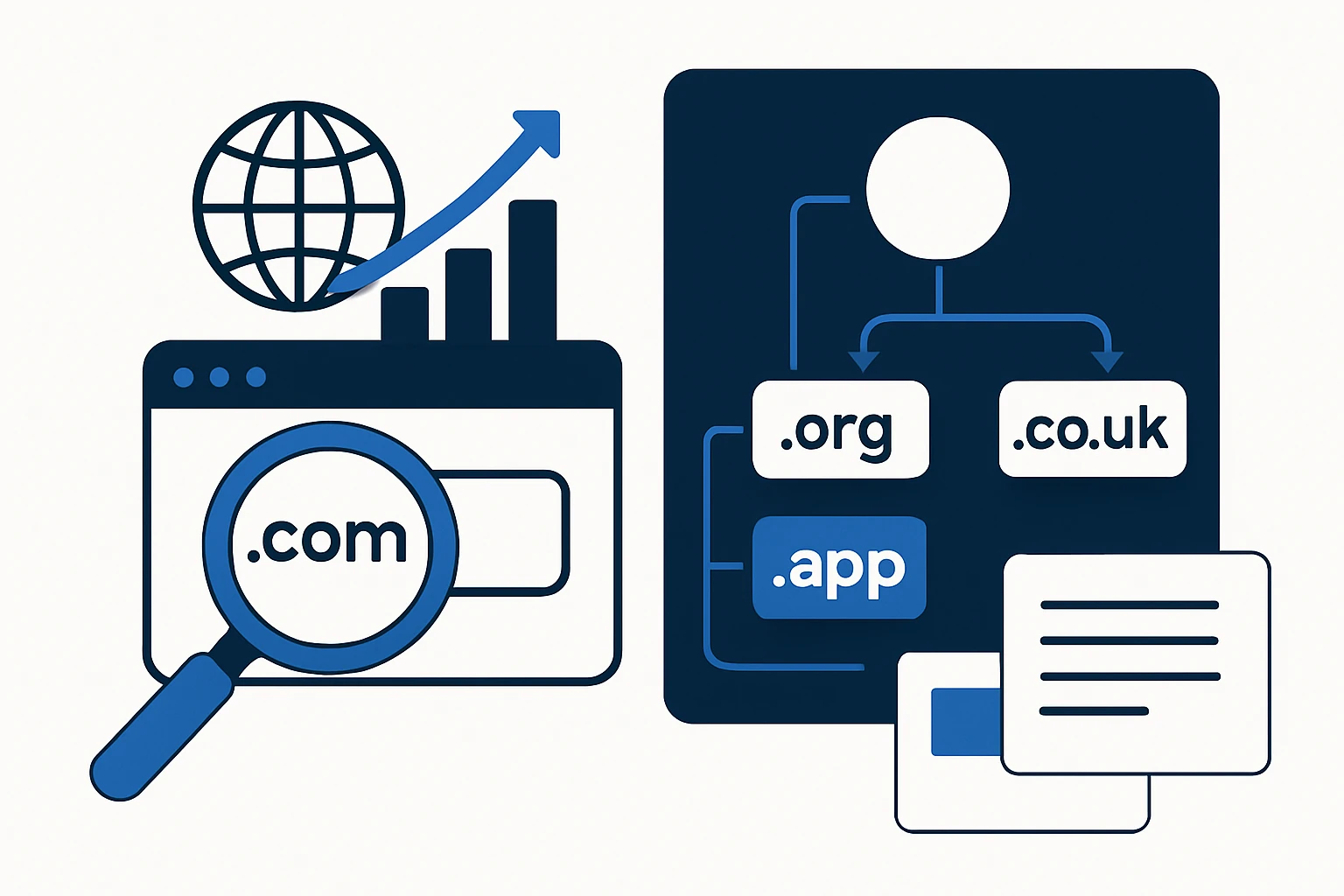
- gTLDs - generic top-level domains like .com, .net, or .org that are not tied to a specific country. These are widely adopted and, in aggregate, dominate global registrations.
- ccTLDs - country-code top-level domains such as .uk, .de, or .jp. They often carry local branding value and may have residency or localization requirements.
- New gTLDs - long-tail additions introduced through ICANN's New gTLD Program, including extensions like .app, .shop, or country-specific variants in new formats. These continue to reshape branding and regional strategies.
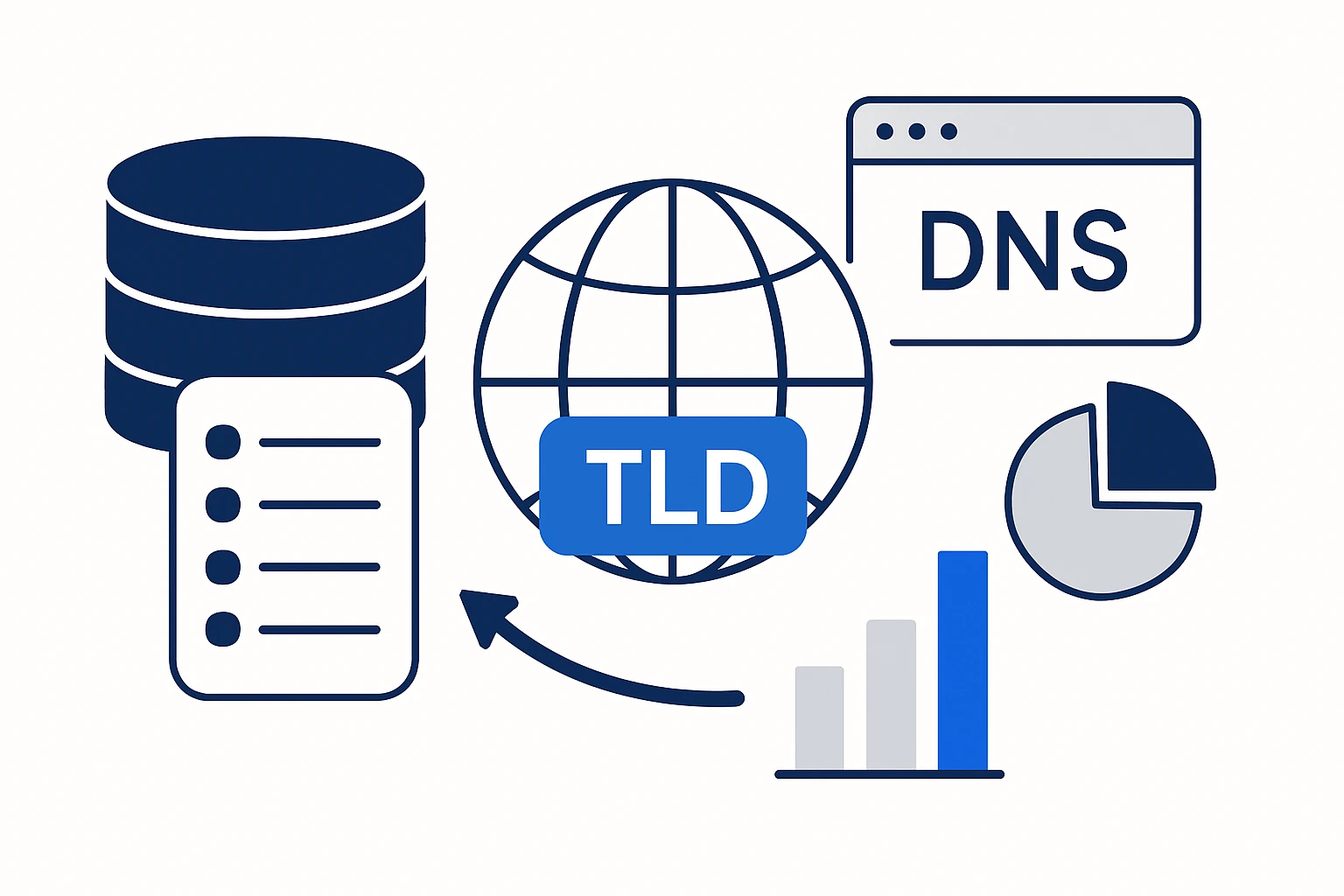
The authoritative taxonomy and the ongoing expansion of the namespace are well-documented by the Internet Assigned Numbers Authority (IANA) and ICANN. For instance, IANA maintains the Root Zone Database that lists delegates for all TLDs, including both gTLDs and ccTLDs. ICANN’s New gTLD Program outlines how additional generic TLDs come into existence and how a Next Round may unfold in the coming years. (iana.org)
Why hosting and DNS teams need a curated TLD database
A curated TLD database supports several core use cases in hosting and DNS operations:
- Localization and localization-ready content routing: knowing which ccTLDs exist enables efficient country-level hosting and language-specific content delivery.
- Policy and risk management: ccTLDs and new gTLDs can carry local policy differences or registration restrictions, a centralized view helps compliance teams anticipate friction.
- Pricing and procurement planning: registries set varied pricing and renewal policies, a single source of truth helps budget accurately.
- DNS strategy and stability: understanding which TLDs have mature registry systems and DNSSEC adoption helps with resilience planning and DNS routing decisions.
As the global namespace expands, the total number of domain registrations also grows. Verisign’s Domain Name Industry Brief (DNIB) shows a continuing rise in total domain registrations across all TLDs, with quarterly snapshots illustrating the scale and momentum of the market. For example, the end of Q1 2025 saw 368.4 million registrations across all TLDs, and by Q2 2025, registrations reached 371.7 million, signaling sustained demand for both traditional and newer extensions. These numbers underscore why a dynamic, regularly updated TLD dataset matters for hosting teams. Verisign DNIB Q1 2025 and DNIB Q2 2025 provide the official quarterly baselines.
Core data fields to capture in a practical TLD database
When designing a TLD database for a hosting roadmap, aim for a compact but extensible schema. Start with a minimal, core set of fields and layer in additional attributes as needed for your business. Below is a pragmatic set to begin with:
- TLD - the canonical top-level domain (e.g., .com, .uk, .icu).
- Type - gTLD, ccTLD, or new gTLD, note whether the TLD is country-specific or industry-focused.
- Country/Region - if ccTLD, the associated country code and any residency requirements.
- Status - active, restricted, or retired.
- Registry Rules - any registration restrictions, local presence requirements, or branding controls.
- DNS Readiness - DNSSEC support, registry stability, and common DNS configurations (e.g., NS records, glue records).
- WHOIS/RDAP Availability - whether the TLD exposes data via WHOIS or RDAP and the typical data fields exposed.
- Pricing Model - annual registration price, renewal, and any premium or restricted pricing tiers.
- Adoption Signals - observed popularity, market share, and growth rate among the TLD’s registrations.
- Data Source - primary source for the row (IANA root, registry, industry brief, etc.).
Reliable data sources anchor these fields. The IANA Root Zone Database is the canonical, authoritative registry for TLDs, while Verisign’s DNIB provides market context and scale. ICANN’s New gTLD Program pages explain how new generic TLDs enter the ecosystem and what to expect in future rounds. IANA Root Zone Database • Verisign DNIB • ICANN New gTLD Program.
A practical framework to maintain a living TLD dataset
Because the namespace evolves, a lightweight, repeatable framework helps keep the dataset accurate without becoming a full-time project. Here’s a compact, repeatable approach you can adapt:
- Identify: start from the IANA root zone and cross-check with the registry’s official pages to confirm current status and rules.
- Validate: verify DNS readiness (NS servers, DNSSEC availability) and ensure WHOIS/RDAP endpoints provide the needed visibility.
- Annotate: record country or regional focus, pricing, and any restrictions, including renewal timelines and auto-renew policies.
- Review: schedule quarterly reviews to capture new gTLDs from ICANN announcements and any ccTLD policy changes.
- Publish: maintain a public-facing view (for example, a versioned dataset) and provide a secure download option for internal teams. As a reference point, hosting platforms often rely on official registries and RDAP data for accuracy.
To illustrate, consider starting with a core set of widely used domains (.com, .org, .net) and a representative cross-section of ccTLDs (.uk, .de, .jp), then layer in a few high-potential new gTLDs relevant to your audience (for example, .shop or .app). This staged approach helps teams learn the data model before expanding to the full universe. For a real-world starting point on lists by TLDs, you can browse official registries such as List of domains by TLDs on the client site.
How to source and verify data: an honest, standards-based approach
Rely on primary, authoritative data whenever possible. Your process should emphasize traceability and reproducibility:
- IANA Root Zone Database for the canonical TLD list and current delegations. IANA Root Zone Database
- Registry-specific data for status changes, new registrations, and any policy restrictions. ICANN’s status pages and registry announcements are reliable sources here. ICANN New gTLD Program
- Market context from Verisign’s Domain Name Industry Brief (DNIB) to anchor adoption trends and scale. DNIB Q1 2025
Where the data matters, bring in a secondary confirmation step. For organizations requiring bulk data access or RDAP/WHOIS lookups, partner with trusted providers (the client’s RDAP & WHOIS database is a good example of how teams can standardize data access across TLDs).
Expert insight: why this matters now
Industry observers emphasize that the domain space is still expanding, with ICANN planning another wave of new gTLDs in the coming years. ICANN’s 2024 progress report highlights the momentum behind the New gTLD Program and notes the Next Round is anticipated to open for applications in the near future. For hosting teams, this means more branding options and potential localization opportunities, but it also increases the complexity of domain management. A well-maintained TLD database becomes a foundational tool for product roadmaps and customer-facing capabilities. ICANN: A Year of Progress (New gTLD Program, 2024) • ICANN New gTLD Program.
Structured block: a compact decision framework for evaluating TLDs
The following framework is designed to be implemented as a lightweight, repeatable process for evaluating TLDs for inclusion in a hosting-ready dataset. Use it to prioritize work and communicate rationale to product, engineering, and sales teams.
- TLD Decision Matrix - a four-criterion framework to score each TLD:
- 1) DNS readiness (DNSSEC, registry stability, NS consistency)
- 2) Policy and restrictions (local presence, residency, or branding limitations)
- 3) Market potential (estimated registrations, region of demand, branding value)
- 4) Economic factors (pricing, renewal terms, registrar ecosystem)
- Score each criterion on a 1–5 scale and compute a simple weighted total to guide inclusion decisions. This approach keeps the dataset actionable for product and engineering teams while remaining grounded in verifiable data sources.
Putting it into practice: workflow and examples
Here’s a practical, step-by-step workflow you can adapt. Each step links to a concrete source or reference point to help teams stay aligned with industry standards:
- identify whether a candidate TLD is gTLD, ccTLD, or a new gTLD. Use IANA as the canonical source for the current root zone delegations. IANA Root Zone Database - check registry pages for eligibility, residency, and branding rules, log any restrictions that affect customers' ability to register or use the domain. - verify NS records, verify DNSSEC availability if applicable, and note any registry-specific DNS quirks. - record list price, renewal pricing, and any premium tiers. - track changes in registration counts over quarterly DNIB snapshots to gauge market momentum. DNIB Q1 2025
For teams that want direct access to data, the client’s RDAP & WHOIS database is a practical way to query domain-level visibility across TLDs (see the client’s RDAP & WHOIS resource). RDAP & WHOIS Database.
Limitations and common mistakes to avoid
- Relying on popularity alone - a TLD’s market share is useful, but popularity does not guarantee technical suitability for a given product or region. Always verify technical readiness and policy rules.
- Ignoring residency and local rules - ccTLDs often carry local requirements and restrictions that can complicate registrations, hosting plans, and content localization.
- Stockpiling without maintenance - a TLD list is not a one-time dump. The namespace evolves through new registrations, policy changes, and sometimes retirements. Plan for quarterly updates and versioning.
- Over-customizing the data model - start with a core dataset and avoid overfitting the schema to current needs. A lean model scales better as new TLDs arrive.
The ICANN and IANA frameworks emphasize that governance and policy evolve, new gTLDs may come with evolving rules, and market participants should stay attuned to official program updates. The combination of authoritative registry data and industry trend data helps ensure that your dataset remains accurate and actionable over time. ICANN New gTLD Program • IANA Root Zone Database.
A compact, editor-friendly reference block
To make this article immediately actionable for teams, here is concise, reusable guidance in a single, portable block you can reference in internal docs or product specs:
: TLD, Type, Country/Region, Status, DNS Readiness, WHOIS/RDAP Availability, Registry Rules, Pricing, Adoption Signals : IANA Root Zone Database, Registry pages, Verisign DNIB, ICANN program notes : quarterly check-ins aligned with Verisign DNIB publication cycles
Integrating the client’s resources into a practical workflow
Hosting platforms often pair a global TLD dataset with tools that allow operators to query and monitor domain data in real time. The client’s RDAP & WHOIS database is a practical example of how teams can build reproducible visibility across TLDs, while the “List of domains by TLDs” page offers a straightforward reference for product and marketing teams to ground localization strategies. See these resources for integration within a broader domain-management workflow:
Conclusion: a living database for a living internet
The domain space continues to grow both in numbers and in the complexity of the rules that govern it. A curated TLD database - built on credible data sources, regularly refreshed, and aligned with product strategy - enables hosting teams to deliver better localization, more reliable DNS experiences, and clearer communications with customers about what is possible in different markets. By combining a lean data model with a disciplined update cadence and direct access to authoritative registries, teams can turn a raw list of extensions into a strategic capability that scales with the internet itself.