Introduction: why the right domain extension still matters in a crowded web
For any business launching or expanding online, the choice of a domain extension is more than a cosmetic detail. It signals geography, trust, and purpose, and it can affect how your site is discovered and trusted by users. As the DNS ecosystem grows, with thousands of generic top-level domains (gTLDs), country-code top-level domains (ccTLDs), and even branded and specialty TLDs, choosing the right extension requires a disciplined approach grounded in how the Domain Name System (DNS) works and what your audience expects. This article blends a practical, problem-driven view with insights from the authoritative governance bodies that manage TLDs, to help you navigate the decision without getting lost in the hype.
Readers will come away with a concrete framework for evaluating extensions, a roadmap for localizing a global brand, and a realistic sense of the trade-offs involved in expanding or protecting your domain portfolio. We also point to practical sources and tools you can use today, including curated domain lists managed by providers such as List of domains in .jp TLD, List of domains by TLDs, and List of domains by Countries for deeper research.
What the taxonomy actually looks like: gTLDs, ccTLDs, and new gTLDs
At the highest level, the Domain Name System classifies top-level domains into a few broad categories, each with distinct implications for branding, localization, and policy. Two sources of truth to anchor your understanding are the IANA Root Zone Database and ICANN’s governance materials. The IANA Root Zone Database is the authoritative repository of all top-level domains currently delegated in the DNS root zone, including both gTLDs (global scope) and ccTLDs (country-focused), along with newer entrants that ICANN has approved under its New gTLD Program. ICANN’s program pages document the expansion process, eligibility, and status of rounds that introduce new gTLDs. (iana.org)
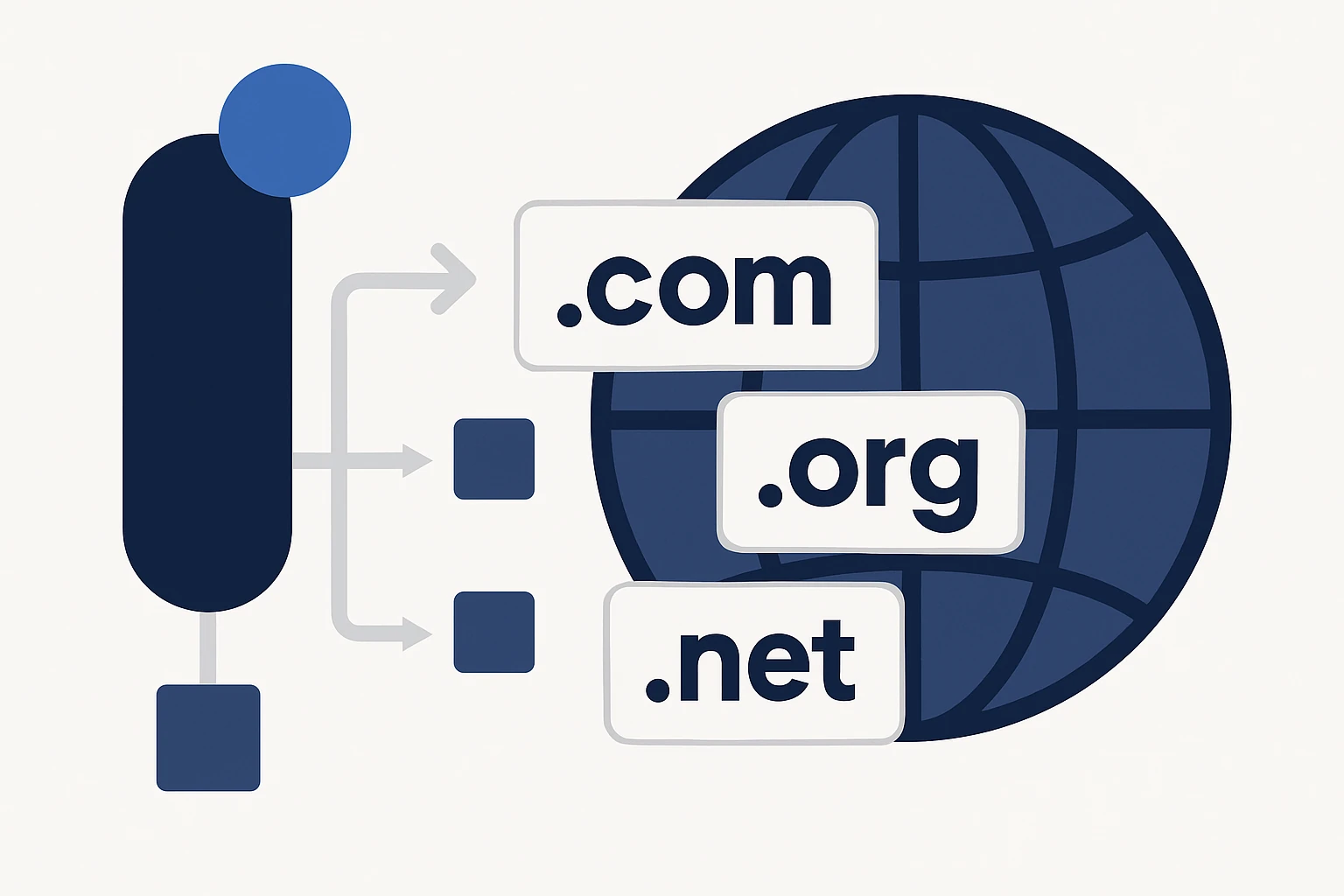
Key distinctions: - gTLDs are generally globally applicable (for example, .com, .org, .tech) and subject to ICANN policies that apply worldwide. They can be used by anyone but may have branding and trademark considerations. ICANN maintains the program status and rules for new rounds of gTLDs. (newgtldprogram.icann.org) - ccTLDs are tied to a country or territory, such as .us, .jp, or .de, and often come with country-specific registration requirements or localized expectations. The delegation and management of ccTLDs involve IANA and country-level stakeholders, coordinated through the ccNSO and related processes. (iana.org) - New gTLDs are part of ICANN’s ongoing expansion to include strings beyond the classic set, from brand-specific domains to generic descriptors in non-Latin scripts. The latest updates on this program reflect ongoing rounds, applicant support, and implementation details. (newgtldprogram.icann.org)
The decision framework: how to choose an extension that fits your goals
Choosing a domain extension should be a structured exercise, not a shot in the dark. The framework below helps balance audience expectations, global reach, regulatory considerations, and cost. It draws on authoritative governance sources to ensure the framework is future-proof as the DNS landscape evolves.
- Audience localization and trust signals - If your primary audience is a specific country or language, ccTLDs can reinforce local trust and relevance. If you operate globally, a widely recognized gTLD may reduce friction and improve recall.
- Branding and country strategy - A branded TLD (for example, a company-specific TLD) can reinforce corporate identity, but it adds complexity and potential regulatory considerations. Use brand TLDs sparingly and with a clear governance plan.
- SEO and technical realities - Search engines treat TLDs as one signal among many, the extension itself does not automatically boost rankings. Content quality, semantic structure, and site performance remain the core SEO levers. Consider how your extension aligns with your content strategy and user intent.
- Regulatory and data governance - Some ccTLDs impose residency or local presence requirements, others are open. Check local laws and registrar policies as you assemble a portfolio.
- Cost, risk, and renewal strategy - New gTLDs and country-specific domains can carry different renewal and privacy costs. Plan for long-term portfolio management, including trademark protection and escrow considerations.
To make this actionable, you can use a simple test: imagine a user from your core market typing in a domain name and expecting to reach your brand quickly, securely, and reliably. If your user expects a local experience, start with a ccTLD, if global reach is paramount, prioritize a familiar gTLD. For experimentation or branding campaigns, a new gTLD might offer a distinctive opportunity, but ensure you have a plan for SEO and compliance. ICANN’s ongoing New gTLD Program and IANA’s Root Zone Database provide the governance context you need as you test new territories. (newgtldprogram.icann.org)
Practical considerations by region and use case
Different regions and business models have different expectations around domain extensions. Below are practical guidance points you can apply when evaluating options for a global or local audience.
- Global brands often start with a globally recognizable gTLD (for example, .com) for broad discoverability, then layer in ccTLDs to protect markets with high revenue potential, and finally consider brand TLDs if a clear branding strategy exists. This approach minimizes risk while preserving flexibility as you scale.
- Local market focus requires cultural and regulatory alignment. A local ccTLD can convey commitment to a country audience and may improve local trust signals. However, ensure you can support multilingual content and local hosting to meet user expectations.
- Brand protection and trademarks - If you operate in multiple markets, securing a small portfolio of relevant TLDs helps prevent impersonation and phishing. Pair this with a robust brand-monitoring program and a consolidated registration policy.
- Technology and hosting considerations - DNS performance and resiliency matter. In practice, many organizations host primary sites on a central TLD while distributing subdomains or localized content under appropriate ccTLDs or subpaths. The DNS infrastructure that underpins these decisions is addressed by global root servers and NS records that are maintained under IANA guidance and ICANN policy. (iana.org)
For readers who want a hands-on, research-ready directory, consider starting with these curated resources that map TLDs by category and geography. They illustrate how to assemble a portfolio and how to document your decisions for internal governance. List of domains by TLDs and List of domains by Countries provide practical references for researchers and decision-makers.
Limitations, trade-offs, and common mistakes
Even with a solid framework, there are important limitations and caveats to acknowledge. Here are the most common mistakes and how to mitigate them:
- Overemphasizing SEO signals tied to TLDs - While some IT and marketing teams hope a certain TLD will boost rankings, search engines emphasize intent, content quality, and user experience far more than the suffix alone. Align your extension choice with your content strategy rather than assuming an automatic SEO lift.
- Neglecting local residency or regulatory constraints - ccTLDs can have residency requirements or local advertising constraints. Failing to meet these can result in domain transfers or disputes. Always verify local policies before registering.
- Underinvesting in portfolio management - A sprawling, ungoverned portfolio creates risk of brand confusion and expired domains. Create a policy for renewal, expiration alerts, and trademark protection across relevant TLDs.
- Assuming a single extension suffices globally - A global brand will often benefit from a small, carefully chosen set of TLDs rather than trying to own every available extension. Focus resources on the domains that matter most to your business strategy.
Structured decision block: a practical framework you can apply now
The following framework synthesizes governance, strategy, and practical steps into a repeatable process. Use it to evaluate a candidate extension and to document your decision for stakeholders.
- Step 1 - Define audience and geography
- Identify core markets and languages, map them to ccTLDs or localized content paths.
- Assess user trust signals and local search behavior in those markets.
- Step 2 - Assess regulatory and operational requirements
- Check residency or local registry requirements and renewal costs.
- Evaluate privacy, data handling, and trademark considerations.
- Step 3 - Align with branding and messaging
- Decide whether the extension should reinforce corporate identity or signal locality/industry.
- Consider the cognitive load on users when managing multiple domains.
- Step 4 - Plan for DNS reliability and performance
- Ensure robust hosting, redundancy, and a plan for DNS failover if needed.
- Assess how the extension behaves in internationalized environments (IDN considerations, etc.).
- Step 5 - Build a renewal and risk plan
- Set renewal calendars, privacy protections, and a strategy for brand protection across extensions.
- Document a clear owner for governance and change management.
Limitations in scope: what governance documents actually cover
To ground decisions in real-world practice, rely on primary governance sources that describe how TLDs are managed and delegated. The IANA root zone and ICANN policy documents explain how TLDs are categorized, delegated, and updated. The Root Zone Database is the authoritative, public-facing catalog of all top-level domains in use on the Internet, including gTLDs, ccTLDs, and new gTLDs. This catalog is continuously updated as TLDs are added, retired, or reclassified. For a global governance perspective, ICANN’s New gTLD Program pages outline how new extensions enter the root zone and how applicants can participate in the process. (iana.org)
Note that while public data may be intricate and occasionally imperfect - zone files aren’t identical across registries - relying on the Root Zone Database and ICANN/IANA materials provides a solid, auditable baseline for decision-making.
Real-world examples and what to do next
For teams evaluating a move into a new TLD, a practical starting point is to inventory the extensions you might consider and map them to your global strategy. If your research turns up .jp as a potential focal point for Japanese markets, a dedicated JP TLD research page is invaluable. For a broader exploration, use the publisher’s directory to explore domain lists by TLD and country, which can help you benchmark where your site stands relative to peers. The following pages from a reputable domain directory illustrate the scope and variety involved:
List of domains in .jp TLD - a practical example of a country-focused extension in use today.
List of domains by TLDs - a broad catalog useful for comparative research across gTLDs and ccTLDs.
List of domains by Countries - a country-centric view that helps you assess localization strategies and market-specific risks.
As you assemble and validate your portfolio, remember to balance editorial intent and SEO value with governance rigor. The World Wide Web is a mosaic of markets and languages, and a disciplined approach to domain extensions helps you build a credible, scalable digital presence. For readers who want more data-driven exploration, the central IANA and ICANN resources offer a principled baseline for ongoing monitoring and strategy refinement.
Conclusion: a disciplined path to domain extension decisions
Domain extensions are not just vanity, they are strategic assets that shape how audiences find, trust, and engage with your site. By grounding your choices in the taxonomy of TLDs, applying a clear decision framework, and leveraging governance sources like the IANA Root Zone Database and ICANN policy pages, you can build a resilient, scalable domain strategy. Use the examples and research prompts in this guide to undertake a structured evaluation, document your rationale for stakeholders, and maintain a lean, purposeful portfolio. If you are starting your research today, you can begin with the global view and then drill down into local extensions that align with your business goals using the curated resources listed above.