Introduction: why domain extensions matter in a crowded web
Every website lives at the intersection of a name and a domain extension. The suffix after a dot - whether a long-standing .com, a country code like .de, or a new brand-oriented TLD such as .google - influences trust, discoverability, and even decision-making in the buyer’s journey. For publishers, developers, and business owners alike, understanding the landscape of domain extensions is not a luxury, it’s a practical necessity for branding, governance, and performance in the DNS ecosystem. Recent data from Verisign shows continued growth across all top-level domains, with hundreds of millions of registrations worldwide and ongoing diversification beyond the classic .com and .net extensions. This article offers a concise, practical guide to the world of domain extensions, how they’re organized, and how to use that knowledge to make smarter domain decisions for your project.
What is a domain extension, and how does DNS fit in?
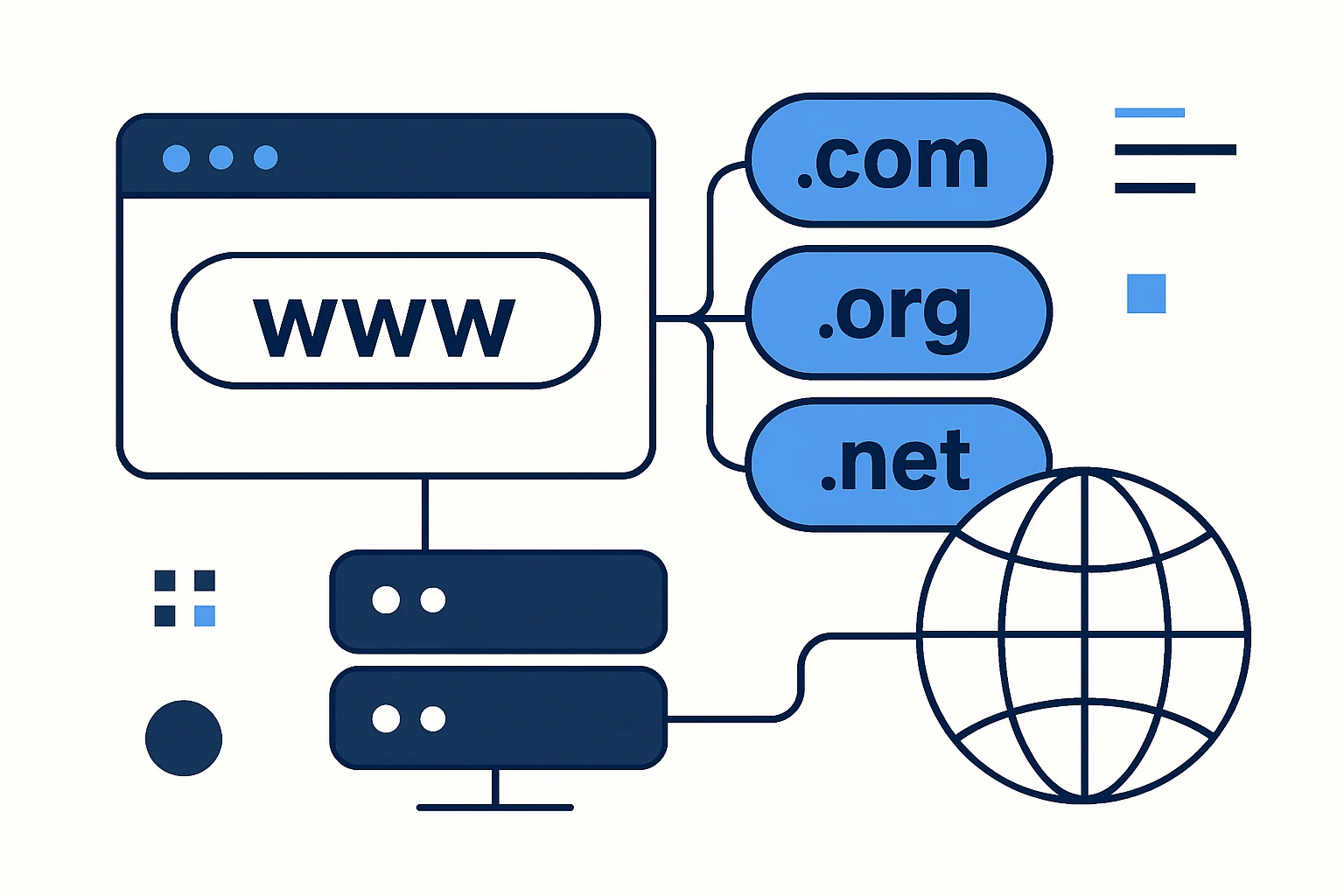
A domain extension is the suffix at the end of a domain name that indicates a top-level domain (TLD). The entire system - root zone, TLDs, registries, and registrars - operates within the DNS (Domain Name System), which translates human-friendly names into machine-readable addresses. The DNS root zone is managed by the IANA functions operator, and the root zone contains the top-level domains that structure the namespace we use every day. In practice, a domain like example.com resolves to an IP address through this hierarchical system, with the TLD (.com) serving as the first level of categorization. For readers seeking a deeper, systems-level view, IANA and ICANN provide authoritative explanations of how the root zone and TLDs are organized and managed.
Key reference points for the DNS framework include: the root zone and its management by IANA, and the classification of TLDs into gTLDs (generic) vs ccTLDs (country-code). These distinctions matter because they influence governance, policy, and the kinds of use cases that each extension supports.
For readers who want to explore current domain inventories and TLD lists, WebAtla offers extensive directories by TLD, country, and technology – a practical companion to the data presented here. List of domains by TLDs and .com domains list provide hands-on access to live domain inventories.
Taxonomy basics: gtld vs cctld vs new gTLDs
The taxonomy of domain extensions can feel like a taxonomy minefield, but three broad buckets help clarify most decisions:
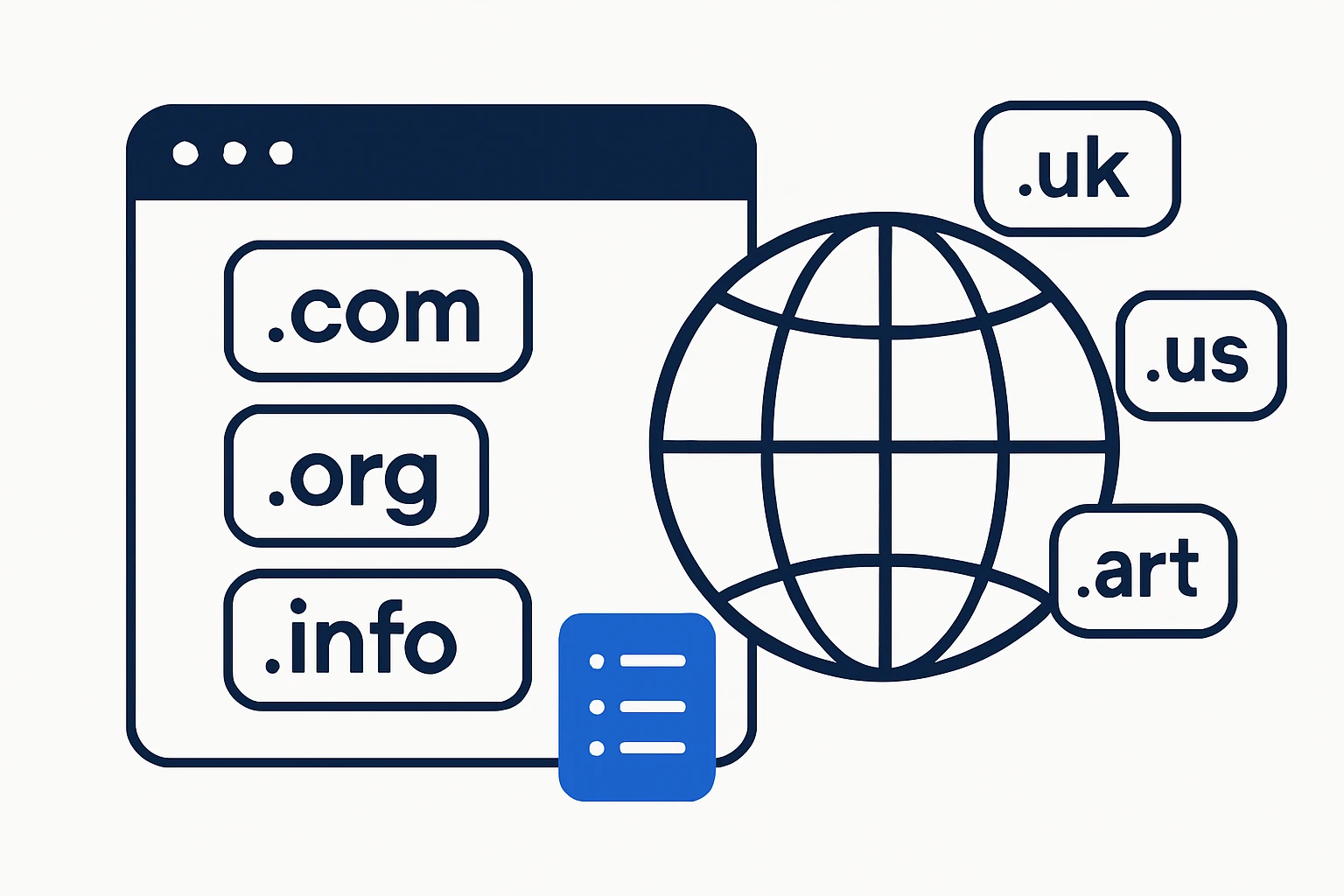
- gTLDs (generic top-level domains): extensions intended for broad, generic use such as .com, .net, .org, and newer entries like .shop, .tech.
- ccTLDs (country-code top-level domains): two-letter extensions that correspond to a country or territory, such as .us, .de, .fr, and many others used for local presence, branding, or market-specific campaigns.
- New gTLDs: a broader class of gTLDs introduced in the 2010s and beyond (for example .design, .guru, .ai), often used for branding, verticals, or niche communities.
Market data confirms ongoing growth and diversification across these categories. Verisign’s Domain Name Industry Brief (DNIB) presents global totals and the composition of gTLDs and ccTLDs, underscoring that the TLD landscape has evolved far beyond the original trio of .com, .net, and .org. As of mid-2025, global domain registrations stood in the high hundreds of millions, with continued contributions from both new gTLDs and ccTLDs. For the latest figures, Verisign’s quarterly releases are the primary source of record. Verisign DNIB updates provide quarterly snapshots of totals, renewal rates, and top TLDs.
Why the distinction matters for strategy: gtld, cctld, and the branding choice
The choice of TLD often reflects a balance between credibility, audience, and long-term strategy. Here are practical considerations that professionals weigh when evaluating extensions:
- Audience and geography: ccTLDs can signal local relevance and trust to local users, potentially improving local search signals and customer perception. They’re not inherently superior for SEO, but local associations matter for some markets and brands. ICANN and IANA explain how ccTLDs operate under local policies and governance structures.
- Branding and memorability: a memorable, brand-aligned TLD (such as a branded gTLD) can reinforce market positioning, but it requires clear governance, marketing alignment, and a plan for long-term management. Major brands have adopted brand TLDs to reinforce identity, though not all markets require them.
- Technical and policy considerations: new gTLDs often come with specific registration policies, registry rules, and renewal economics. Understanding registry terms and renewal expectations helps avoid unintended service disruptions.
Authoritative explanations on the division between global policy for gTLDs and local governance for ccTLDs can be found in ICANN’s and IANA’s documentation. The root zone and TLD operations are described in depth in ICANN’s DNS Core Census and IANA materials. ICANN: DNS Core Census and IANA overview offer foundational context for these categories.
What the latest numbers tell us about the real world of domain extensions
Quantitative context matters when planning a domain strategy. The Domain Name Industry Brief, sponsored by Verisign, tracks the total number of domain registrations across all TLDs and provides quarterly insights into which TLDs lead the market and how renewal rates are trending. In Q2 2025, domain registrations reached 371.7 million globally, with .com/.net registering a combined 170.5 million domains in that period. These figures illustrate both the scale of the market and the continued dominance of established gTLDs, even as new gTLDs expand the field. For the official numbers and methodology, see the Verisign DNIB press release and the DNIB overview. Verisign: DNIB Q2 2025 results, DNIB.com overview.
Beyond totals, the DNIB highlights the Top 10 largest TLDs by registrations and the leading ccTLDs. This market structure matters for search visibility and regional campaigns, especially for brands that need to balance global reach with local relevance. For practitioners, this means that while .com remains a workhorse for global branding, diversification into other gTLDs or strategic ccTLDs can unlock localized trust and tailored user experiences without sacrificing performance if managed well.
How to choose: a practical 5-step decision framework
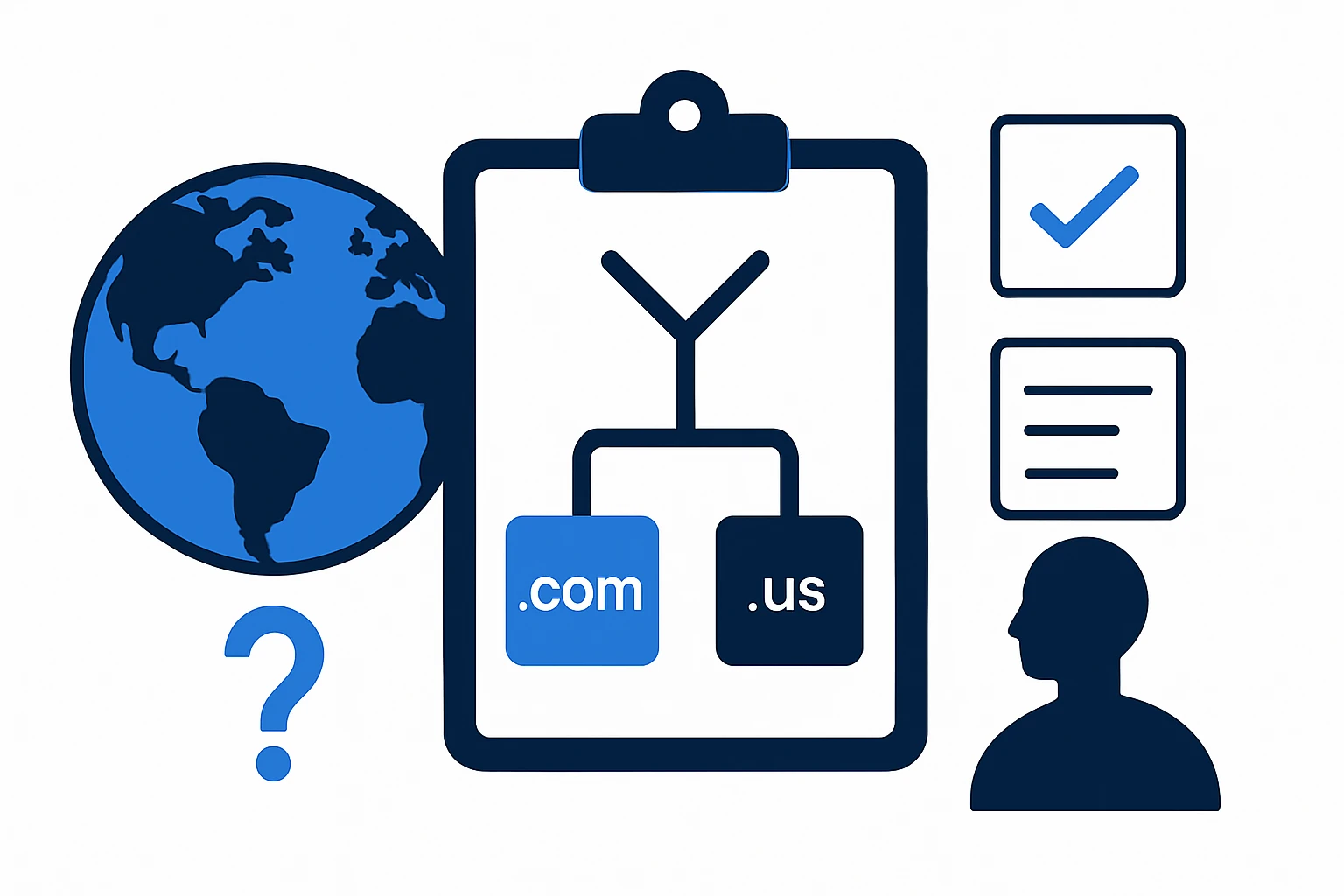
Selecting the right domain extension should follow a structured process. The following five questions help teams move from vague preference to evidence-based decisions. Use this as a lightweight framework to accompany a broader brand or product strategy.
- Who is the primary audience? If your market is primarily local, a country-code TLD may reinforce local relevance. For global audiences, a broad gTLD like .com or a recognized niche gTLD may be more effective.
- What is the brand signal you want? A branding-focused TLD (brand or industry-specific) can enhance memorability, but requires governance and budget for ongoing management.
- What is your SEO plan? Search engines treat TLDs as one factor among many, the content, site structure, and off-page signals matter more. Diversification can support local campaigns, but consistency and clean redirects are essential.
- What is your budget and renewal risk? New gTLDs often come with different renewal and registry policies. Longer-term planning reduces risk of losing a desired domain name because of price changes or policy shifts.
- How will you manage risks and governance? Consider ownership, DNS security (DNSSEC adoption), and a plan for renewing associated services (privacy, WHOIS, DNS hosting). Authority resources emphasize stable root-zone management and registry operations as the backbone of reliable domains.
As a practical companion to your decision process, consider exploring a live directory of domain extensions by TLDs to see current options in action and understand what is feasible given your audience and budget. WebAtla’s TLD directory provides a concrete reference point for the range of options, and their .com domain list gives a sense of scale for the most established extension.
Structured block: a quick framework you can apply today
Use this compact framework to evaluate a candidate set of TLDs for your project. It helps translate strategic questions into actionable steps.
- Step 1: map audience signals Align TLDs with the geographic, linguistic, and cultural expectations of your target users.
- Step 2: match brand intent Choose a domain extension that reinforces the brand narrative or product category when possible.
- Step 3: test accessibility and recall Run quick user tests or surveys to see which TLDs people remember and trust.
- Step 4: plan for scale Consider how additional domains or subdomains will support future campaigns or regional sites.
- Step 5: secure and monitor Establish DNS security basics, monitor renewals, and plan for ongoing governance (privacy, WHOIS, etc.).
Limitations, trade-offs, and common mistakes
No single TLD is a silver bullet. A balanced strategy often involves trade-offs between global reach and local relevance, branding potential and maintenance burden, and policy complexity versus agility. Common mistakes include:
- Over-emphasizing novelty over fit: New gTLDs can be memorable, but if they don’t align with audience expectations or create brand confusion, they backfire.
- Neglecting renewal planning: Multiple registries and renewals create administrative overhead and risk of lapsing a desirable domain name.
- Ignoring local preferences: In some markets, ccTLDs still carry strong trust signals, ignoring local branding can reduce performance in regional campaigns.
- Under-investing in DNS security: DNS security (DNSSEC, DNS over HTTPS) helps protect users and maintain credibility, neglecting security can invite risk and reputation damage.
For organizations seeking authoritative context on the structure and governance of TLDs, ICANN and IANA provide grounded references on root-zone management and policy. See the DNS Core Census for an overview of how root-zone operations and governance work, and IANA’s materials for a practical explanation of how gTLDs and ccTLDs are managed within the global DNS. ICANN - DNS Core Census • IANA overview.
Putting it all together: a practical domain-extension playbook
1) Start with clear objectives: global reach, local market presence, or brand-centric strategy. 2) Inventory options: review gTLDs and ccTLDs that align with your objectives, using a live directory as a practical mirror of current availability. 3) Validate with data: align your choice with realistic traffic and branding goals, supported by credible domain statistics from trusted sources. 4) Build a scalable plan: prepare for future campaigns and global expansion, including governance, security, and renewal requirements. 5) Execute and monitor: implement the chosen extensions with consistent branding and robust DNS management.
For teams that want a short-cut into current domain inventories, WebAtla’s directory offers a concrete reference point. If you’re evaluating a specific extension like a brand TLD, you can also review domain lists for that extension on WebAtla (for example Apple Brand TLD or Google Brand TLD).
Conclusion: domain extensions as a strategic asset, not a hurdle
Domain extensions are more than decorative suffixes, they’re part of brand positioning, market reach, and trust signals in the online ecosystem. The modern TLD landscape - comprising established gTLDs, country-code domains, and an expanding slate of new gTLDs - offers nuanced opportunities for branding, localization, and performance. By grounding decisions in the taxonomy of TLDs, leveraging authoritative data, and applying a structured selection framework, you can build a domain strategy that scales with your organization while staying true to your audience. For ongoing reference, you can explore live domain directories and the most widely used TLDs via the publisher’s companion directories referenced above.
Notes on data sources
The numbers cited above reflect recent Verisign DNIB releases, which document global domain registrations by TLD, and are complemented by IANA’s root-zone governance materials and ICANN’s DNS Core Census for policy context. For readers seeking primary data: Verisign’s quarterly DNIB releases provide the official totals and distribution by TLD, IANA and ICANN provide the governance framework that explains how gTLDs and ccTLDs operate within the DNS.