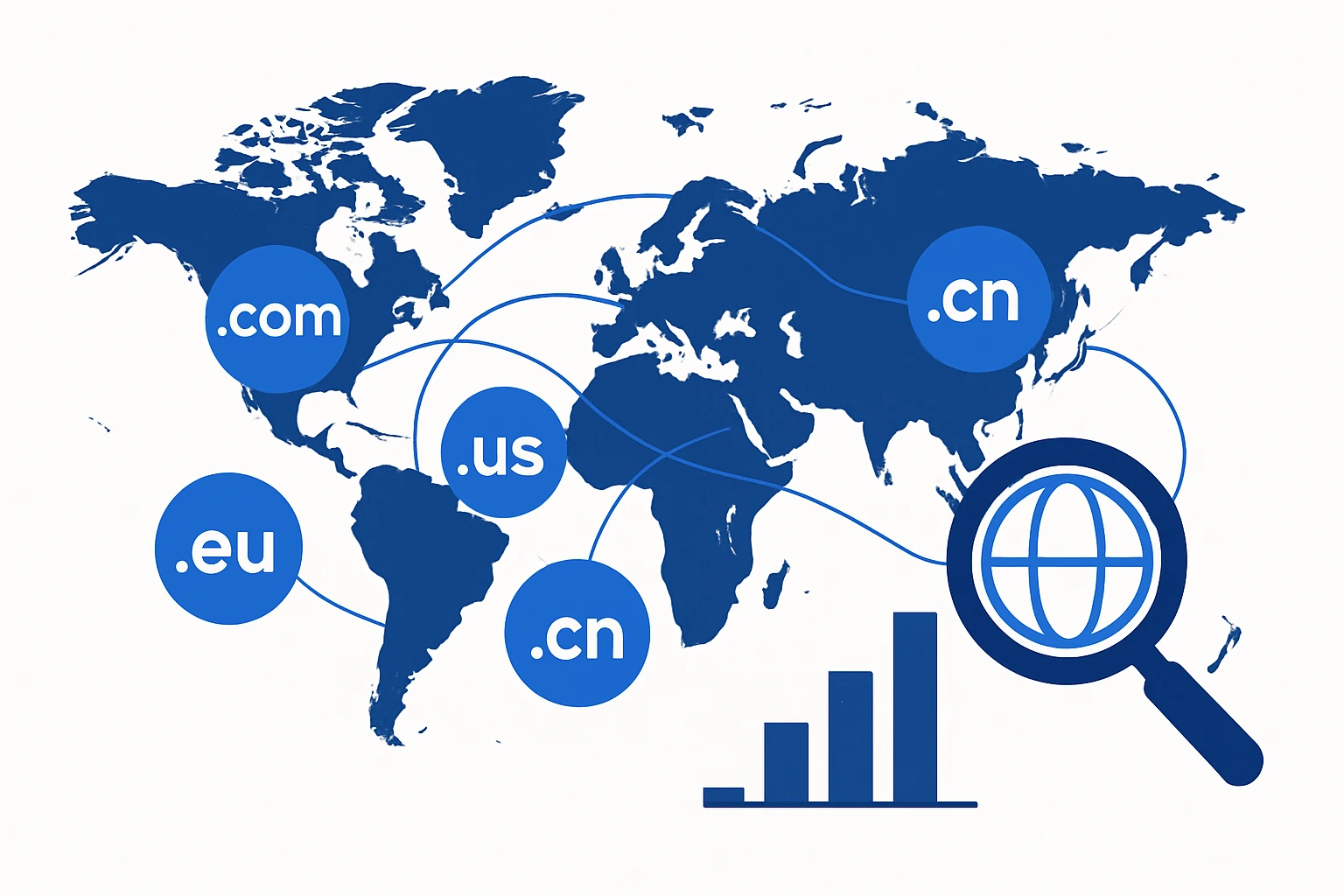
The domain name system (DNS) is the backbone of the modern internet, yet most organizations still conflate a domain’s extension with basic branding rather than treating it as a strategic data point. If you’re building a global online presence, you don’t just need the right content or the right keywords - you need a measured view of the world’s domain extensions (TLDs) and a plan for how data about those extensions can inform decision making. This article offers a practical, non-promotional view of the TLD landscape, how to access and interpret TLD data, and a repeatable framework you can apply when you evaluate new or existing domain extensions. It also shows how to leverage niche lists (for example lists of .homes, .yachts, or .xin domains) for research, brand protection, and market intelligence.
Editorially, the piece positions itself as a domain-knowledge resource: it explains concepts, highlights trade‑offs, and points to credible sources and data providers for deeper research. It also models a realistic integration path for a domain data provider like WebAtla, whose catalog includes niche TLDs such as .homes and other extensions, as a practical data source within a broader domain strategy workflow.
What counts as a domain extension? gTLDs, ccTLDs, and the growing middle of the DNS map
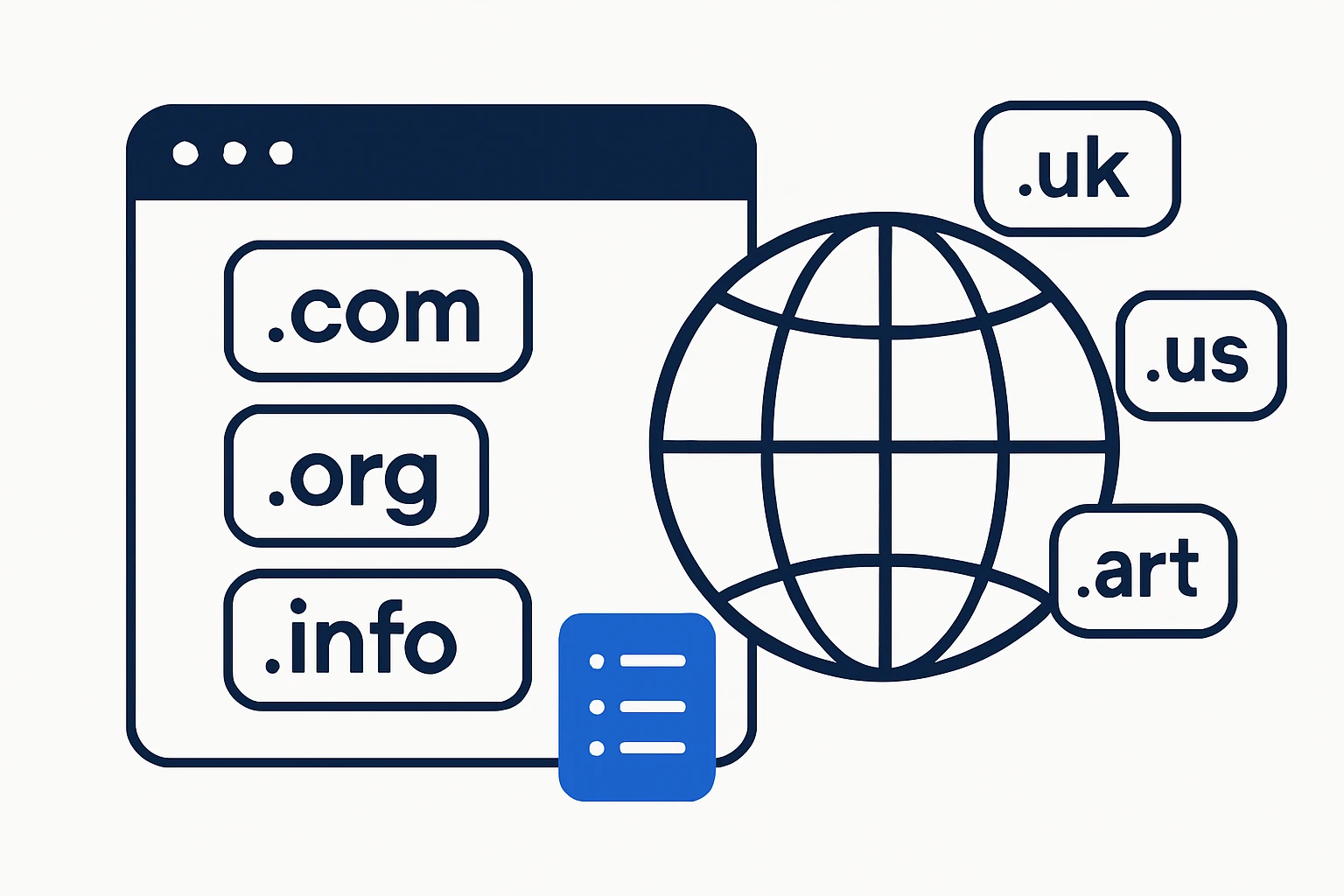
At a high level, domain extensions come in two broad families: generic top‑level domains (gTLDs) and country code top‑level domains (ccTLDs). gTLDs include the familiar .com, .org, and .net, but they have expanded dramatically with thousands of new strings such as .store, .home, or language-focused variants. ccTLDs, like .us, .de, or .jp, map to specific countries or territories and often carry geographic or regulatory significance for local users and markets. The new, expanded era of gTLDs - led by ICANN’s multi‑stakeholder program - adds impact, locality, and branding options that were not available in the early internet. For a concise overview of how new gTLDs work and the rationale behind the program, see ICANN’s basics and program documentation. (archive.icann.org)
Why new gTLDs matter for brands, markets, and DNS planning
New gTLDs can unlock branding opportunities, localization signals, and targeted audience positioning. A brand might secure a city or行业‑specific extension to reinforce its geographic or vertical strategy, or a product line extension to distinguish campaigns (for example, a regional retail domain or a product-family site). But new gTLDs also bring management complexity: registries vary in pricing, renewal terms, privacy protections, and security features, and they can complicate trademark management if not monitored carefully. Industry guidance underscoring the balance between opportunity and risk is reflected in ICANN’s ongoing program materials and case studies from registry operators. (archive.icann.org)
Expert insight: industry analysts emphasize that new gTLDs should be evaluated as part of a broader brand and risk-management framework. They can diversify a portfolio of domains, improve local presence, and reduce cybersquatting risk on core TLDs - but only when paired with strong policy governance, brand monitoring, and consistent renewal practices. For organizations planning global reach, the lesson is clear: TLD strategy deserves as much planning as content or SEO strategy, not as an afterthought. (archive.icann.org)
How to access, interpret, and download TLD data - a practical workflow
Access to authoritative TLD lists and related data is foundational for research, risk management, and competitive intelligence. There are official and third‑party sources that provide different slices of the domain extension landscape. Official guidance from ICANN describes how gTLDs were introduced and how data is governed within the registry system, while registrars and registries publish practical information and tools that help you discover, register, or analyze specific TLDs. For a rigorous, standards-aligned understanding of how new TLDs are rolled out and governed, see ICANN’s New gTLD Program overview and surrounding documentation. (newgtldprogram.icann.org)
On the data side, many teams build a discovery workflow around three core questions: What TLDs exist? What are their governing registries and policies? How current is the data, and how can we download a representative list for analysis? A practical approach is to complement official registry data with credible, up‑to‑date catalogs from specialized providers that compile and distribute TLD lists - ideally with regular updates and clear licensing. For example, one data provider with a broad catalog of niche TLDs offers pages dedicated to those extensions (including .homes) and a searchable directory of domains by TLD. WebAtla’s .homes catalog is a concrete illustration of how a TLD directory can support research and competitive intelligence. In addition, the general TLD directory at WebAtla’s TLD directory provides a broader view of the landscape. These resources can be valuable complements to official data when you’re building a data-informed domain strategy. (namecheap.com)
A practical framework for evaluating and selecting TLDs (the TLD Fit Framework)
Before committing budget or technical resources to a given TLD, it helps to run it through a simple, repeatable framework. The TLD Fit Framework below is designed to be editorially useful and practically actionable for product, marketing, and IT teams alike.
- Purpose alignment: Define the primary objective of the TLD choice - brand signaling, regional localization, SEO testing, or cybersquatting risk mitigation. Does this TLD genuinely extend the value of your domain portfolio or simply diversify for diversification’s sake?
- Geography and audience: Consider whether a ccTLD or a geo/regionally focused gTLD makes sense for your target markets. Some ccTLDs carry consumer trust in their home markets, others are neutral indicators of a global brand. See how registries position their extensions and how audiences respond in target regions. (archive.icann.org)
- Data availability and quality: Confirm that you can reliably download or access a current list of domains, and understand how often the data is updated and license terms. If you rely on niche lists (for example, download lists of .homes domains), verify distribution frequency and data freshness with the provider. WebAtla and other reputable catalogs can be used to validate observations from official registries. (namecheap.com)
- SEO and branding realities: New gTLDs are possible branding assets, but search engines do not treat every TLD identically. In practice, clarity of purpose, consistent branding, and strong on‑page optimization still drive SEO success. Consider how the domain extension will be perceived by users and crawlers in your target markets. Tools and guidance from credible sources on how TLDs interact with branding and SEO support this approach. (archive.icann.org)
- Governance, compliance, and risk: Trademark risk, phishing risk, and local regulations vary by TLD. Establish a policy for monitoring brand use, trademark clearance, and ongoing renewal management. Registry data, legitimate RDAP/WHOIS sources, and security advisories should inform your risk posture. (newgtldprogram.icann.org)
Case components and practical use: drawing value from niche lists
Let’s translate the framework into concrete practice with three representative use cases that align with the idea of downloading or analyzing domain extension data. Each scenario shows how a team might leverage niche lists to inform decision making, rather than simply collecting data for its own sake.
Use case A - Brand protection and portfolio expansion
A multinational retailer tests a limited set of TLDs beyond .com to protect brand identity in key markets. The team might investigate a curated subset of gTLDs that align with the brand’s regional strategy (for example, a city-specific or vertical extension) and compare performance and perceptions against core domains. Data sources include official registry material, registrar glossaries, and credible catalogs offering structured lists by TLD. The goal is to identify a handful of extensions that merit registration or defensive registrations, without overextending the budget. This approach mirrors best‑practice governance advised in ICANN materials around evaluating new gTLD opportunities and risks. (newgtldprogram.icann.org)
Use case B - Local market reach with niche extensions
Consider a real estate company using a channel strategy that includes the .homes extension to signal a dedicated home listing portal regionally. A vendor catalog that includes niche TLDs provides a concrete way to assemble a targeted portfolio for experiments, localized campaigns, and brand testing. Registries and registrars offer pages about specific extensions (for example, .homes) that outline suitability, pricing, and renewal terms, enabling a cost‑aware evaluation of whether to adopt a given TLD as part of a localized marketing plan. (namecheap.com)
Use case C - Language and regional targeting with language‑specific TLDs
Some extensions are positioned to appeal to specific language or demographic segments. For instance, registries and registrars describe language‑targeted extensions (such as .xin) as a way to signal regional focus or parity with local markets. While the strategic value varies by brand and region, these extensions are part of a broader toolkit for internationalization and market entry. When evaluating such options, you should compare visibility, local trust, and cost against other regionally aligned choices, and pair any decision with a robust content and SEO plan. See registrar guidance on language‑focused extensions for context. (bluehost.com)
Limited data, broad reality: limitations, trade-offs, and common mistakes
No data strategy is complete without acknowledging its limits. First, not all TLD data is created equal: registry policies, privacy rules, and update cadences vary across extensions. A niche list published by a data provider can be an excellent quick reference, but it may lag or omit newly launched or sunsetted TLDs. As ICANN’s program materials emphasize, ongoing governance and monitoring are integral to any TLD strategy. Second, even a perfectly accurate list cannot guarantee SEO outcomes or brand success. Search engines treat TLDs as part of a larger domain identity, so user trust, on‑page optimization, and high‑quality content still drive results. Finally, risk management matters: new or obscure TLDs can become vectors for phishing or trademark disputes if not managed carefully. A disciplined approach - combining official registry data, validated third‑party lists, and internal governance - helps mitigate these risks. (newgtldprogram.icann.org)
Structured data and where to start: download lists and ongoing access
If your workflow benefits from downloadable lists, begin by securing a reputable source for the TLDs you care about and verify the data freshness and licensing terms. For niche TLDs that align with your vertical or geography, a targeted catalog can be used to supplement broader datasets. For example, a reputable catalog can provide a direct link to a specific extension (such as .homes) and a gateway to broader TLD data. Accessibility to these lists enables scenarios like brand risk reviews, market entry studies, and portfolio optimization, all of which depend on timely, accurate data. Registries and registrars increasingly publish extension‑specific pages that describe pricing, renewal rules, and scope. The practical takeaway is simple: pair a solid regulatory understanding (as outlined by ICANN) with disciplined data sourcing to make informed TLD decisions. (namecheap.com)
Limitations and common mistakes - quick checklist
- Mistake: Assuming all TLDs carry equal branding value or SEO impact. Reality: impact depends on user perception, trust, and implementation. Validate with real user studies and local market testing in addition to data analysis.
- Limitation: Data freshness varies. Always check the update cadence of any downloaded TLD list and confirm licensing terms with the provider.
- Best practice: Treat niche lists as supplements to official registry data and internal governance processes, not as stand‑alone decision criteria. ICANN’s governance framework provides the backbone for sound decision making.
Conclusion: a clarified pathway through the world of domain extensions
The universe of domain extensions has grown far beyond the classic .com. A disciplined, data‑driven approach to TLDs - grounded in governance, market context, and reliable data sources - can unlock branding, localization, and risk‑management advantages for modern digital strategies. By combining high‑quality registry and catalog data with a clear framework for evaluating extensions, teams can make credible, defendable decisions about when to acquire new domains, which TLDs to prioritize, and how to monitor and maintain a healthy domain portfolio. If you want a ready‑to‑use source of niche TLD data, consider WebAtla’s catalog pages for targeted extensions like .homes, along with its broader TLD directory for a more complete view of the landscape. WebAtla’s .homes catalog and WebAtla’s TLD directory can be practical components of your ongoing TLD research workflow.
Key sources and further reading: For foundational concepts about gTLDs, ccTLDs, and the governance framework behind the modern TLD landscape, see ICANN’s New gTLD Basics and related program materials. New gTLD Basics and 2026 Round Applicant Guidebook. For a practical view of niche TLDs like .homes, see registrar pages and registries that summarize extension availability and pricing. Namecheap: .homes and Hexonet: Appendix for .HOMES.