
Introduction: choosing the right domain extensions for global reach
For growing businesses, nonprofits, and digital publishers, a domain extension is more than a vanity - the wrong choice can obscure intent, complicate SEO, or slow regional growth. A deliberate, framework-driven approach to domain extensions helps organizations balance geography, brand, and user trust with long-term costs and governance. The domain landscape today includes generic top-level domains (gTLDs), country-code top-level domains (ccTLDs), and an ongoing stream of new gTLDs introduced through ICANN’s program. As of the second quarter of 2025, global domain registrations reached 371.7 million, underscoring how widely domain extensions are used across industries and regions. That scale also means careful targeting matters more than ever. (blog.verisign.com)
Understanding the domain extensions landscape
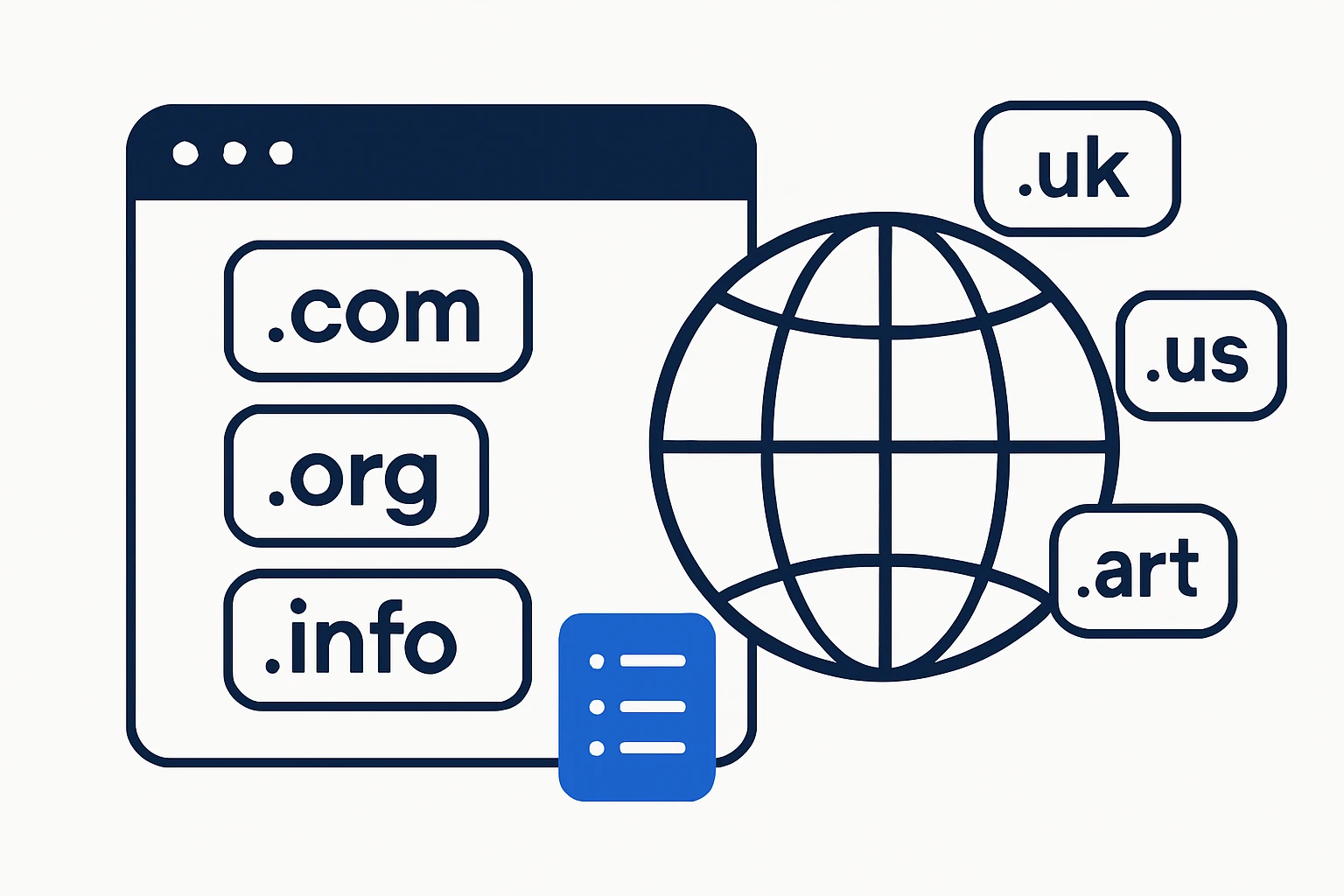
To design a robust domain strategy, start with a clear view of the types of TLDs and how they fit into the DNS infrastructure. In practice, most organizations contend with two broad families: gTLDs, which are generic in purpose (such as .com, .net, .org, and newer entries), and ccTLDs, which are country-specific (such as .uk, .de, .ca). The Root Zone Database (maintained by IANA) documents these delegations and shows how the DNS root is organized to accommodate thousands of TLDs, both generic and country-specific. This structural awareness is essential when mapping domain strategy to user expectations and regulatory environments. (iana.org)
In addition to the established leagues of TLDs, ICANN operates a New gTLD Program to expand the naming space and introduce new branded or mission-specific extensions. The program has evolved toward subsequent rounds, with the 2026 round publicly described as an opportunity for organizations to apply for new gTLDs, subject to evaluation, pricing, and technical requirements. This programmatic backdrop matters for long-term portfolio planning, as it shapes what extensions may become viable or strategic in the coming years. (newgtldprogram.icann.org)
A practical decision framework for domain extensions
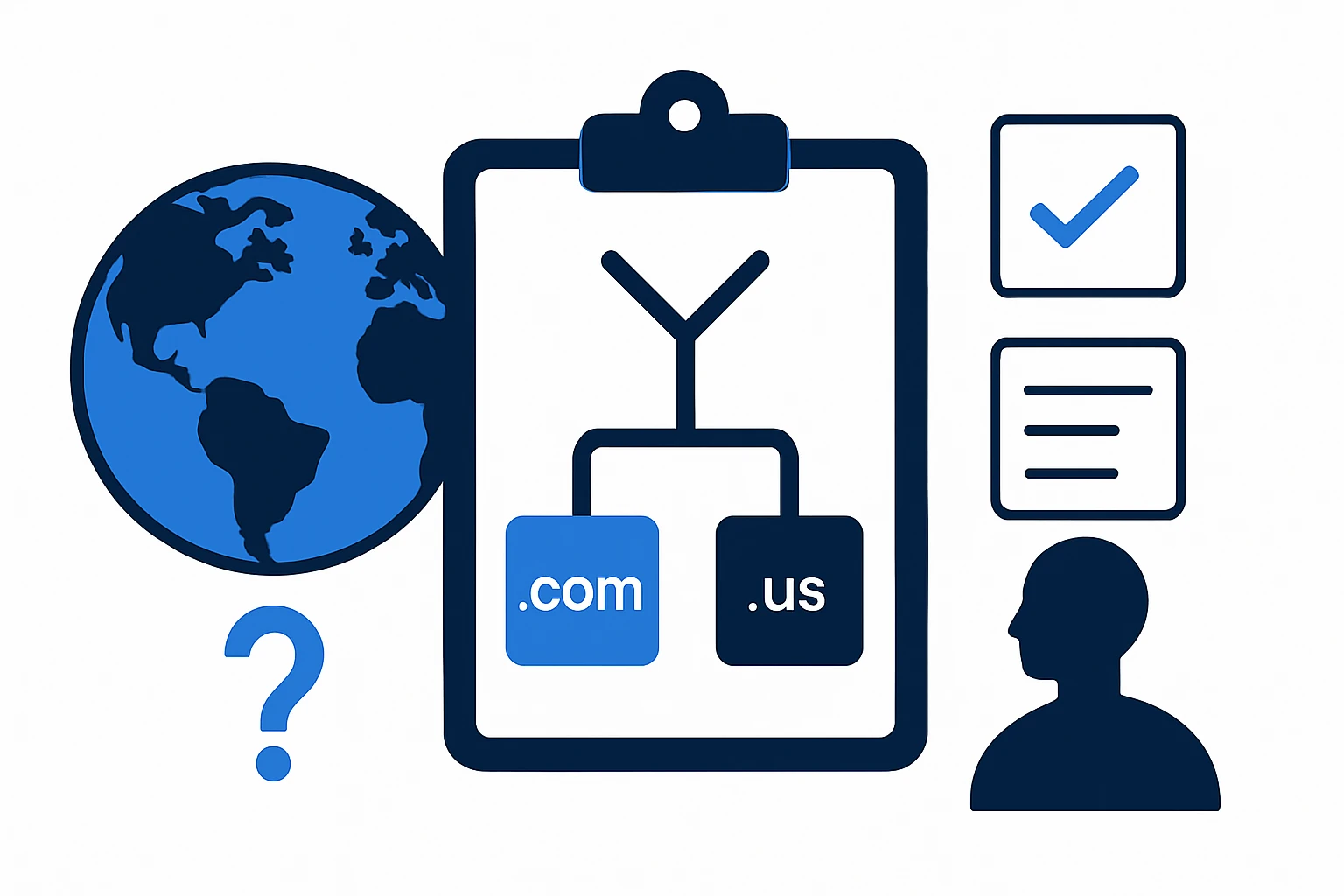
Below is a concise, action-oriented framework you can apply when deciding which extensions to register, renew, or sunset. Treat this as a living toolkit rather than a one-off checklist.
-
1) Define geography and audience.
Identify core markets and how users will search and navigate. If a brand operates primarily in a single country, ccTLDs can enhance local trust and SEO signals in that market. For global customers, a strong core like .com is often a universal anchor, complemented by targeted ccTLDs where local presence is strategic.
-
2) Align with branding and governance needs.
Consider whether extensions support your product lines, campaigns, or corporate governance requirements. Branded gTLDs (e.g., .brand) can reinforce identity but add complexity and cost. The New gTLD program envisions a broader ecosystem, but the governance and renewal implications require careful planning. (newgtldprogram.icann.org)
-
3) Assess SEO and user perception trade-offs.
Domain extensions influence user trust and, in some cases, geotargeting signals. A core strategy typically combines a stable, widely recognized extension with selective additions that align with regional or product-specific messaging. While there is no single shortcut to SEO success, the choice of extension should harmonize with other on-page and technical SEO practices.
-
4) Evaluate costs, risk, and renewal management.
New gTLDs and country-specific extensions can carry different pricing and renewal policies. Consider total cost of ownership, potential regulatory constraints, and the effort required to preserve consistent branding across portfolios. The scale of modern domains makes portfolio management an ongoing discipline, not a once-a-year task.
-
5) Plan DNS, hosting, and security alignment.
DNS consistency, performance, and security are foundational. Ensure that registries, registrars, and DNS providers are aligned across all chosen extensions to avoid fragmentation in DNS configurations and to facilitate secure, fast user experiences. The Root Zone Database clarifies how top-level delegations connect to the broader DNS system. (iana.org)
-
6) Establish a monitoring and renewal cadence.
Track renewal dates, registrar changes, and any policy updates that affect each extension. A disciplined review cycle helps prevent lapses that could damage brand continuity or local presence in key markets.
Strategic considerations by objective
Different business goals call for different extension mixes. Here are three common objective-driven trajectories, with practical considerations for each.
-
Geographic targeting and local resonance.
For regional campaigns or country-specific audiences, ccTLDs can be a strong signal of local commitment and relevance. Complement a primary global domain with strategic ccTLD registrations to capture local intent and search presence. Be mindful of local regulatory and trademark landscapes when expanding into new ccTLDs.
-
Brand protection and product diversification.
Consider registering multiple gTLDs to protect brand names, product lines, or campaigns. Branded extensions can support marketing specificity, while guarded portfolios help prevent brand impersonation or cybersquatting. The 2026 ICANN round signals ongoing opportunities to explore branded gTLDs, though this comes with governance and cost considerations. (newgtldprogram.icann.org)
-
Global reach with core reliability.
Many organizations maintain a stable core domain (often .com or another widely trusted gTLD) and selectively deploy additional extensions to support international expansion or specialized initiatives. This approach balances brand familiarity with local relevance and search signals.
DNS, data, and the role of registries
The domain ecosystem is underpinned by the DNS, a hierarchical system where the root zone delegates authority to TLD registries. Understanding this structure helps teams plan for resilience and governance across a growing portfolio. The Root Zone Database provides the definitive mapping of TLDs to their managers and categories (generic vs. country-code), illustrating how extensions fit into global internet infrastructure. In practice, this means every added extension introduces new technical and contractual considerations. (iana.org)
ICANN’s ongoing New gTLD Program highlights the balancing act between expansion and manageability. The 2026 round information emphasizes that new registrations come with application requirements, evaluation, and long-term commitments - factors that should influence any 3-5 year planning for a domain portfolio. (newgtldprogram.icann.org)
A note on practical data resources and downloadable lists
For teams building tooling or performing due diligence on domain portfolios, structured data matters. Some organizations look for downloadable lists of domains by specific TLDs (for example, .rest, .hk, or .hr) to seed inventories or validate ownership. In practice, data providers and registries offer exportable views of TLDs and domain counts, but it’s important to source these datasets from credible, up-to-date channels and to verify licensing terms. For organizations needing programmatic access and reliable data feeds, WebATLA offers a REST API to retrieve TLD data and domain inventories, which can be integrated into internal dashboards or compliance workflows. WebATLA TLD REST API The broader WebATLA catalog also hosts curated lists by TLD and by country, which can be useful for quick reference and portfolio checks. WebATLA TLD catalog For completeness, WebATLA also maintains a RDAP & WHOIS database to support domain lifecycle investigations. WebATLA RDAP & WHOIS
Limitations, trade-offs, and common mistakes
Even with a structured framework, domain extensions require careful judgment. Here are the most common missteps to avoid and the trade-offs to weigh.
-
Mistake 1: Believing more extensions automatically boost SEO.
While the extension can influence user trust and perceptions, SEO success hinges on a holistic set of signals (content quality, technical optimization, and site structure). A scattergun approach to registering many extensions often leads to higher costs with limited incremental returns.
-
Mistake 2: Underestimating governance and renewal burden.
Each extension adds management overhead (registrar relationships, renewal dates, policy changes). A disciplined governance process is essential to avoid lapses that could destabilize branding or regional campaigns.
-
Mistake 3: Overemphasizing novelty over reliability.
New gTLDs can offer branding opportunities, but they may also carry consumer perception risks or higher maintenance costs. A stable core alongside selectively chosen additions is often a safer path for most organizations.
-
Mistake 4: Ignoring the DNS and hosting alignment.
Misaligned DNS configurations across extensions can create bottlenecks or introduce security risks. A coherent technical strategy is essential when scaling a portfolio across multiple TLDs.
Structured resources and practical tools
To translate the framework into action, consider the following practical steps and resources:
- Map your target markets to ccTLDs and assess brand protection needs using an internal domain extensions list framework.
- Reference an up-to-date tld database to understand which extensions are active, which are country-coded, and which are branded.
- Evaluate gtld vs cctld considerations for geography, governance, and user trust.
- Leverage DNS and domain data assets from legacy to modern extensions and monitor trends in domain statistics worldwide.
- When in doubt, consult a structured plan for expansion using the new gtld list and assess the 2026 ICANN round requirements before applying.
Editorial note: expert takeaway and practical caveats
Expert takeaway: Industry-wide perspectives emphasize that a thoughtfully composed portfolio - anchored by a stable core and augmented by strategically chosen extensions - tosters brand resilience and regional relevance. The DNS architecture and registry governance underpin these decisions, so portfolios should be designed with long-term operational viability in mind. This aligns with ICANN’s ongoing emphasis on balancing expansion with governance and technical feasibility as part of the New gTLD Program and subsequent rounds. (newgtldprogram.icann.org)
Conclusion: a disciplined, future-ready approach to domain extensions
Domain extensions are a key lever in branding, localization, and user experience. A disciplined framework - grounded in a solid understanding of gTLDs, ccTLDs, and new gTLDs, and informed by authoritative data from IANA and Verisign - helps organizations grow with clarity and confidence. As the ICANN 2026 Round unfolds, the landscape offers opportunities to refine portfolios, strengthen local relevance, and safeguard brand integrity across markets. The central message is simple: start with a strategic map, layer in DNS and governance considerations, and then scale with purpose rather than novelty. For teams building or refining their domain strategy today, a data-informed approach and a credible data partner can make all the difference.
Additional resources from WebATLA can help operationalize this approach: WebATLA TLD REST API, WebATLA TLD catalog, and WebATLA RDAP & WHOIS Database.