Introduction: the core problem for global brands
Expanding a brand across borders often triggers a fundamental decision: which domain extension strategy best supports growth, trust, and operational practicality? The choice between generic top-level domains (gTLDs) and country code top-level domains (ccTLDs) shapes branding, search visibility, DNS management, and budget. Rather than chasing every new extension in the wild, smart brands adopt a framework that ties business goals to technical realities, regulatory considerations, and search-engine behavior. This article offers a practical framework for choosing between gTLDs and ccTLDs in 2026, drawing on industry guidance from ICANN, practical DNS basics, and evolving search-engine signals. Source context: ICANN provides the structural backdrop for how new gTLDs come to market, and Google outlines how geo-targeting signals work in practice.
Understanding the domain extension landscape
To make an informed choice, it helps to separate the three broad families of extensions:
gTLDs, ccTLDs, and new gTLDs: what they are and how they differ
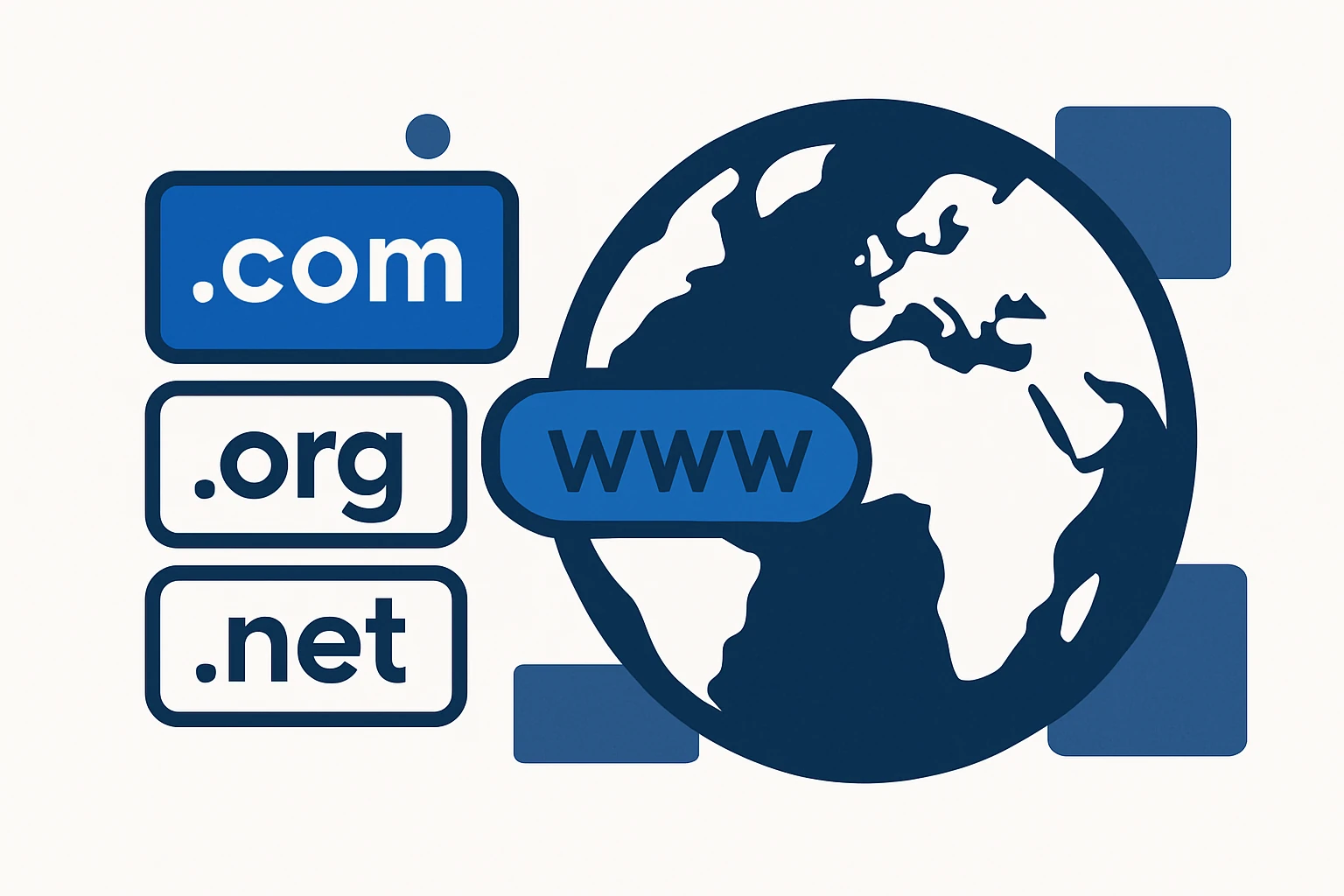
- gTLDs are generic top-level domains such as .com, .org, .net, and newer variants that are not tied to a specific country. They are designed for broad global reach and brand-centric web properties. ICANN’s New gTLD Program expanded the namespace beyond the legacy trio, enabling thousands of new extensions since the program’s inception in 2012. This program continues to influence how brands think about naming in a global context. ICANN: New gTLD Program overview.
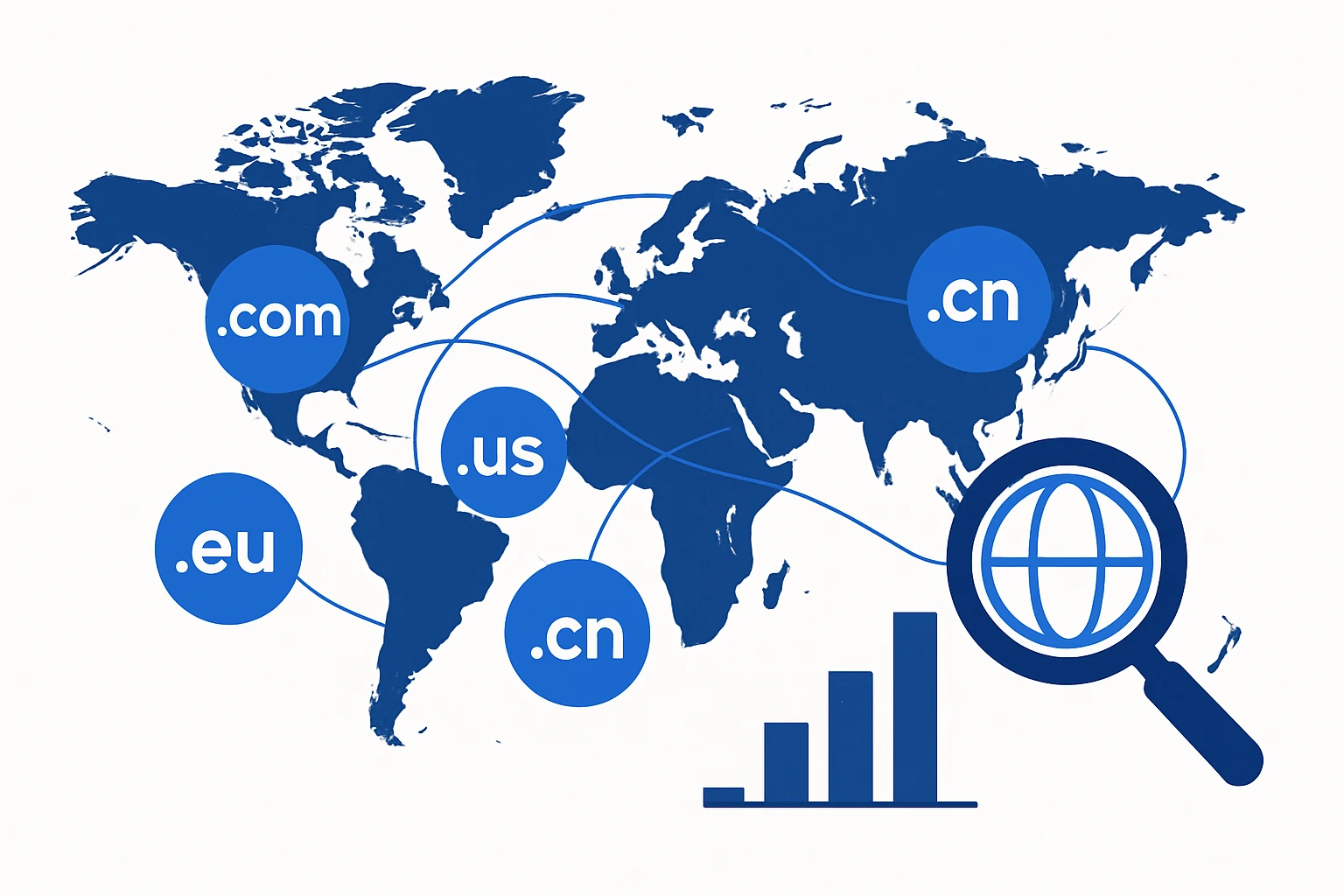
- ccTLDs are country-code domains like .uk, .de, or .jp. They signal country association and are frequently used to target local audiences or satisfy local regulatory expectations. Google’s guidance indicates that ccTLDs can act as strong geo-targeting signals, though modern SEO also relies on hreflang and proper site structure to convey regional targeting. Google: Managing multi-regional sites.
- New gTLDs are a broader family of extensions introduced starting in 2012, covering categories from brands to keywords (for example, .design, .cloud, .shop). ICANN’s ongoing work shows the potential for additional rounds in the future, driven by policy development and market demand. ICANN: History of the New gTLD Program.
Beyond the taxonomy, the Domain Name System (DNS) is the underlying plumbing that makes any extension usable. DNS is a hierarchical, distributed system that translates human-readable names into machine addresses, and its behavior underpins how a brand appears online across different extensions. A clear grasp of DNS basics helps explain why this isn’t just a branding question but a technical one as well. Internet Society: DNS explained.
For brands, the appetite for new extensions should be tempered by realistic expectations. While new gTLDs offer branding and market reach opportunities, they also bring governance, security, and operational considerations that can outweigh potential gains if not managed well. Google’s guidance on geo-targeting and multi-regional sites reinforces the idea that the right extension choice is context-dependent, not a universal fix for SEO. Google: Multi-regional site management.
A practical decision framework: how to decide between gTLDs and ccTLDs
When teams evaluate extensions, a structured framework helps avoid ad hoc choices that complicate later growth. The following framework - built around branding, regional strategy, and operational realities - is designed to be actionable for marketing, product, and IT stakeholders alike.
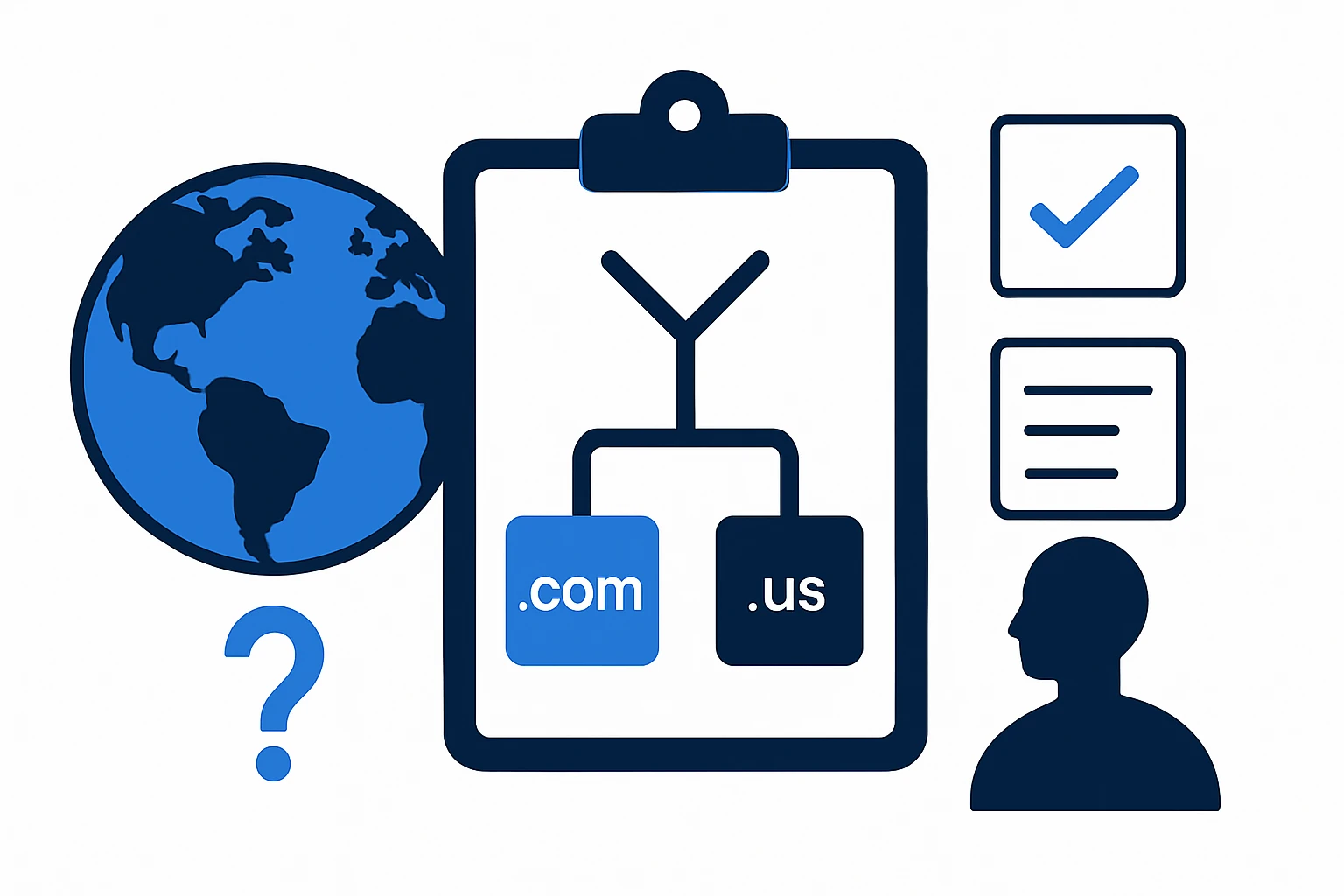
Framework: the BRAND framework for domain extension decisions
- Brand reach and coherence: If your brand operates globally with a unified value proposition, a primary gTLD (e.g., your brand name with a generic extension like .com or a relevant new gTLD) can be cleaner and easier for customers to remember. For some brands, a single, strong gTLD is enough to maintain a consistent global identity.
- Regional targeting and local trust: If your business must appear country-specific or you must comply with local regulations, ccTLDs can be advantageous. However, beware that Google and other search engines increasingly use multiple signals for geo-targeting, so ccTLDs are not a guaranteed SEO shortcut. Use hreflang, location signals, and targeted content to reinforce regional relevance. Google: Multi-regional targeting guidance.
- Audience behavior and brand perception: Some audiences associate ccTLDs with local relevance and trust, while others expect a global reach via a familiar gTLD. Consider user expectations in your key markets and test how extensions perform in real search results and user journeys.
- Navigation, UX, and memorability: Simpler, shorter, and more intuitive domains tend to perform better in recall. If your brand is global and available with a concise generic TLD, that path can reduce cognitive load for users crossing borders.
- DNS management and security: Each additional extension adds to the operational surface you must protect. This includes DNS configuration, certificate management (TLS), and monitoring. The more extensions you run, the greater the maintenance overhead and the potential for misconfigurations. Tip: Start with a primary extension and progressively expand only where clear business value exists.
- Cost and governance: There are direct costs (registration, renewals, SSL/TLS certificates) and indirect costs (renewal calendars, monitoring, legal reviews). A staged approach - prioritizing a core set of extensions and a clearly defined rollout plan - often yields a better ROI than a broad, indiscriminate strategy.
- Regulatory and brand protection considerations: Some markets require or prefer local presence, while others emphasize global brand protection. Consider trademark and brand-protection strategies alongside domain registrations to manage risk across portfolios.
The BRAND framework is not a one-size-fits-all check list. It’s a living decision model that evolves with market opportunities, regulatory environments, and the technical realities of DNS. As ICANN continues to shape the landscape for future rounds of new gTLDs, brands should stay aware of policy developments and the potential for additional extensions to surface in the market. ICANN: History of the New gTLD Program.
Practical considerations: what to weigh in the real world
Beyond the framework, several practical considerations consistently influence outcomes for global brands. These are not abstractions, they map to on-the-ground realities in product teams, legal, and digital marketing operations.
Geographic targeting and search visibility
Geo-targeting is nuanced. While ccTLDs have historically signaled country specificity, Google and other engines now rely on multiple signals, including IP targeting, Search Console settings, language signals, and hreflang annotations, to determine which users see which content. In practice, many sites rely on a hybrid approach that uses a global gTLD for branding and a targeted set of ccTLDs or regional pages with explicit localization signals. This approach aligns with Google’s guidance on geotargeting and the management of multi-regional sites. Google: Multi-regional targeting.
Framing a geo-targeting strategy around offerings, language needs, and country-specific regulations is often more efficient than chasing a universal SEO boost from a single extension. The key is to design pages for regional intent (local content, local keywords, local landing pages) while preserving a clean global brand signal across extensions.
Brand protection, risk, and governance
Expanding into multiple TLDs can expose a brand to cybersquatting, impersonation, or confusion if not managed with a solid governance model. A pragmatic approach is to establish a centralized policy for when and why to register additional domains, with clear ownership and renewal processes. ICANN’s ongoing oversight of the registry ecosystem underscores the complexity of operating across a portfolio of TLDs and the need for disciplined governance. ICANN: New gTLD Program overview.
Operational realities: DNS, SSL, and monitoring
Each TLD you manage adds to DNS configuration tasks, TLS certificate provisioning, and monitoring requirements. A sound strategy limits operational overhead by consolidating DNS management where possible and establishing scalable workflows for new registrations, renewals, and security best practices. DNS is the backbone that keeps your sites reachable across different extensions, and misconfigurations can degrade user experience even if branding and content are impeccable. Internet Society: DNS explained.
Limitations, trade-offs, and common mistakes
No framework is perfect, and domain extension decisions come with trade-offs. Below are the most common mistakes teams make when navigating gTLD vs ccTLD choices, and how to avoid them.
Common mistakes to avoid
- Overestimating the SEO impact of many extensions: More domains don’t automatically translate into better rankings. SEO outcomes depend on a suite of signals, including content quality, technical SEO health, and regional targeting signals. Google’s multi-regional guidance illustrates that geo signals come from a combination of factors, not a single extension alone. Google: Multi-regional targeting.
- Underestimating governance and maintenance cost: Each extension adds operational complexity - DNS configuration, certificate management, and monitoring. A phased approach with clear governance avoids mounting, unmanageable complexity.
- Treating ccTLDs as a universal geo signal: While ccTLDs signal country association, modern search engines also rely on content signals and hreflang annotations. A misalignment between signals can lead to suboptimal visibility in target regions. See ICANN and Google guidance on geo-targeting. ICANN: History of new gTLDs and Google: Multi-regional targeting.
Expert insight: as Google’s John Mueller has indicated in diverse contexts, domain strategy should be driven by intent and localization needs rather than assuming a generic TLD yields global SEO advantages. A balanced approach - combining a trusted global gTLD with carefully chosen regional signals - tends to perform more consistently across markets. John Mueller on domain selection.
Case example: designing a global TLD portfolio for a hypothetical brand
Consider a global consumer brand, BrandA, seeking to maximize international reach while maintaining a clean brand image. BrandA launches with a strong global gTLD (for instance, brandname.com) as the primary site for all markets and adds targeted regional pages (brandname.xx) to support key markets that require local language content or regulatory clarity. In parallel, BrandA registers a small number of ccTLDs for markets with regulatory or consumer-trust requirements, while avoiding a sprawling portfolio that would overburden operations.
In practice, BrandA would map markets to signals rather than reflexively creating extensions everywhere. For example, markets with strong brand affinity and tight local competition may benefit from a country-specific extension, while other markets benefit from a globally recognizable gTLD and precise localization on subdirectories (e.g., /es/ for Spanish-speaking regions) or subdomains (es.brandname.com). This approach aligns with the evolving view of geo-targeting signals described in recent industry guidance and keeps the brand coherent for global audiences.
Practical resources for teams exploring niche TLDs
For teams that want to explore niche or category-specific TLDs - such as design-focused or solutions-oriented extensions - there are curated resources and research paths that complement internal decision frameworks. Notably, for brands interested in niche extensions like .design, the dedicated design-domain resources from Partners in TLD research help teams understand availability, branding implications, and potential co-branding opportunities. See the dedicated design TLD page for a focused look at how such extensions can fit a design-first branding strategy. download list of .design domains.
Beyond individual extensions, many teams rely on centralized indexes to survey the broader tld landscape. For a consolidated view of domain extensions by TLDs (the broader catalog that feeds planning and risk assessment), teams can consult the general TLD index. download list of domain extensions by TLDs.
If your work intersects with country-specific market analysis, consider country-focused lists as part of your risk assessment and localization planning. The country-by-country perspective often reveals regulatory or consumer behavior patterns that influence how you allocate registrations. country-specific TLDs.
Conclusion: a disciplined, future-ready approach to domain strategy
In a landscape where DNS remains the foundation of global connectivity and search engines continually refine geo-targeting signals, the most durable domain strategies balance branding clarity with regional relevance and operational discipline. A purposeful, staged approach - rooted in the BRAND framework, informed by ICANN policy context, and aligned with practical DNS management - tends to deliver the most reliable outcomes for multinational brands. The goal is not to chase every new extension but to build a coherent, scalable portfolio that supports brand integrity, customer experience, and efficient governance.
For teams exploring niche TLDs, dedicated resources and curated lists - like the design-focused extension and the broader TLD index - can accelerate planning and risk assessment while keeping the editorial quality and user experience top of mind. download list of .design domains and download list of domain extensions by TLDs. If country- or language-specific targeting is part of your plan, the country context pages can provide additional clarity during decision-making. country-specific TLDs.