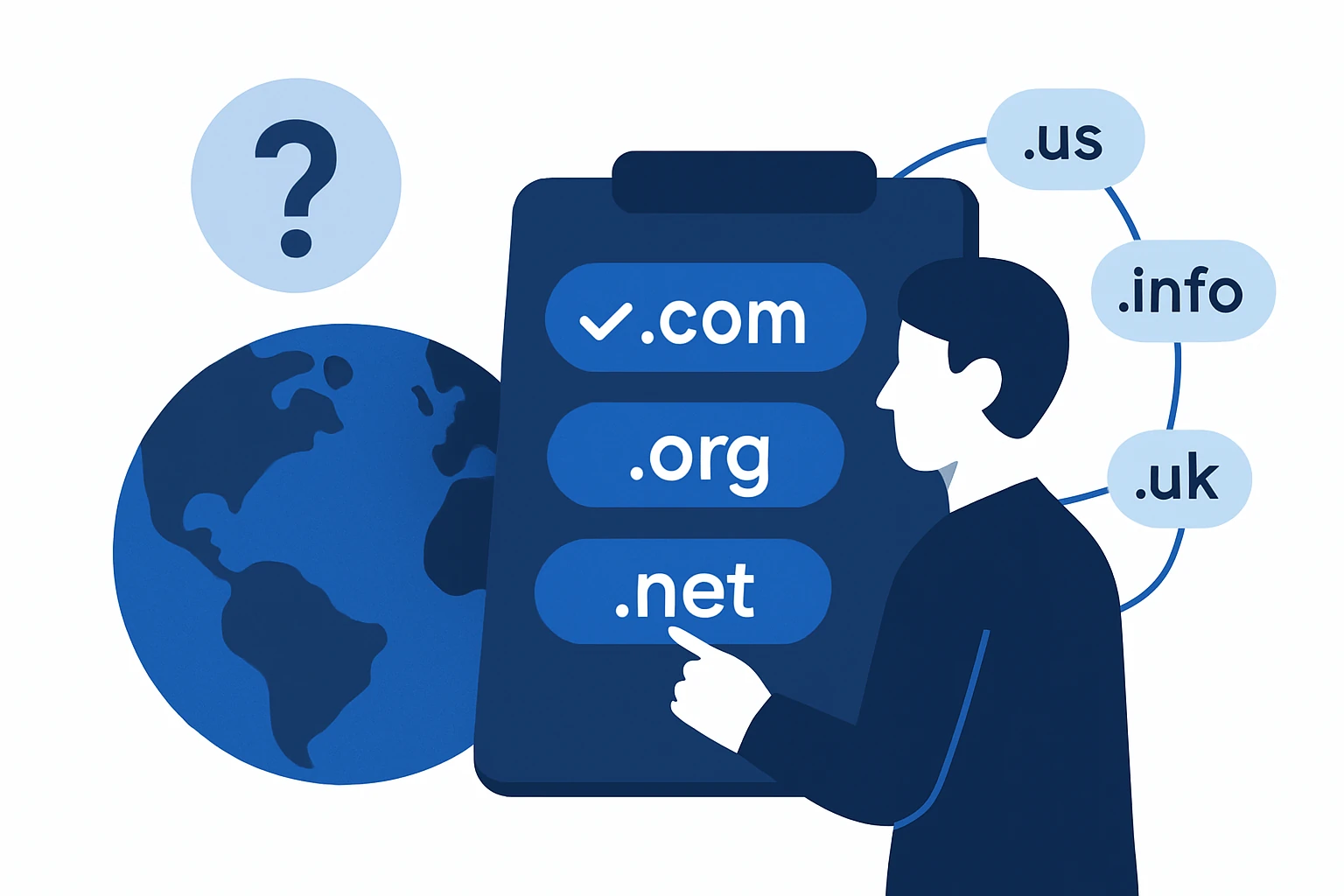
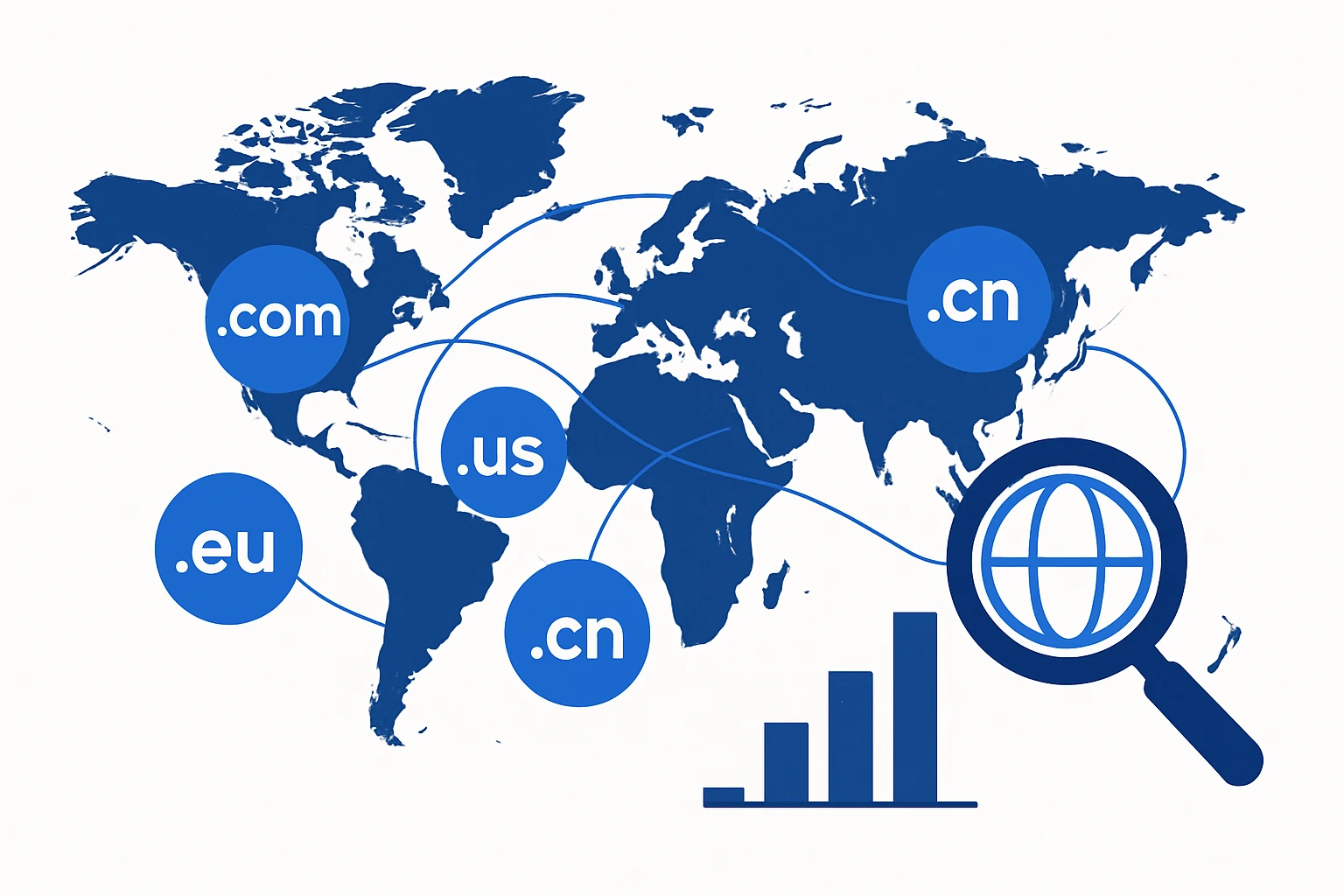
Global brands today face a core strategic question long before they launch a new website: which domain extensions should you pursue to reach audiences around the world? The answer isn’t simply a default to .com. The domain ecosystem now spans generic top-level domains (gTLDs), country-code top-level domains (ccTLDs), and a growing catalog of new gTLDs that offer branding opportunities beyond the classics. A thoughtful mapping of domain extensions - balanced against brand goals, markets, and technical realities - can improve local relevance, protect brand assets, and optimize how users reach you online.
To ground this guidance, consider the latest authoritative data on the domain space. As of the fourth quarter of 2025, global domain registrations reached 386.9 million, with ccTLDs accounting for roughly 145.6 million of those, and new gTLDs contributing a meaningful share as registries continue to expand the namespace. This growth reflects a market that recognizes both global reach and local presence as complementary strategies. Verisign’s Domain Name Industry Brief (Q4 2025) documents these shifts and the ongoing diversification away from a single-dominant name system. DNIB overview. For a stable, globally coordinated view of which TLDs exist and how they’re delegated, the IANA Root Zone Database remains the canonical reference for all TLDs, including new gTLDs and ccTLDs.
Understanding the TLD landscape: gTLDs, ccTLDs, and new gTLDs
At a high level, TLDs fall into a few broad categories, each with distinct strategic implications:
- gTLDs - Generic top-level domains such as .com, .org, .info. They’re typically used for global audiences or broad organizational purposes and are often the default choice for multinational brands seeking scale.
- ccTLDs - Country-code domains like .uk, .de, .jp. They map to specific geographies and can signal local presence, regulatory relevance, or country-specific campaigns.
- New gTLDs - A wide array of branding-oriented extensions such as .space, .shop, .app, and many industry- or brand-specific variants. ICANN’s program statistics show ongoing expansion as registries introduce new options to capitalize on niche angles and sector-specific identities.
What do these categories mean in practice? A global brand might use a broad .com alongside a country-focused ccTLD portfolio to support regional marketing and compliance. A regional player could emphasize a ccTLD to reinforce local legitimacy, while a tech company could adopt a few well-chosen new gTLDs to separate product lines (for example, .app for software products) without diluting the main brand. The practical decision rests on audience distribution, regulatory landscapes, and the technical readiness to manage multiple registries and DNS configurations.
Decision framework: when to use gTLDs vs ccTLDs vs new gTLDs
To move from theory to action, you need a lightweight but robust framework that translates business goals into a concrete domain strategy. The following framework is designed to be used in cross-functional teams - marketing, legal, IT, and operations - and to adapt as markets evolve.
- Market reach and geography: Use ccTLDs when your primary objective is local legitimacy and search visibility within a country or region. Consider gTLDs when you want global recognition, or when a country’s digital market favors universal reach over local branding.
- Brand architecture and product scope: New gTLDs can create clean product or service silos (for example, a retailer using .shop or a SaaS company using .cloud) while keeping the main brand on a core TLD like .com. Align the extension with your product taxonomy and messaging.
- Regulatory and legal considerations: Some jurisdictions prefer or require local presence, making ccTLDs attractive. Ensure you understand country-specific registration rules and trademark implications as part of a risk assessment.
- DNS readiness and operational alignment: Managing multiple registries increases complexity. Ensure you have a centralized approach to DNS hosting, security (DNSSEC where appropriate), WHOIS/RDAP coverage, and renewal governance to avoid service disruption.
- Cost and renewal strategy: While some gTLDs are inexpensive upfront, renewal and protection across dozens of extensions can add up. Build a cost model that weighs current needs against long-term brand protection and SEO objectives.
These considerations map closely to observable industry trends. Data from ICANN’s New gTLD program status pages shows ongoing activity and rounds that affect market dynamics, while Verisign’s quarterly data highlights the broad, ongoing growth of the total domain base and the particular contributions of ccTLDs and new gTLDs to overall momentum. ICANN New gTLDs statistics and Verisign DNIB Q4 2025.
Practical mapping: a lightweight framework you can use today
Below is a compact, repeatable workflow you can apply to any brand portfolio. It’s designed to be simple enough to run in a planning meeting, yet rigorous enough to support governance and budget decisions.
- Audit the current domain footprint - List existing TLDs, owned brands, and any pre-owned or protected domains. Identify gaps that prevent global reach or local credibility.
- Define regional objectives - For each market, determine whether a local ccTLD or a strong global gTLD better supports your goals (revenue, localization, or regulatory compliance).
- Evaluate branding opportunities - Review new gTLDs for niche alignment with products or services. Consider whether a country-specific or industry-specific extension enhances brand clarity or creates confusion.
- Assess DNS and risk - Map DNS providers, security, and privacy controls across extensions. Prepare a plan for DNSSEC, RDAP/Whois data accuracy, and renewal governance to minimize risk.
- Decide on a staged rollout - Prioritize a core set of extensions for immediate protection and marketing impact, then phase additional extensions as market needs evolve and budgets permit.
For teams already relying on the Webatla directory to explore domain-by-TLD inventories and pricing, these resources can complement the workflow: List of domains by TLDs and RDAP & WHOIS Database. These internal references help ensure your decisions are anchored in current registrations and registry policies.
DNS, data, and the scope of the domain namespace
The Domain Name System is the backbone that translates human-friendly names into IP addresses. While the vast majority of user interactions happen at the application layer, the DNS underneath is a distributed, fault-tolerant system with a limited set of root-level authorities. Understanding this architecture matters when you’re planning a global TLD strategy, because DNS performance and reliability influence user experience and SEO signals in subtle ways. For a concise overview of how DNS maps names to addresses, see the Domain Name System basics on major reference sources, including the IANA-rooted structure and the broader DNS ecosystem. IANA Root Zone Database documents current delegations and the official root zone, while industry overviews describe how domains tie to services through DNS records and resolvers.
What the latest data tells us about growth and mix
Recent official reporting confirms a shift in the mix of extensions as the namespace expands. Verisign’s Domain Name Industry Brief (Q4 2025) shows a total of 386.9 million domain registrations across all TLDs, with ccTLDs contributing 145.6 million. The quarterly data also highlights continued growth across the broader ecosystem and ongoing structural differences in renewals and registrations among gTLDs, ccTLDs, and new gTLDs. This information is echoed by ICANN’s ongoing program statistics and by market analyses that track the expansion of new gTLDs and their adoption across industries. Verisign DNIB (Q4 2025). For a global view from a policy and governance lens, see ICANN Annual Report 2025, which documents the broader context of domain name system stewardship and new gTLD activity.
Limitations, trade-offs, and common mistakes
Any domain strategy that aims to balance global reach with local relevance must confront real constraints. Some common missteps include over-extending the portfolio without a clear renewal plan, or assuming a ccTLD will automatically boost local SEO without ensuring regionally appropriate content and hosting. Another frequent pitfall is underinvesting in DNS security and data accuracy across registries, which can lead to degraded user trust or compliance challenges. It’s essential to pair the strategic mapping with operational controls - DNS hosting choices, privacy protections, and a disciplined renewal calendar - to avoid brittle deployments that undermine brand integrity.
Limitations to acknowledge include:
- Not all ccTLDs carry equal SEO weight, outcomes depend on local search ecosystems and content relevance.
- New gTLDs can carry branding advantages but may require more user education and marketing to achieve recognition.
- Management complexity rises with each additional extension, governance, data privacy, and renewal risk increase correspondingly.
Conclusion: a strategic, data-informed approach to TLD selection
Choosing domain extensions is a strategic decision that blends branding, geography, and technical stewardship. By grounding choices in authoritative data sources and pairing them with a practical workflow, teams can design a TLD portfolio that grows with markets while protecting brand equity. The namespace will continue to evolve as new gTLDs emerge and as registries optimize for security, privacy, and performance. A thoughtful mapping - supported by reliable data and a clear governance process - helps ensure your online presence stays robust, credible, and scalable in 2026 and beyond.