Introduction
The Domain Name System (DNS) ecosystem is no longer dominated by a single family of extensions. A modern global strategy requires understanding how generic top-level domains (gTLDs), country-code top-level domains (ccTLDs), and new gTLDs interact with audience expectations, legal considerations, and technical realities. The latest data shows a broad and growing namespace: ICANN/IANA maintain the authoritative catalog of TLDs, while Verisign’s quarterly domain-name industry brief tracks how registrations evolve across all TLDs and regional markets. As of mid-2025, total global domain registrations neared 372 million, with ccTLDs contributing a meaningful and growing share to the overall base. This landscape creates both opportunities and traps for global brands and digital teams who must decide where to invest, how to measure impact, and when to diversify beyond the venerable ".com". IANA’s Root Zone Database remains the most authoritative source for the official list of TLDs, while Verisign’s Domain Name Industry Brief (DNIB) provides quarterly context on registrations by TLD. An evolving policy landscape - most notably ICANN’s New gTLD Program - also shapes how organizations think about future extensions and brand strategy. ICANN’s program site offers the roadmap for potential future rounds and the rule set that governs new entrants to the namespace.
Understanding the TLD Landscape: GTLDs, ccTLDs, and New gTLDs
GTLDs vs ccTLDs: What they signal to users and markets
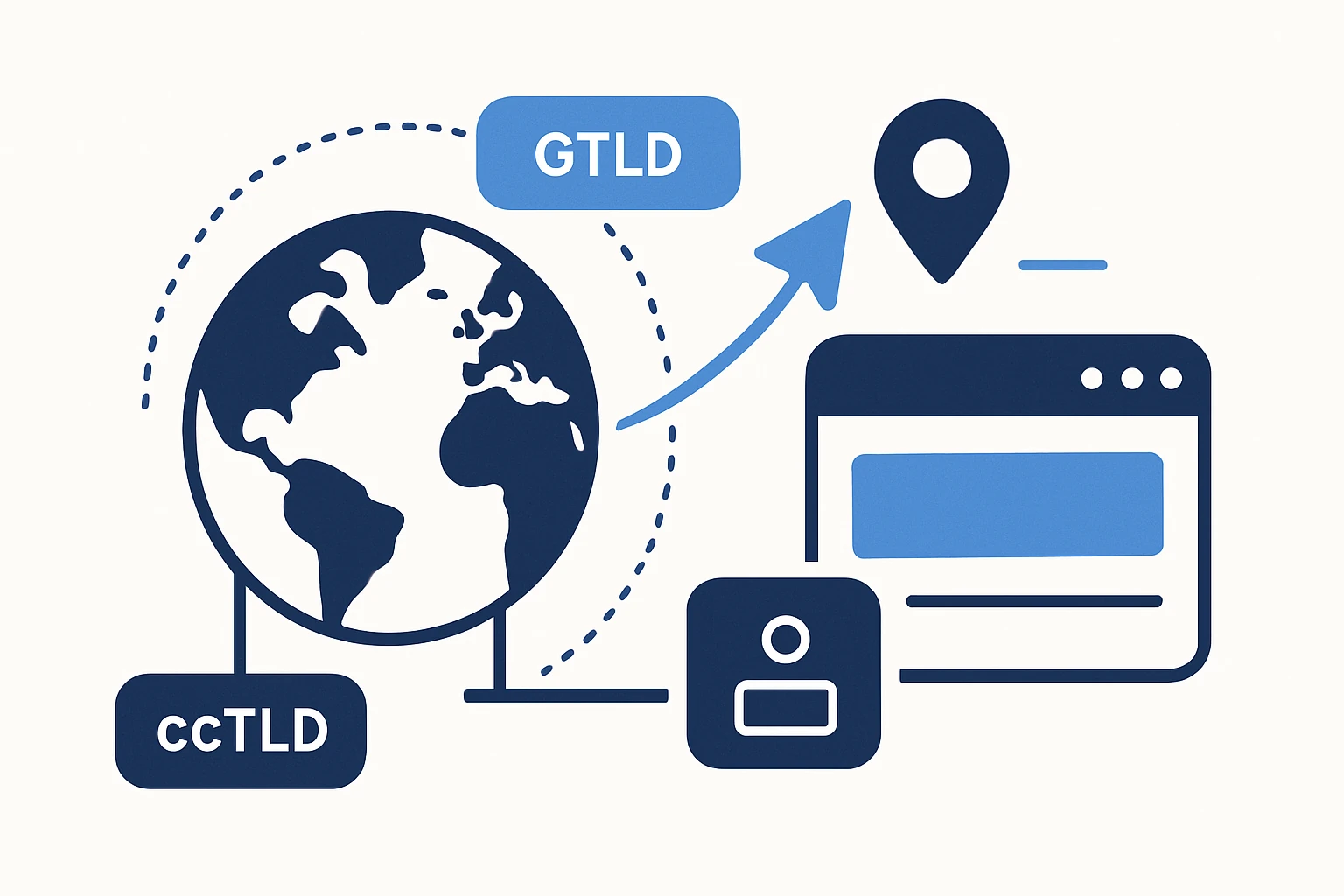
Generic top-level domains (gTLDs) are designed to be globally meaningful and are not tied to a specific country. They are often chosen for brand alignment, relevance to a product category, or to improve memorability in a global audience. In contrast, country-code top-level domains (ccTLDs) are country- or territory-specific and can signal local intent, language, or compliance with regional regulatory expectations. For many global brands, a hybrid approach - maintaining a strong core with a few strategic ccTLDs - supports localized campaigns, regional SEO, and customer trust in regulated markets. The IANA Root Zone Database documents all delegated TLDs and classifies each entry (generic vs. country-code), providing a definitive map of the namespace. IANA Root Zone Database is the go-to reference for the current TLD roster and their types.
Beyond the two primary families, new gTLDs emerged from ICANN’s expansion program beginning in the early 2010s, introducing thousands of brand and thematic extensions (for example, .nyc, .berlin, .tokyo, or brand-backed domains like .google and .microsoft). ICANN’s New gTLD Program aims to increase competition, choice, and global branding opportunities, with the next round anticipated as part of ongoing policy work. ICANN’s official materials emphasize the opportunity side of expansion while outlining governance and application considerations. The New gTLD Program provides an authoritative overview of this evolving space.
New gTLDs: Why they matter for modern marketing and product naming
New gTLDs broaden the naming canvas beyond traditional extensions, enabling more expressive brand domains and sector-specific identities. They influence not only branding and discovery but also potential trust signals in certain markets where a local TLD carries perceived legitimacy or cultural resonance. However, new gTLDs also introduce complexity: they may require additional education for consumers, policy considerations for multinational campaigns, and careful risk assessment around brand protection and cybersquatting. In short, new gTLDs are powerful levers for global naming strategies when deployed with discipline and data-driven planning. ICANN’s updates and FAQs remain essential for teams evaluating whether to participate in a future round.
A Data-Driven Approach to TLD Strategy
Executing a globally effective TLD strategy hinges on reliable data and a clear framework. The DNS data landscape is large but not perfectly uniform across regions or registries. For decision-makers, the objective is to balance reach, trust, and risk, while aligning with technical realities of DNS resolution, branding, and regulatory compliance. IANA’s public root zone data provides authoritative mapping of TLDs, and DNIB’s quarterly snapshots offer a sense of market momentum by TLD family. For instance, DNIB Q2 2025 reported deepening registrations across the global namespace, with notable contributions from ccTLDs in many regions and sustained strength in foundational gTLDs like .com/.net. These data points inform not just “how many” but “where” to focus localization and protection efforts. Verisign Domain Name Industry Brief and IANA Root Zone Database are the two anchors many teams rely on for baseline measurements.
Expert insight: ICANN’s own publications emphasize that diversification - within a well-defined framework - can strengthen brand resilience and consumer reach across borders. That perspective underpins a deliberate, data-backed evaluation of which TLDs to own, protect, and invest in over time. New gTLD program context provides the governance backdrop for future rounds and the broader market implications of expansion.
In practice, the data story is not just about totals. It’s about distribution - where registrations cluster by region, which gTLDs drive category-brand alignment, and how DNS-related factors (like resolution reliability and privacy protections) map to user trust. This is why a framework that integrates audience analytics, regulatory considerations, and DNS realities yields better, faster decisions than a purely historical look at registration counts.
A Practical Framework for TLD Selection
The 4-Step TLD Selection Framework
- Step 1 - Define intent and audience. Establish whether your priority is global reach, local market penetration, or brand storytelling. For global campaigns, a core gTLD strategy (e.g., .com/.net) paired with select ccTLDs can improve local resonance and search presence. See how ccTLDs map to regional markets and consumer expectations in authoritative registries.
- Step 2 - Assess brand protection and risk. Inventory potential threats, cybersquatting risk, and country-by-country regulatory considerations. A blend of brand TLDs, defensive registrations, and reputable DNS data helps mitigate risk while preserving flexibility for regional campaigns.
- Step 3 - Evaluate technical and DNS implications. Ensure that DNS performance, certificate management, and DNSSEC considerations align with your deployment plan. The DNS layer should support fast, secure access across geographies, this is where data-driven insights into TLD popularity and resolution reliability matter. IANA Root Zone Database remains the baseline reference for TLD types and registries.
- Step 4 - Build a measurement and refresh cadence. Deploy a monitoring plan that tracks registrations, brand mentions, and user behavior across the chosen TLDs. Periodic reviews against the latest DNIB snapshots help ensure your strategy stays aligned with market evolution. For ongoing context, ICANN’s New gTLD program pages outline how future rounds could influence your plan.
Structured frameworks like this help teams avoid common missteps and maintain a disciplined approach as the namespace continues to evolve. A practical takeaway: you don’t need to own every extension to gain competitive advantage, you need the right mix, grounded in audience data and DNS realities.
Accessing TLD Data and Lists: Where to Look
For teams doing competitive analysis, market sizing, or domain strategy planning, three data streams are particularly valuable: (1) authoritative TLD catalogs, (2) zone data and CZDS access for DNS-level information, and (3) periodic industry briefs that summarize global and regional trends. The authoritative catalog for TLDs is maintained by IANA, including the official classification of TLD types (gTLD vs ccTLD). IANA Root Zone Database serves as the canonical list.
Zone data, accessed through CZDS and related channels, provides granular visibility into DNS zone files for many TLDs, enabling researchers to study zone file structures, registration density, and autoconfig patterns. The Centralized Zone Data Service (CZDS) is a key mechanism many researchers use to access zone data responsibly, however, access policies and data availability vary by registry. While this data is powerful for policy and security research, it is not a substitute for brand strategy planning. For ongoing market context, the Domain Name Industry Brief from Verisign offers quarterly aggregates and regional splits that help teams understand market momentum. Verisign DNIB Q2 2025 provides the most recent quarterly snapshot at the time of this writing.
For brand- or product-specific TLDs, consider consulting dedicated registry pages and provider catalogs. For example, you can review a representative TLD directory to understand how extensions are grouped by domain type and geography. WebATLA’s TLD directory consolidates domain lists by TLD and can serve as a practical reference during exploratory research. In addition, specialized data services and RDAP/WHOIS databases can complement DNS-centered analyses: RDAP & WHOIS database entries help you verify ownership and registration details for target names. Finally, as a concrete example of a non-traditional TLD, the cYOU extension page illustrates how a branded, category-specific TLD might fit into a global strategy. the .cyou extension page provides context for this particular class of extensions.
Limitations, Trade-offs, and Common Mistakes
Limitations and trade-offs you should acknowledge
- Data quality and availability vary by registry, zone file access and CZDS data are powerful but not universal across all TLDs, which can limit cross-TLD benchmarking.
- Brand risk vs. local relevance is a moving target, a global brand may need to balance universal naming with locally resonant ccTLDs, and this balance may shift with market or regulatory changes.
- New gTLDs bring opportunity but also consumer education challenges, adoption curves differ by market and vertical, affecting search visibility and trust signals in different regions.
- Cost and management overhead scale with the number of owned TLDs, including certificate management, renewals, and compliance across jurisdictions.
Common mistakes to avoid
- Relying solely on historical DNIB totals without considering regional performance, search behavior, or local regulatory requirements.
- Underestimating the time and governance needed to steward brand protection across multiple TLDs, which can lead to cybersquatting exposure or inconsistent user experiences.
- Neglecting DNS operational readiness (DNSSEC, certificate management, sharding for performance) when adopting new or additional extensions.
Practical Takeaways for a 2026 TLD Plan
With a namespace that continues to evolve, the most resilient TLD strategy blends core, globally trusted extensions with a carefully chosen set of local or branded domains. The 2026 landscape is shaping up to be a phase of consolidation and targeted experimentation: a strong foundation in a core gTLD (like .com/.net), selective ccTLDs to unlock regional opportunities, and a measured exploration of new gTLDs where branding and product naming can benefit from geographic or sector-specific signals. ICANN’s current and forthcoming rounds will influence strategic timelines and risk management - teams should monitor official channels for round openings, application guidelines, and changes to eligibility or fees. New gTLD program updates are the best source for those signals.
For organizations seeking practical, delve-in data and directory references without losing sight of strategy, consider using a combination of authoritative data sources (IANA, Verisign DNIB) and editorially curated registries to support decision-making. Finally, remember that the right TLD strategy is as much about governance, brand protection, and user trust as it is about keyword strategy or search rankings. A well-designed TLD portfolio can improve discoverability, protect brand equity, and enable nuanced regional campaigns when combined with solid DNS practices and ongoing measurement.
Conclusion
As the domain ecosystem continues to expand, the best practice is not to chase every new extension but to design a deliberate, data-informed plan that harmonizes audience intent, brand resilience, and technical readiness. By anchoring decisions to authoritative data sources - such as IANA’s Root Zone Database for official TLD mappings and Verisign’s DNIB for market context - teams can chart a policy-grounded path through 2026 and beyond. ICANN’s New gTLD Program remains a critical backdrop, signaling the potential for future rounds and the ongoing evolution of how businesses name themselves on the global Internet. For hands-on research, you can browse WebATLA’s TLD directory for a practical look at domain lists by extension, explore RDAP & WHOIS data for registration context, and study branded extensions like .cyou to understand branding opportunities in real-world deployments.
Data-driven domain strategy is an ongoing discipline. It requires disciplined governance, careful risk assessment, and a willingness to adapt as the namespace grows. With the right framework and reliable sources, organizations can optimize their global presence and ensure their digital assets remain discoverable, trustworthy, and legally sound across markets.