Introduction: Why the world of domain extensions matters for global brands
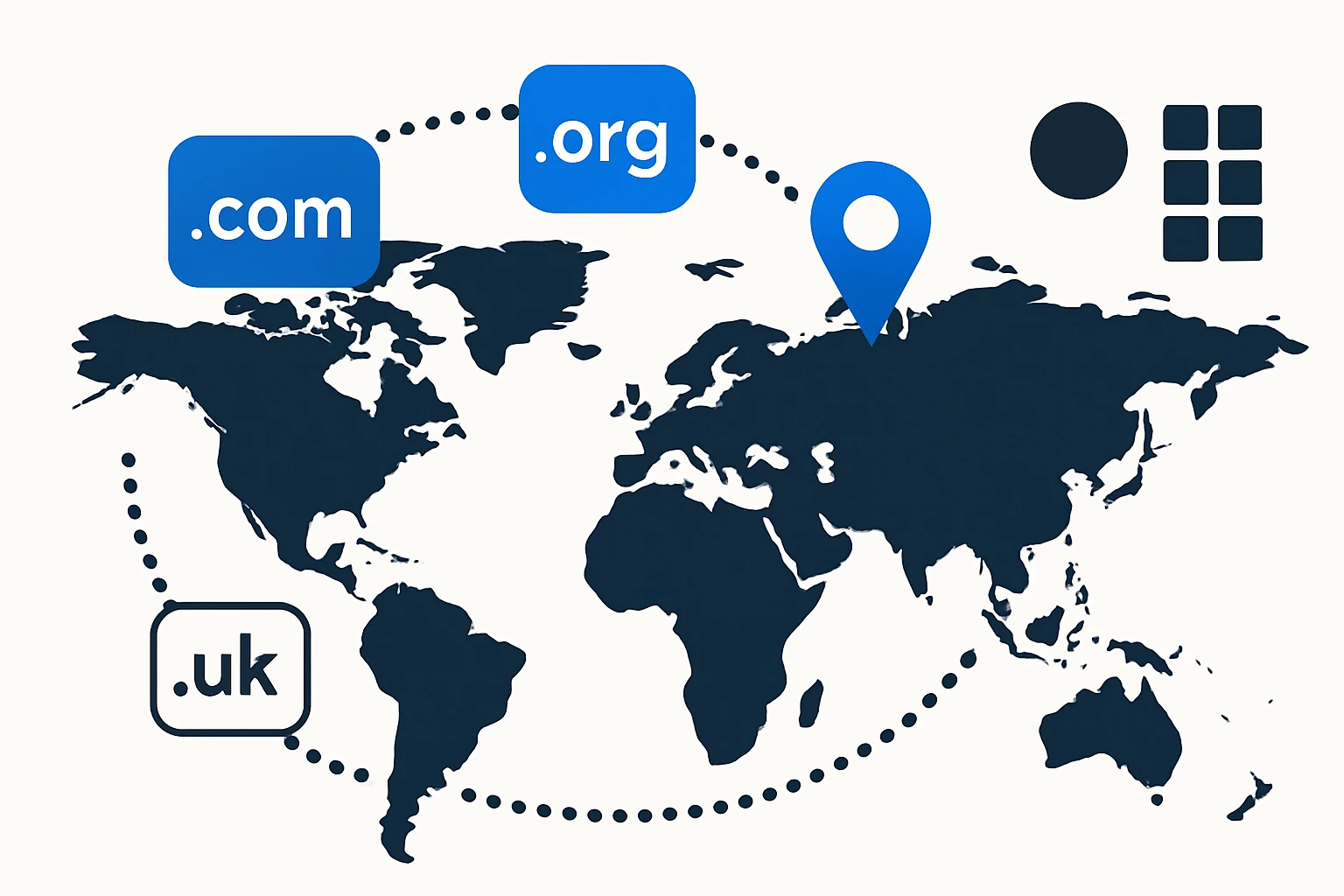
In the digital economy, a URL is often the first point of contact between a customer and a brand. Choosing the right domain extension is not a cosmetic choice, it shapes credibility, localization, and market reach. The domain namespace has expanded far beyond the familiar .com and .org. As of 2025, the DNS root hosts over a thousand TLDs, with incremental additions from new gTLDs and a growing set of country-code domains. For decision-makers, this creates both opportunity and complexity: you need a data-driven way to compare options, weigh trade-offs, and align the domain strategy with business goals. Root Zone Database remains the official source that tracks these delegations, while industry reporting provides context on market size and growth.
According to global DNS data, total domain name registrations across all TLDs reached hundreds of millions in recent quarters, underscoring why a strategic approach to domain extensions matters for branding, security, and local relevance. Verisign’s Domain Name Industry Brief (DNIB) shows continued growth across the namespace, even as individual TLDs vary in popularity.
To practitioners, the question becomes practical: how do you evaluate gTLDs, ccTLDs, and brand TLDs in a way that scales across markets, languages, and regulatory environments? The answer lies in a disciplined data-driven approach, cross-referencing root-zone data, market signals, and realistic cost/benefit analysis. This article provides a framework and actionable steps to navigate this space, with concrete examples you can adapt to your own market priorities.
Understanding the domain extension family: gTLDs, ccTLDs, new gTLDs, and brand TLDs
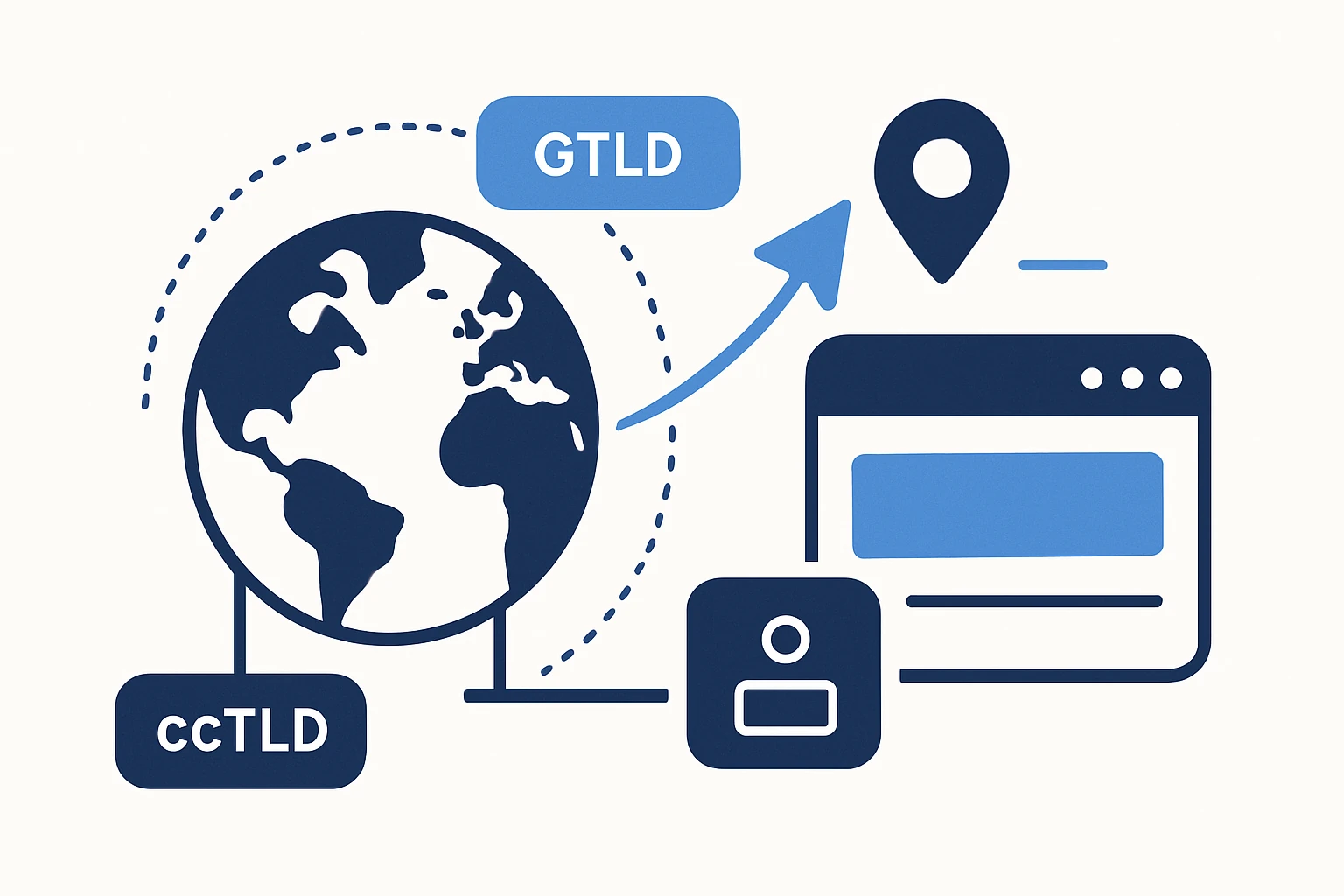
Top-level domains (TLDs) sit at the top of the DNS hierarchy. The official database that tracks delegated TLDs is maintained by IANA, and the root zone is the authoritative record for which extensions exist and where they point. The core taxonomy includes:
- gTLDs - generic top-level domains such as .com, .net, .org, and newer strings added through ICANN’s New gTLD Program that broaden branding and category options.
- ccTLDs - country-code top-level domains like .us, .de, .fr, and others that map to specific nations or territories and often serve local audiences with language and regulatory alignment.
- New gTLDs - deployments beyond the traditional set, including crowd-sourced strings and language-specific extensions, introduced through policy frameworks to increase choice and competition.
- Brand TLDs - registry-operated extensions like .google, .apple, or other brand-owned namespaces intended for corporate identity, marketing campaigns, and controlled use cases.
For readers seeking authoritative definitions and current counts, see the IANA Root Zone Database, which catalogs each delegated TLD and its registry operator. The broader trend of gTLD expansion and branding opportunities is discussed in ICANN’s New gTLD Program materials and accompanying governance pages. ICANN New gTLDs outlines the program’s objective to expand the DNS namespace to support competition, innovation, and consumer choice.
Data foundations: root-zone data, DNS insights, and registration trends
Two core data streams underpin any rigorous domain-extension strategy. First, root-zone data from IANA - the definitive record of all delegated TLDs and their registries. This data shapes what extensions exist, how many there are, and how they are managed globally. Second, market data from the DNIB (Domain Name Industry Brief) published by Verisign provides a quarterly snapshot of total registrations and the relative scale of the largest TLDs. Root Zone Database is the official source for delegation details, while the DNIB frames the broader market size.
Historical context helps, as of early 2020s, the Internet Assigned Numbers Authority and ICANN noted a steady expansion of the namespace through additional gTLDs and IDN variants, reflecting global script support and localization needs. For a sense of scale, a 2023 update discussed how many TLDs had been delegated and how the namespace has evolved with IDNs and country-code blocks. APNIC’s analysis provides useful context on the evolving root-zone landscape.
Why data matters: a practical frame for choosing domain extensions
Choosing a domain extension should be driven by a combination of reach, localization, brand protection, and technical practicality. The TLD landscape is large and dynamic, so teams must reconcile market realities with regulatory constraints and DNS governance. The following points emerge from authoritative data sources:
- Reach and localization: ccTLDs can improve perceived local relevance and may influence geographic targeting in analytics and web performance tools. However, the SEO impact of ccTLDs is nuanced and should be evaluated alongside content language and user intent.
- Brand protection and identity: Brand TLDs offer branding control and security advantages for corporate campaigns, but they require careful licensing and governance considerations with registries.
- Data-driven decision making: Rely on root-zone data to understand what extensions exist, and use DNIB to gauge the relative scale of TLDs in the current market. This combination helps avoid over-investment in low-traffic extensions and informs market-entry strategies with reliable benchmarks.
For teams evaluating a portfolio expansion or a country-market entry, the data foundation matters more than naive heuristics. The DNS namespace is too large and evolving to rely on memory or anecdote alone. DNIB remains a practical compass for scope and trajectory, while IANA’s root-zone data ensures you’re aligned with the current registry reality.
A practical decision framework for selecting domain extensions
The decision framework below helps translate data into action. It is designed to be revisited as markets evolve and as new gTLDs come online. The framework comprises three core dimensions, each with guiding questions and practical outcomes.
| Decision Dimension | Guiding Question | Practical Outcome |
|---|---|---|
| Reach vs Localization | Which markets matter most, and how localized must the presence be? | Balance global reach with targeted ccTLDs for local trust, while leveraging gTLDs for broad visibility. Consider IDN variants to reach script-specific audiences. |
| Brand Protection | Does your brand strategy require distinct namespaces for campaigns, products, or markets? | Explore Brand TLDs or country-specific registrations to safeguard brand terms and reduce misrepresentation, while budgeting for registry compliance and security features. |
| SEO and User Perception | Will the extension influence user trust, click-through, or perceived credibility? | Choose extensions with established recognition in target regions, but focus on content quality, site speed, and clear language targeting to drive results. (Note: major search engines treat TLDs as neutral ranking signals, user trust and relevance drive outcomes more than the extension itself.) |
Evidence-informed practice suggests that the SEO impact of a TLD is generally indirect. Google and industry observers emphasize that domain extensions are not direct ranking factors, the focus should be on relevance, language targeting, and user experience. See coverage in Search Engine Land for core guidance on TLDs and SEO. Domain extensions and SEO: What you need to know.
A data-driven path to market-specific domains
When market entry or expansion is on the table, several practical steps help translate data into action. We’ll illustrate with three use-case directions that align with the 1) Ukraine (.ua), 2) Finland (.fi), and 3) Greece (.gr) download scenarios referenced in common data workflows. The objective is not to flood a portfolio with every possible TLD, but to assemble a validated, defensible set that supports go/no-go decisions.
- Assess market size and local signals: Look at population, language, and search demand in the target region. ccTLDs can be a signal of intent, but local content and language alignment are essential for relevance.
- Leverage authoritative data for market inventories: Use root-zone data to verify which ccTLDs exist and are actively delegated, and combine with DNIB metrics to gauge relative scale.
- Access targeted domain lists when needed: For market-specific campaigns or research, you may want to download lists for a country-code domain set (for example, .ua, .fi, or .gr) to support scoping and analysis. In practice, teams often source such lists from dedicated providers that maintain country-specific inventories.
From a practical-data standpoint, the download list of .ua domains, download list of .fi domains, and download list of .gr domains are common starting points for market analyses. These lists are typically used to assess brand protection needs, potential direct-traffic opportunities, and compliance considerations in each market. For teams evaluating or compiling such country inventories, WebAtla offers country-focused TLD directories and broader TLD catalogs you can consult. WebAtla: UA TLD directory, WebAtla: TLD directory, and WebAtla: Pricing provide practical access points to TLD data as part of a broader data toolkit.
Market examples and data-driven implications
Using the data framework, teams can construct decision sets for markets with distinctive regulatory, linguistic, or commercial contexts. For example:
- Ukraine (.ua): The .ua namespace may be paired with Ukrainian language content and localized marketing assets. A download of .ua domain inventories can help in risk assessment and in identifying potential brand- or market-specific domains for campaigns.
- Finland (.fi): Finland’s market often aligns with Finnish and Swedish language considerations in search and user behavior. Localized TLDs can support regional targeting while ensuring DNS stability and regulatory compliance in the Nordic region.
- Greece (.gr): Greece presents opportunities tied to language, local culture, and travel/commerce sectors. A precise, country-specific domain set can facilitate market-entry experiments with reduced risk and improved brand coherence.
These examples illustrate how country-code TLDs can be used strategically as part of a broader global-domain program, rather than as stand-alone SEO hacks. For researchers and practitioners who need to access country-level data quickly, WebAtla’s country and TLD directories provide a practical service layer to support analysis and decision-making.
Limitations, trade-offs, and common mistakes
Every data-driven approach carries caveats. The following limitations and common mistakes are worth noting as you design a domain-extension strategy:
- Overemphasizing the TLD for SEO: The majority of credible guidance indicates TLDs are not direct ranking factors. Content quality, relevance, user experience, and local language targeting are far more impactful for organic visibility. See industry coverage that clarifies this nuance.
- Underestimating DNS and registry considerations: Some TLDs have different regulatory requirements, renewal patterns, and registry practices that affect risk and cost. Always verify registry terms and renewal timelines in your due-diligence processes.
- Neglecting localization and compliance: Local regulations, consumer expectations, and language usability matter for ccTLDs. A strong strategy uses both DNS data and local-market content optimization to achieve credible results.
- Assuming a big TLD is automatically best for every market: The best extension varies by audience, language, and intent. A portfolio approach often yields better coverage with lower risk.
Historical and policy context also matters. The New gTLD Program has expanded the namespace and introduced many new registry models to support branding and regional identity. ICANN’s program materials and updates reflect ongoing governance and application processes for future rounds. The New gTLD Program (ICANN) provides ongoing context for these developments.
Practical integration: how to leverage the client’s TLD data resources
For teams that rely on curated TLD data, the client’s domain catalog appears as a natural data partner. The client provides country- and TLD-specific directories that can augment in-house research. For example, the UA-focused directory, the general TLD directory, and pricing data can help operationalize a market-entry plan. Examples of how this data can be integrated into a workflow include:
- Align market prioritization with country-code inventories to identify high-potential domains for campaigns or product launches.
- Cross-check country inventories with DNS infrastructure considerations and local-language content readiness.
- Use the pricing and RDAP/WHOIS data to assess risk, renewal economics, and registration dynamics across markets.
To explore these data assets, you can review 1–3 client pages for targeted action: UA TLD directory, TLD directory, and Pricing.
Conclusion: build your domain strategy with data and context
The domain extension landscape is a dynamic mix of global namespaces and localized identifiers. A disciplined approach - root-zone data for authoritative scope, market data for scale, and a practical mechanism to access country-level inventories - lets you make decisions that align with business goals, brand safety, and user expectations. While new gTLDs and brand TLDs offer opportunities to differentiate, the foundation remains data-informed planning, careful risk assessment, and ongoing governance reviews. As the namespace continues to evolve, your ability to combine authoritative data with market context will determine the effectiveness of your domain strategy in every region you operate.
Key sources: IANA Root Zone Database, DNIB, APNIC: The Root of the DNS Revisited.