Introduction: Why the world of domain extensions matters in 2026
For brands, developers, and researchers, choosing the right domain extension is more than a cosmetic decision. It shapes brand trust, regional reach, technical reliability, and even user behavior. The domain market has grown steadily over the past decade, with hundreds of gTLDs, thousands of ccTLDs, and a vibrant ecosystem of new gTLDs that expand what a brand can own online. Recent data from Verisign shows a continuing rise in global domain registrations, underscoring how central domain identity has become to online strategy. In Q1 2025, total registrations across all TLDs reached 368.4 million, with growth continuing through mid-2025 and beyond. Source figures and trends are published by Verisign’s Domain Name Industry Brief (DNIB). (investor.verisign.com)
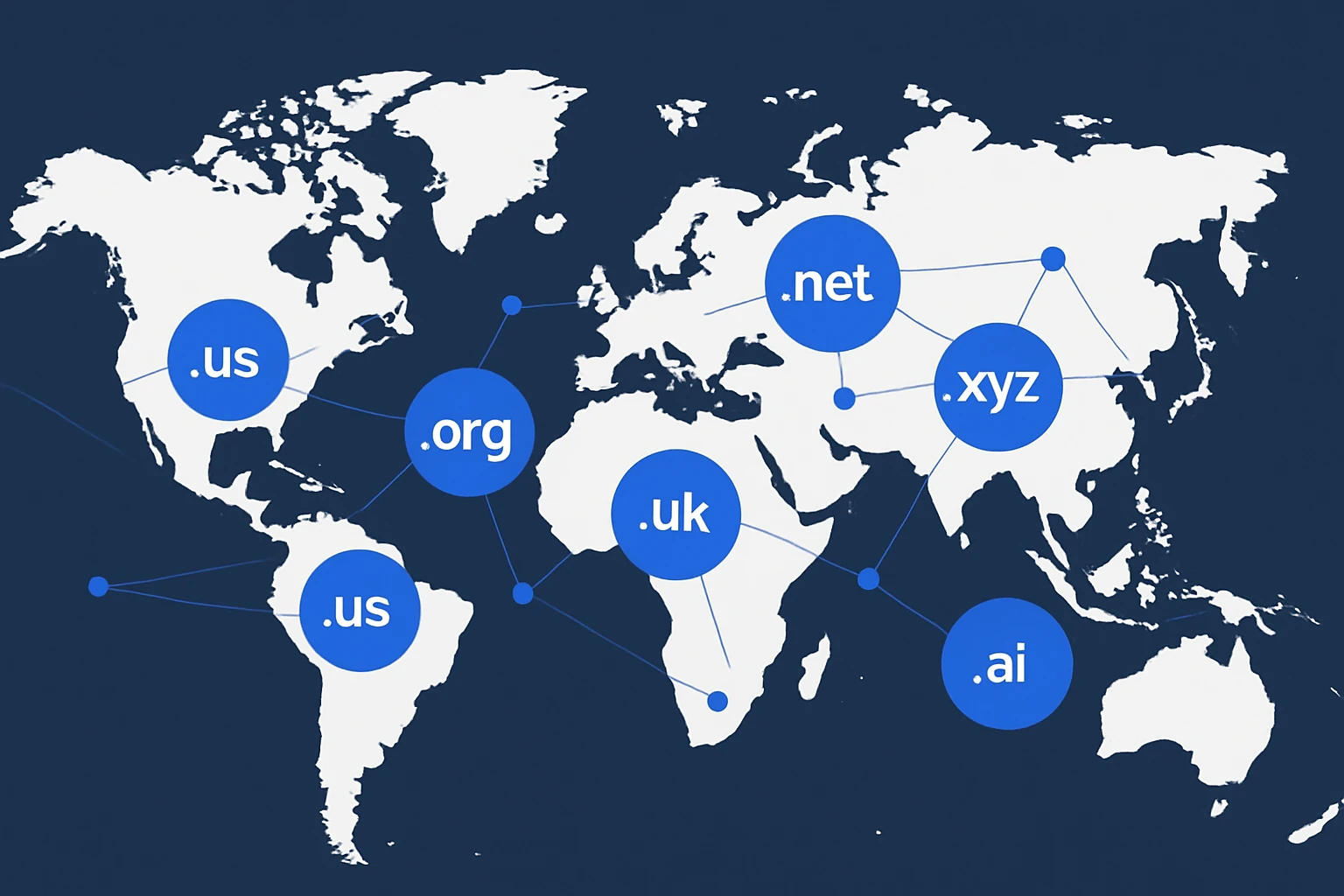
Understanding the landscape begins with the big three categories of domain extensions: generic top‑level domains (gTLDs), country-code top‑level domains (ccTLDs), and the newer wave of gTLDs. The Internet’s root zone is managed by IANA, and the authoritative list of all top-level domains is maintained there. This database is the backbone for validating domain ownership, DNS delegation, and regional name policies. IANA Root Zone Database remains the primary reference for TLD delegation. (iana.org)
What are the main types of domain extensions?
gTLDs are generic extensions used worldwide and include long-standing favorites like .com, .org, and .net, as well as a growing range of new possibilities (eg, .app, .tech, .ai). The expansion of new gTLDs has been a deliberate policy to increase branding options for businesses and communities. Verisign and DNIB data confirm that new gTLDs collectively carry tens of millions of registrations and continue to grow alongside the legacy gTLDs. For a precise 2025–2026 trajectory, see Verisign’s quarterly DNIB updates. (investor.verisign.com)
ccTLDs are country-specific domains like .us, .uk, and .de. They’re often associated with geographic targeting and local trust. Google has explicitly discussed how ccTLDs are used to localize search results, signaling geographic relevance to users and to search engines. This geotargeting signal is one of the most relied-upon reasons why organizations choose ccTLDs for local markets. Google’s ccTLD update discusses how these signals influence localization, Google confirms they are indeed used to tailor results to specific regions. (blog.google)
New gTLDs are the latest wave of generic extensions introduced to align domain names with evolving brands and verticals. Industry data shows new gTLDs have grown rapidly in registrations, reflecting demand for distinctive, brandable domains in competitive markets. See Verisign’s DNIB coverage for quarterly growth details and the ongoing expansion of new gTLD registrations. (investor.verisign.com)
Do TLDs influence SEO or DNS behavior?
There’s a common misconception that the TLD itself is a direct ranking factor. In practice, major search engines treat TLDs as part of the site’s identity rather than a quality signal. Google has stated that generic top‑level domains are not a direct ranking signal, and country-code TLDs primarily act as geographic signals for local targeting rather than global ranking boosts. This means a well‑structured site, local presence signals, and quality content matter far more than your TLD choice alone. Search Engine Land on TLDs and SEO, Google’s own updates reiterate the geographic value of ccTLDs while clarifying there is no inherent advantage for gTLDs. “ccTLDs send geographic signals,” Google notes in its communications about geo-targeting. (searchengineland.com)
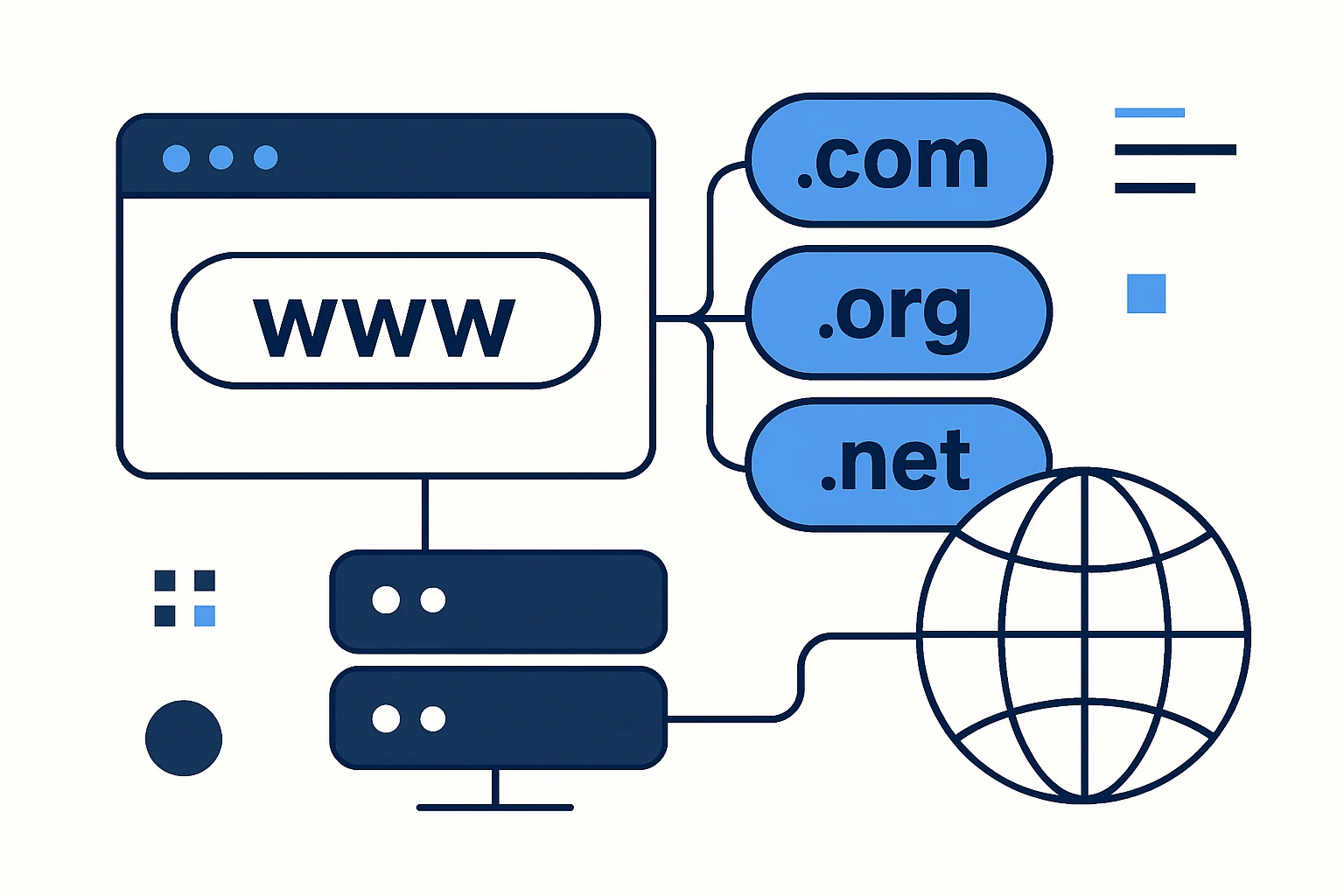
Separately, the technical backbone of all domain names is the Domain Name System (DNS). DNS translates user-friendly URLs into IP addresses that browsers can use to retrieve content. This system is foundational to internet routing, security, and performance. Understanding DNS is essential when assessing domain strategy, especially when consolidating assets across multiple TLDs. Verisign: What is the DNS? (verisign.com)
Market snapshot: what the numbers say about domain extensions
The game is global, and scale matters. Verisign’s DNIB reporting tracks the market closely, showing steady growth in total registrations across all TLDs through 2025 and into 2026. For example, the end of Q1 2025 tallied 368.4 million registrations, by mid‑2025, DNIB reports continued gains with total registrations around 371.7 million, and later quarters approached the high 380s as new registrations surged in various regions. These figures illustrate that the namespace remains vibrant, with both legacy and new extensions contributing to overall growth. See Verisign’s Q1 2025 DNIB release for the official numbers. (investor.verisign.com)
Cross‑checking with global statistics sources provides a broader picture. The World Intellectual Property Organization (WIPO) aggregates domain data and tracks long‑term growth, underscoring the ongoing expansion of the domain ecosystem. While year‑to‑year totals vary, the trend toward more registrations and a larger variety of TLDs has persisted through 2024–2025. WIPO Domain Statistics. (wipo.int)
A practical framework for TLD strategy
Below is a concise framework you can apply when planning a multi‑TLD strategy. It’s designed to be practical for product teams, marketing leads, and domain governance professionals alike.
- Define objectives: Brand clarity, geographic focus, SEO impact, or regulatory compliance. Align the choice of TLDs with your business goals.
- Map geographies and audiences: If you serve multiple markets, consider ccTLDs for region-specific trust and geotargeting where appropriate.
- Balance brandability with reach: A strong brandable new gTLD or gTLD with keyword relevance can complement a primary dot-com, expanding coverage without diluting trust.
- Assess DNS and infrastructure needs: Ensure DNS stability, registrar support, and renewal risk management across chosen extensions.
- Plan governance and licensing: Establish ownership, renewal calendars, and security controls to protect digital assets across TLDs.
- Test with geotargeting and local signals: For ccTLDs, configure geotargeting in search tools and consider hreflang for multilingual sites.
- Measure and iterate: Track traffic, conversions, and brand search interest by TLD, prune or reallocate as needed.
Limitations, pitfalls, and common mistakes
Even with a clear framework, several common missteps can undermine a TLD strategy. Awareness of these helps you avoid costly errors:
- Over‑reliance on ccTLDs for global reach: While ccTLDs excel for local markets, they may complicate global campaigns if not managed with proper international targeting. (Geographic signals are strong for local SEO, but global visibility may suffer without parallel global domains.) (blog.google)
- Ignoring DNS and security fundamentals: DNS integrity and resolvability impact user experience and trust, neglecting DNS security (eg, DNSSEC) can introduce risk. DNSSEC at Verisign provides practical guidance. (verisign.com)
- Underinvesting in renewal risk management: Fragmented portfolios across many TLDs require disciplined renewal monitoring to avoid accidental loss of assets.
- Confusing brand protection with SEO advantage: A solid TLD strategy supports brand perception, but it’s not a substitute for strong content, technical SEO, and local signals.
A structured block: a quick-start framework in practice
The following quick-start framework translates the theory above into actionable steps you can implement this quarter:
- Step 1 - Audit: List all current TLDs and assess renewal status, traffic, and brand coverage across regions.
- Step 2 - Prioritize: Decide on primary global presence (e.g., a strong dot-com) and a subset of ccTLDs or new gTLDs for key markets.
- Step 3 - Deploy: Launch additional domains with consistent hosting and DNS architecture to minimize latency and downtime.
- Step 4 - Localize: Implement geo-targeting signals and language-specific content where ccTLDs align with markets.
- Step 5 - Monitor: Track performance by TLD and adjust allocations quarterly based on traffic, conversions, and brand search interest.
Where to access global domain data and how to relate it to your strategy
For researchers, marketers, and decision-makers, reliable data sources help ground strategy in reality. The authoritative root‑level data is maintained by IANA, and Verisign provides ongoing market reporting via the Domain Name Industry Brief. These sources offer the factual basis for understanding how many domains exist, how fast the namespace is growing, and where new extensions are taking hold. IANA Root Zone Database and Verisign DNIB are essential references for any domain strategy brief. (iana.org)
For readers who want to explore TLDs by category or geography beyond the main registry data, HostingFlow’s companion database and the client’s TLD directories offer practical, up-to-date overviews. For a comprehensive look at TLDs by geography or technology, you can visit the client’s list pages like List of domains by TLDs and jump to country-specific lists or special‑purpose TLDs via their related pages. Note: these are partner resources and should be used to complement official registry data. (iana.org)
For researchers who need to download domain data or perform RDAP/WHOIS lookups, the client’s RDAP & WHOIS database is a practical tool worth exploring in a controlled setting. See RDAP & WHOIS Database for details and access points. Always respect license terms and data privacy when handling bulk domain data. (verisign.com)
Expert insight and practical takeaways
Expert insight: DNS and DNSSEC are foundational to scalable domain strategy. Ensuring secure and reliable DNS across all TLDs reduces site outages, preserves brand trust, and supports a cohesive international presence. As a practical rule, pair a strong core domain with carefully selected extensions that align with target markets and user expectations, while keeping a clean renewal calendar and robust DNS configuration. This approach helps balance reach with reliability, two pillars of a durable domain portfolio.
Practical takeaway: when evaluating TLDs, start with geography and brand perception, then validate with DNS readiness and SEO considerations. Don’t assume that newer TLDs inherently deliver SEO advantages, instead, use them to reinforce brand strategy or market presence where they align with user expectations.
Conclusion: a disciplined, data-informed approach to domain extensions
The world of domain extensions is large and still expanding, with Q1 2025 data showing hundreds of millions of registrations worldwide and ongoing growth in new gTLDs. A disciplined approach - grounded in data, awareness of SEO signals, and a strong DNS foundation - lets you design a TLD strategy that supports brand trust, regional reach, and technical resilience. For teams seeking practical, up-to-date reference data, IANA’s Root Zone Database and Verisign’s DNIB provide authoritative context, while companion resources like HostingFlow’s domain directory and the client’s RDAP/WHOIS tools offer hands‑on assets to operationalize your plan.
As the domain ecosystem evolves, the most durable strategies align business goals with geographic targeting, DNS reliability, and a measured pace of portfolio expansion. In other words: choose the right mix of TLDs to match who you serve, where they are, and how you deliver content securely and efficiently.