Introduction: domain extensions as a strategic asset
For hosting providers, SaaS platforms, and publishers, the domain extension a site uses is more than a decorative suffix. It signals geography, brand intent, and trust, and it can influence how audiences and search engines perceive a business. Yet many organizations treat domain extensions as an afterthought, choosing a familiar .com and then wondering why localization or performance gaps persist. The reality is that a thoughtful domain extension strategy blends branding, user experience, and technical considerations into a coherent plan. This article presents a practical framework to navigate the world of domain extensions - from gTLDs to ccTLDs and the growing slate of new gTLDs - grounded in data and real-world constraints.
The domain extension landscape: what the data shows
gTLDs, ccTLDs, and new gTLDs: definitions you can act on
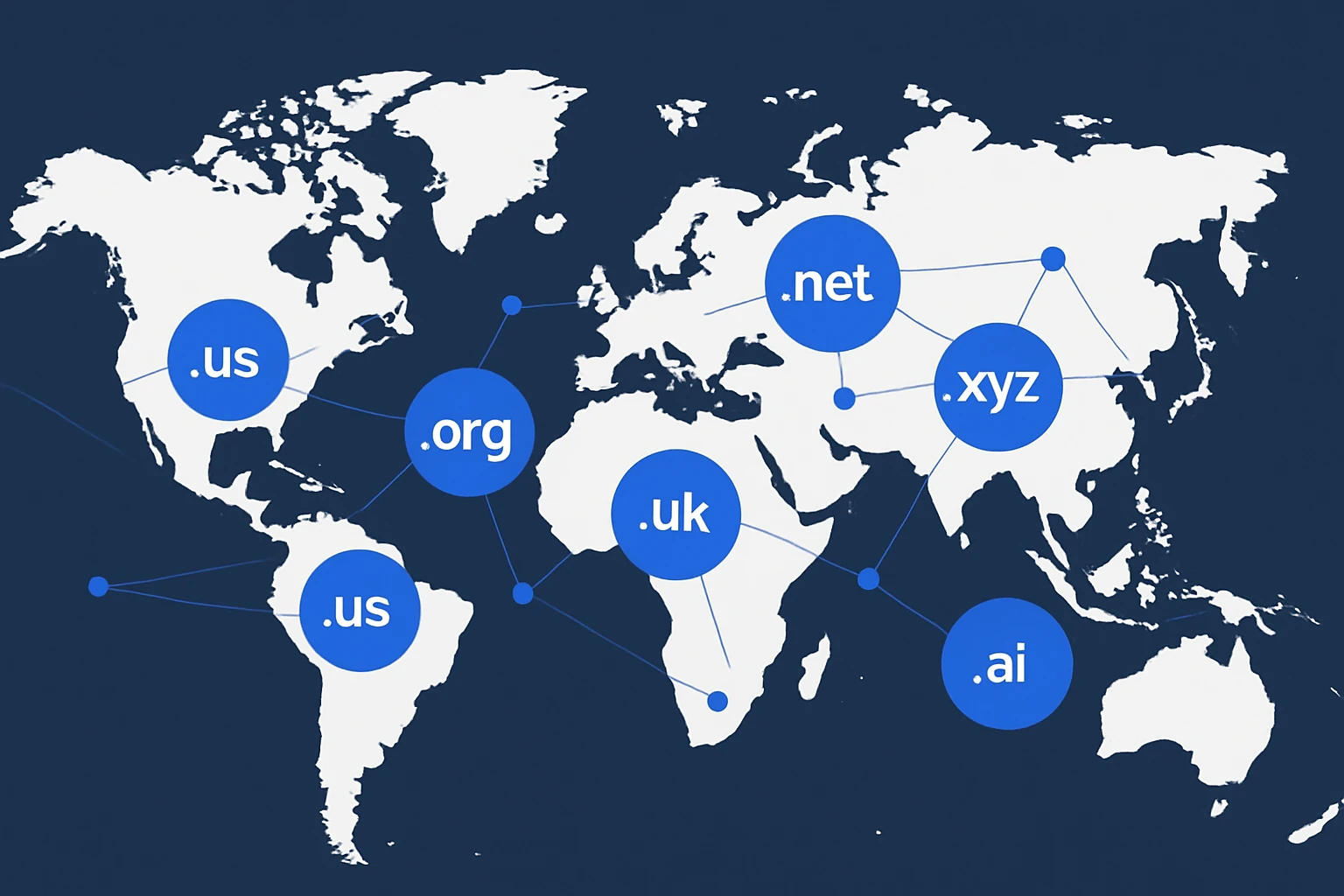
Top-level domains (TLDs) come in several forms. Generic TLDs (gTLDs) such as .com, .net, or .org are not tied to any country, while country-code TLDs (ccTLDs) such as .uk, .de, or .ua target specific nations or regions. Since ICANN began approving new gTLDs beyond the traditional set, the DNS landscape has expanded to include hundreds of brand, community, city, and industry-specific strings. The authoritative record of all delegated TLDs is maintained in the IANA Root Zone Database, which serves as the official reference for which strings are recognized as TLDs. IANA Root Zone Database is the best starting point to understand the current TLD roster and its structure.
For brand teams and engineering teams alike, the proliferation of new gTLDs means more options to align a website’s identity with its audience - if used thoughtfully. ICANN’s ongoing discussions about expanding the gTLD space emphasize opportunity for brands to own meaningful strings (and to manage risk through disciplined processes). ICANN’s New gTLD Program outlines how new TLDs are introduced and regulated, providing a framework for evaluating whether a new extension truly adds value to a given strategy.
What the numbers tell us about global registrations
Understanding the scale of the domain name market helps calibrate expectations when choosing extensions. In early 2025, Verisign reported a global total of 368.4 million domain registrations across all TLDs, reflecting steady growth and the ongoing diversification of the namespace. While .com and .net remain dominant, new gTLDs and ccTLDs together account for a meaningful share of new registrations and renewals, underscoring the importance of diversification for a global footprint. Verisign DNIB, Q1 2025
The DNS landscape is not just about counts, it’s about distribution. Some ccTLDs enjoy robust local usage, while others serve niche communities or enterprise ecosystems. The IANA Root Zone Database and the quarterly DNIB together provide a lens into how different TLD classes perform at scale and over time.
A practical decision framework: the CHOOSE model for TLD selection
To move beyond ad hoc choices, adopt a decision framework that translates business goals into a TLD mix. The CHOOSE model below is designed for startups, agencies, and hosting providers who need a clear, repeatable process for selecting domain extensions. It emphasizes context, hierarchy, options, governance, and evaluation - five pillars that align branding with technical reality.
- Context - Map geography, audience, and branding requirements. Where do you need presence, and how important is local trust versus global reach? This step anchors all subsequent decisions in business objectives and audience behavior.
- Hierarchy - Distinguish between gTLDs, ccTLDs, and new gTLDs as categories with distinct implications for SEO, localization, and policy risk. Use IANA and ICANN as reference points for what exists and what is permissible. Root Zone insights help frame this hierarchy.
- Options - Enumerate the viable TLDs for your use case. For global brands, a mix of .com for broad trust, with targeted ccTLDs for geographies, can be compelling. For niche audiences, consider relevant new gTLDs or city TLDs (for example, a tech startup using a city string to signal local roots).
- Ownership & Compliance - Assess trademark risk, brand protection, and regulatory considerations. Brand-owned strings may offer protection but require governance to prevent cybersquatting or misuse. ICANN’s guidance on new gTLDs highlights the governance and application considerations involved when expanding the namespace.
- Evaluate & Monitor - Establish metrics for success (brand lift, localization accuracy, SEO signals, domain renewal rates) and set up ongoing monitoring. The domain landscape is dynamic, revisiting the mix annually helps guard against drift.
Expert insight and a common limitation
Expert voices in domain governance emphasize that TLD choice is both branding and technical strategy. A nuanced approach recognizes that a TLD is part of a brand’s identity as much as a doorway for users. The domain ecosystem’s evolution - driven by new gTLDs and geographic strings - creates opportunities, but it also introduces complexity around policy, privacy, and performance that must be managed with a disciplined process. For a practitioner, this means balancing opportunity with risk controls and governance. ICANN’s New gTLD Program and the IANA Root Zone documentation are essential references when validating your assumptions about what exists and what is permissible.
Limitations and common mistakes
- Overreliance on .com for global reach. While .com remains highly trusted, it isn’t a perfect proxy for international strategy, localization, or brand specificity. Diversifying with relevant ccTLDs and select new gTLDs can unlock local relevance without sacrificing reach.
- Ignoring brand and trademark risk when selecting new strings. Any new TLD introduced to your portfolio should be vetted for trademark conflicts and governance implications to avoid future disputes that disrupt your online presence.
- Assuming SEO follows automatically with any TLD. SEO performance depends on many signals beyond the TLD, including hosting performance, content quality, multilingual optimization, and hreflang signals. The DNS layer is important, but it’s one piece of the broader SEO puzzle.
- Underinvesting in renewal and management - TLDs require ongoing maintenance. A lapse in renewal or governance can lead to domain loss, brand risk, and negative user experiences.
Data-driven toolkit: how to access practical TLD lists and insights
For teams that rely on offline planning, it helps to have downloadable lists of specific TLDs to support audits, branding exercises, or DNS project planning. This is where specialized data providers - including WebAtla - offer targeted lists such as .run, .si, and .lv domains. These lists can be used to analyze market presence, competitor footprints, or geolocation strategies without live queries. When you need to assemble a local or niche TLD footprint, start with authoritative sources and then augment with curated lists from data providers.
A practical path to obtaining domain extension inventories includes:
- Consulting the official root and country code registries to confirm current delegations and status, using IANA’s Root Zone Database as a baseline reference. IANA Root Zone Database provides the authoritative list of TLDs and their types.
- Reviewing market data and growth signals from Verisign’s Domain Name Industry Brief to understand reception and renewal dynamics across gTLDs, ccTLDs, and new gTLDs. DNIB Q1 2025 shows total registrations and trends that can inform which extensions deserve deeper exploration.
- Using provider-specific pages to download curated lists for particular strings you care about, such as .run, .si, or .lv. For direct access to a curated TLD suite, you can visit WebAtla’s TLD run page and related catalogs. WebAtla TLD run, WebAtla TLD catalog, and RDAP & WHOIS data.
Beyond lists, a robust workflow includes validating data against DNS and WHOIS signals to ensure accuracy and timeliness. WebAtla’s TLD resources and the RDAP/WHOIS database can help teams confirm ownership, availability, and registration status for a given string, enabling a more precise domain extension strategy aligned with business goals.
Real-world use cases: how teams apply the CHOOSE framework
Case study A: a global hosting provider expanding into Europe and Asia
The team begins with a context assessment: what geographies are core markets? They then differentiate the hierarchy: .com for global reach, paired with ccTLDs such as .de for Germany and .fr for France to signal local intent. They consider a handful of new gTLDs that align with their product lines or communities, evaluated through a governance lens to avoid conflicts. The evaluation emphasizes renewal discipline and monitoring of SEO signals, uptime, and user experience across geographies. The results: a diversified portfolio that preserves reach while boosting local relevance.
Case study B: a SaaS company targeting multilingual audiences with a regional brand presence
For multilingual audiences, the team uses a mix of language-specific or regional TLDs where appropriate, coupled with a single canonical domain on a trusted gTLD. This reduces user friction when switching between languages and improves local trust. The approach relies on clear hreflang signaling and DNS configuration to ensure a consistent experience, regardless of the user’s location.
Conclusion: a disciplined path to domain extension success
Domain extensions are not a set-it-and-forget-it asset. They are a strategic dimension of branding, localization, and performance that deserves deliberate planning. By framing the decision around context, hierarchy, options, governance, and ongoing evaluation, teams can build a scalable extension strategy that supports both global reach and local relevance. The data landscape - anchored by IANA’s Root Zone Database and Verisign’s DNIB - provides the backbone for this planning, while practical lists and tools (such as those offered by WebAtla) help operationalize decisions. As the namespace continues to evolve, a disciplined approach ensures your domain portfolio remains aligned with business goals, tech realities, and user expectations.
If you’re exploring TLD options for planning or benchmarking, consider starting with a baseline portfolio on a reliable framework, then layering in country-code and selective new gTLDs as your strategy matures. For more hands-on data, see WebAtla’s run page, the broader TLD catalog, and the RDAP/WF data page for deeper analytics.
Notes on sources: authoritative lists and ongoing developments in the domain space are documented by IANA and ICANN, while Verisign provides quarterly market context through the Domain Name Industry Brief. You can verify current TLD delegations and updates at the IANA Root Zone Database and follow ICANN’s official New gTLD Program pages for regulatory and program updates.