Introduction
In a domain ecosystem that now includes thousands of top-level domains (TLDs), making the right choice is about more than availability. It’s a strategic decision that influences brand perception, geographic reach, DNS architecture, and even long-term SEO posture. The domain space has expanded through policy initiatives like ICANN’s New gTLD Program, which broadens the universe beyond the familiar .com, .org, and .net. This article offers a pragmatic framework to help teams navigate gTLDs, ccTLDs, and the newer generation of gTLDs in a way that aligns with business goals and technical realities. The expansion is well documented by ICANN as part of the ongoing evolution of the DNS, including prospective rounds and implementation milestones. The New gTLD Program illustrates both the opportunity and the complexity of adding new extensions to your portfolio.
Understanding the TLD Landscape
What are gTLDs, ccTLDs, and new gTLDs?
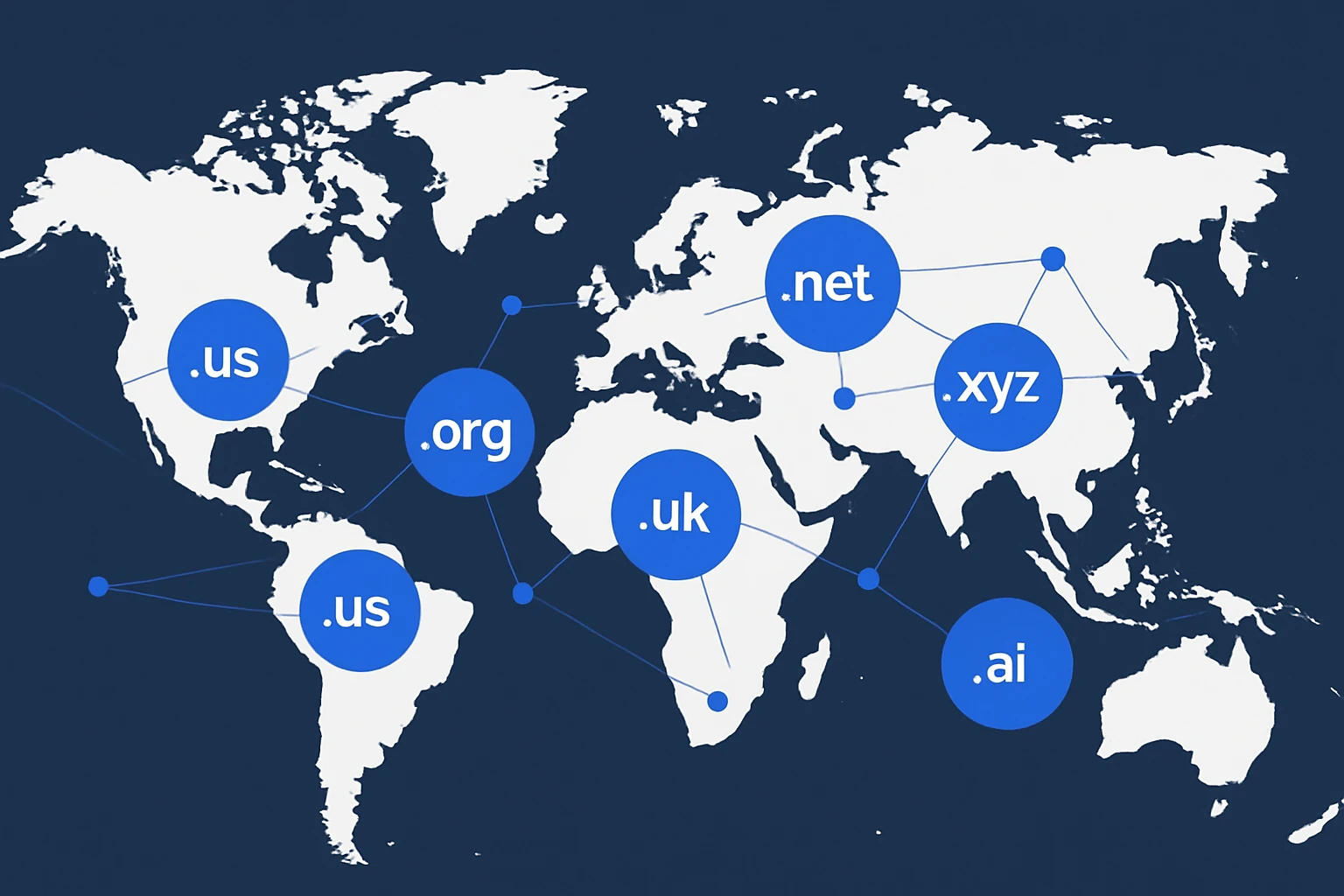
Top-level domains (TLDs) come in several flavors. Generic top-level domains (gTLDs) include familiar extensions such as .com, .org, and .net, which target broad audiences. Country-code top-level domains (ccTLDs) such as .de, .fr, and .jp are typically associated with specific nations or regions. Since 2012, ICANN’s New gTLD Program has expanded the set of gTLDs to include many niche and brand-oriented extensions (for example, .shop, .dev, or country-agnostic options). The program’s ongoing status and potential future rounds continue to shape the field. ICANN New gTLD Program and ICANN New gTLDs overview provide a structured view of how these extensions are introduced and managed.
From the deployment perspective, new gTLDs are additions to the same DNS root you rely on for every domain. ICANN’s program is designed to foster competition and choice, while registries and registrars manage policies, pricing, and eligibility criteria for each extension. For a snapshot of recent progress and anticipated rounds, see the ICANN program status pages. Program Status.
DNS foundations and the role of TLDs
All TLDs resolve through the Internet’s root zone, which is administered by a consortium of root servers. The DNS is the system that translates human-friendly domain names into IP addresses, and the chosen TLD is a critical part of this resolution path. Understanding the DNS layer helps when planning registry relationships, DNS provider configurations, and potential migration plans. For a practical primer, see the DNS fundamentals guide from Cisco, which outlines how domain queries are resolved in real-world networks.
A Practical Decision Framework for TLD Selection
Choosing the right TLDs hinges on aligning technical realities with business objectives. Below is a concise, field-tested framework you can apply to most multi-market projects. The framework is designed to help teams avoid common missteps and to support the editorial narrative for a world-domain database oriented audience.
Framework overview
- Clarify target markets and audience: Are you aiming for global reach, or do you plan country-specific experiences? ccTLDs can signal local intent, while gTLDs are typically treated as broad-brand options. Google’s guidance on managing multi-regional sites and geotargeting underscores that geographic targeting is a function of signals beyond the TLD, such as hreflang, content, and site structure. Google Search Central: Managing Multi-Regional Sites.
- Align with brand perception and user expectations: Some audiences may perceive certain TLDs as more credible for specific industries or geographies. While search engines treat gTLDs as equivalent in rankings, user perception and trust can influence click-through and engagement, which indirectly impact SEO. See industry coverage on how TLD choices relate to user behavior and trust. John Mueller on GTLD vs ccTLD.
- Assess SEO and technical implications: For SEO, the TLD itself is usually less important than overall site quality, content relevance, and backlinks. However, TLDs do carry signaling effects - ccTLDs can indicate geographic focus and allow geotargeting decisions in tools like Google Search Console. In practice, Google emphasizes that most gTLDs are treated similarly for ranking, while ccTLDs provide strong country signals if used intentionally. Domain extensions and SEO, Google Search Central.
- Account for regulatory, policy, and availability considerations: Certain ccTLDs operate under country-specific policies or restrictions, which can affect branding, eligibility, and residency requirements. The ongoing evolution of new gTLD policy - potential future rounds and fee structures - can also influence your long-term strategy. See ICANN’s New gTLD program resources for context on governance and process. ICANN New gTLD Program.
- Balance cost, management complexity, and renewal cadence: A portfolio with many TLDs increases management overhead, renewal tracking, and DNS configuration needs. Plan for a policy-driven governance model, a clear ownership map, and automation where possible.
- Develop a migration and risk plan: If you’re consolidating to a new TLD palette or expanding into niche extensions, map the migration with 301 redirects, consistent internal linking, and accurate geotargeting signals. A well-planned migration minimizes SEO disruption and preserves link authority.
Expert insight: SEO practitioners and researchers consistently emphasize that a TLD should not be used as a sole lever for SEO gains. John Mueller, Google's public-facing SEO liaison, has highlighted that gTLDs and ccTLDs are treated differently mainly as signals for geographic targeting, not as direct rankings modifiers. This nuance reinforces the framework’s emphasis on aligning TLD choice with audience, not relying on the TLD alone to move rankings. John Mueller on GTLD vs ccTLD.
To translate this framework into action, consider the following structured decision steps you can apply to any domain-extension project. The steps are designed to be editorially robust for a high-credibility domain guide publication and to support practical decision-making for teams evaluating a bulk domain directory:
Structured decision steps
- Step 1: Map markets and audiences – List countries and languages you intend to serve, and identify whether you need local brand signaling or global reach. This step informs whether ccTLDs or a global gTLD fits best.
- Step 2: Align with brand strategy – Decide if your brand strategy benefits from a broad, universally recognized TLD or if it gains credibility from a local TLD strategy in key markets.
- Step 3: Plan geo-targeting and site structure – If you plan multi-regional sites, determine whether you’ll use country-specific domains, subdirectories, or subdomains, and how this choice interacts with hreflang and canonicalization.
- Step 4: Assess risk and governance – Review any regulatory constraints for targeted markets and potential policy changes in new gTLD rounds that could affect long-term strategy.
- Step 5: Build a budget and lifecycle plan – Include registration costs, renewal cadence, and DNS management overhead. Plan how many TLDs you’ll actively manage and what constitutes a “core” portfolio versus an experimental set.
- Step 6: Implement measurement and governance – Establish dashboards for performance, geo-targeting signals, and brand protection processes to monitor changes in visibility and user engagement across TLDs.
Practical Use Case: Global Brand and Regional Markets
Consider a hypothetical global consumer brand expanding into Europe and Asia. A practical approach would commonly begin with a strong global presence on a familiar gTLD such as .com to preserve broad recognition, paired with ccTLDs for core markets where local signals matter (for example, .de for Germany and .fr for France). In markets where the brand seeks rapid experimentation or niche positioning, new gTLDs like .shop or .store might be employed to convey category specificity. The decision should be data-driven, with the geo-targeting signals managed through Search Console or similar tools to ensure the correct regional focus is communicated to search engines. These dynamics are reflected in industry-wide reporting and guidance from ICANN, which outlines the structured path for new extensions while highlighting the need for governance and implementation planning. ICANN New gTLD Program and Google search best practices provide practical guardrails for such decisions.
As you evaluate your portfolio, you may also want to explore bulk lists and directory-style resources that simplify comparison across hundreds of extensions. Platforms such as WebAtla curate TLD directories, including country-focused and technology-based lists. See WebAtla’s TLD directory for a structured overview, and for country-specific lists, WebAtla PK domain lists can be a useful reference point when building a country-centric strategy.
Limitations and Common Mistakes
Despite strong strategic value, TLD selection is not a silver bullet. Below are common pitfalls and the practical trade-offs to consider.
- Over-reliance on the TLD for SEO: SEO professionals increasingly stress that search rankings hinge on content relevance, links, and technical quality rather than TLD choice alone. gTLDs and ccTLDs are generally treated similarly for rankings, but ccTLDs can carry country signals that affect local performance. This nuance is documented in industry coverage and Google guidance. Domain extensions and SEO, Google Search Central: Managing Multi-Regional Sites.
- Neglecting user perception and brand trust: Local users may respond differently to exotic TLDs, which can influence click-through and engagement. While Google may not reward a TLD by itself, user trust can indirectly impact SEO through behavior signals. John Mueller has highlighted the geo-targeting signaling role of ccTLDs, which reinforces the importance of alignment with audience expectations. John Mueller on GTLD vs ccTLD.
- Complexity of management: A portfolio dominated by many TLDs increases DNS management, renewal tracking, and governance overhead. It’s common to underestimate the operational costs of maintaining multiple domains and redirects, which can erode the overall value unless properly governed.
Conclusion
The choice between gTLDs, ccTLDs, and new gTLDs is best understood as a balance of audience targeting, brand strategy, SEO readiness, and operational discipline. A robust framework helps teams avoid over-indexing on one factor (like a shiny new gTLD) and instead design a portfolio that supports sustainable growth across markets. As the domain landscape evolves - driven by ICANN’s ongoing program and the broader DNS ecosystem - subscription to authoritative guidance remains essential. For organizations seeking a comprehensive directory to compare hundreds of extensions and their availability, a bulk TLD directory can be a practical starting point. The domain data economy is still maturing, and informed, governance-led decisions will compound value over time.
External references and foundational reading: