Introduction: why domain extensions matter in 2026
The way a brand is perceived online often begins with its choice of a domain extension. Beyond a memorable name, the suffix you attach to your domain influences regional reach, branding authority, and even search performance in subtle but real ways. The internet’s addressing system is defined by the DNS root zone, which lists every delegated top-level domain (TLD). The authoritative root data is maintained by IANA and published in the Root Zone Database, which confirms the current set of gTLDs (like .com, .net, and new generic TLDs) and ccTLDs (country-code TLDs such as .uk, .de, and .jp). IANA Root Zone Database is the canonical reference you should consult when auditing any portfolio.
Over the past decade, ICANN’s New gTLD Program has expanded the universe of domain extensions well beyond the classic trio. The program is designed to increase competition, choice, and branding opportunities for registrants, including brand owners and regional players. As ICANN notes, the expansion is ongoing, with future rounds planned to further grow the namespace and align with multilingual branding needs. ICANN New gTLD Program / About New gTLDs.
Latest industry data shows the DNS namespace remains robust, with hundreds of millions of domain registrations across all TLDs. Verisign’s Domain Name Industry Brief (DNIB) provides quarterly context on growth and distribution across the TLD ecosystem, illustrating that even as the namespace broadens, overall registrations stay large and dynamic. Verisign DNIB.
For practitioners, this landscape creates both opportunities and complexities: you can diversify reach with regional ccTLDs, reinforce brand identity with a Brand TLD, or consolidate a global presence using a broad set of gTLDs. The challenge is to balance reach, risk, cost, and governance in a way that aligns with your business strategy. The following sections outline a practical framework to navigate these choices, grounded in current governance and technical realities.
Understanding the TLD landscape: gTLDs, ccTLDs, and Brand TLDs
What counts as a gTLD vs ccTLD and why it matters
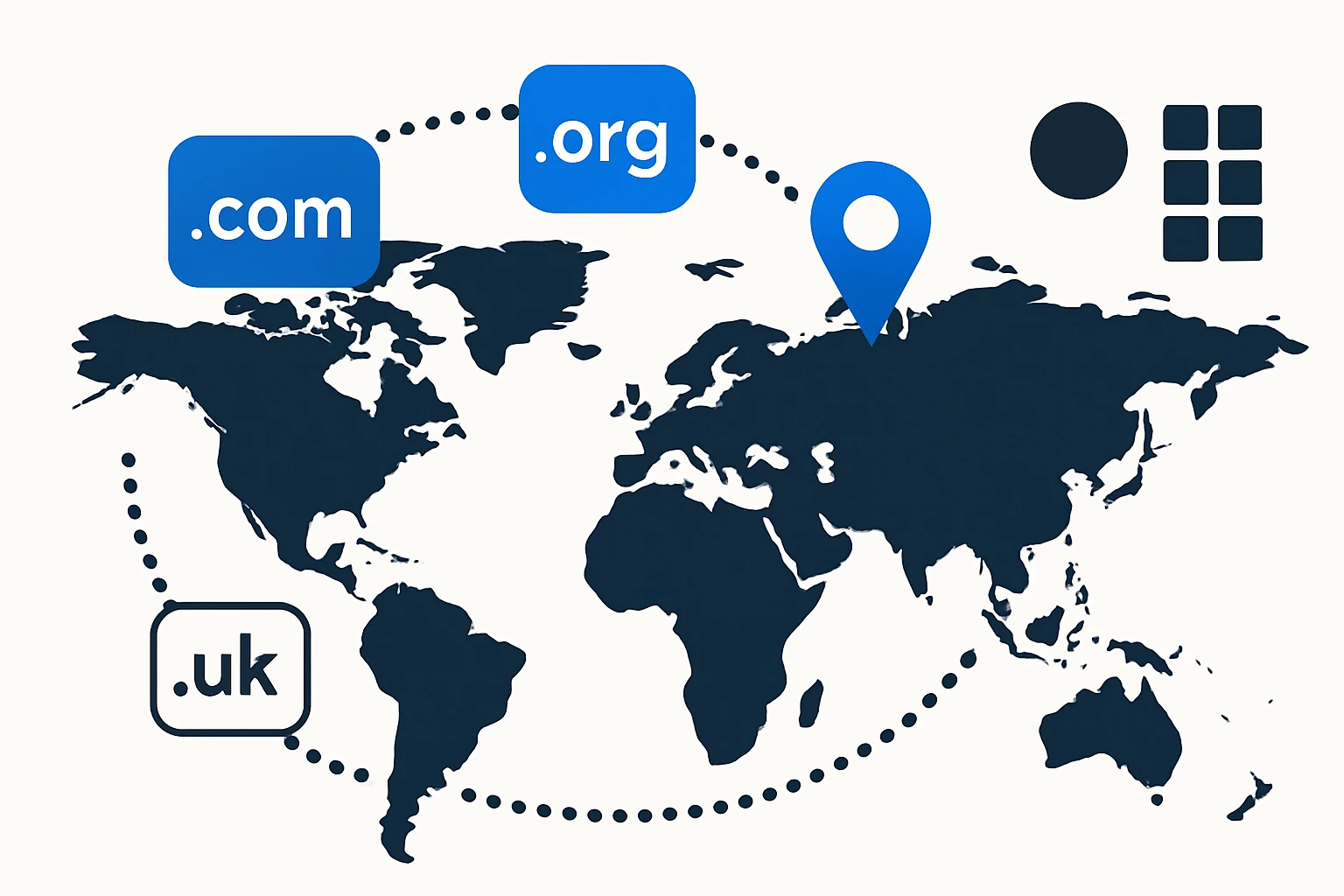
The DNS root zone differentiates generic TLDs (gTLDs) from country-code TLDs (ccTLDs). gTLDs are not tied to a specific country and are often used for branding, services, or global campaigns (examples include .com, .org, and newer gTLDs such as .shop or .app). ccTLDs are country-specific (for example, .uk for the United Kingdom, .de for Germany), and they can carry strong regional signals, regulatory expectations, and local search relevance. Understanding this distinction helps you map target markets and optimize domain portfolios for both branding and regional presence. The authoritative list of TLDs and their types is published in the Root Zone Database maintained by IANA. IANA Root Zone Database.
Geographic vs Brand pressure: Brand TLDs and the expansion of the namespace
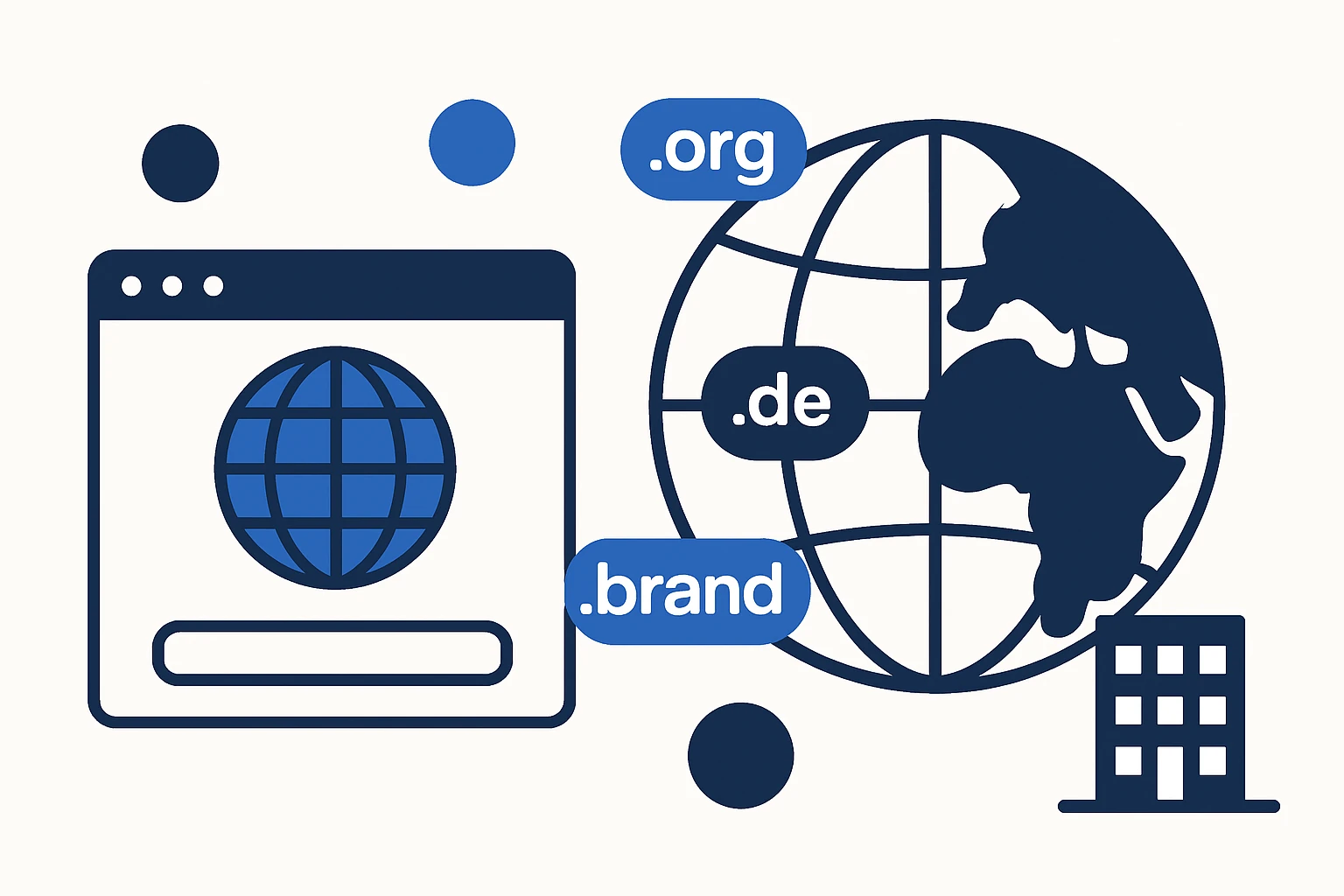
Beyond country codes and generic options, brand TLDs allow companies to signal official brand identity with a suffix that aligns to the corporation’s trademark and branding strategy. ICANN’s ongoing programmatic expansion explicitly accommodates brand and identity-based extensions, enabling brands to own a unique suffix that can support trust and recognition in digital ecosystems. The program’s ongoing evolution and its impact on branding strategy are documented by ICANN across its new gTLD resources. ICANN New gTLD Program.
A practical framework for selecting domain extensions
To move from general awareness to a concrete, governance-backed decision, consider the following framework. It is designed to be used by brand teams, digital marketers, and IT operations who must balance reach with risk and cost.
- Define goals and markets. Clarify which regions you plan to reach first, and whether your brand strategy requires a single global presence or a modular, region-specific footprint. Geographic signals from ccTLDs can help in local SEO and user trust, while gTLDs enable a unified global brand message. For some, a Brand TLD may be an explicit part of the branding playbook, but it requires long-term governance and investment. IANA Root Zone Database remains your baseline reference for what exists today.
- Map audience language and culture. If you operate in multilingual markets, IDN-enabled TLDs or regionally focused ccTLDs may improve user experience and perceived relevance. Consider whether your domain strategy needs language-specific branding in addition to or instead of a global suffix.
- Choose TLD types aligned with strategy. Use ccTLDs to anchor regional campaigns, rely on gTLDs for global marketing, and evaluate Brand TLDs if your branding and trademark strategy supports it. The New gTLD Program has broadened the space, but it also introduces governance and cost considerations that must be managed.
- Assess DNS reliability and security requirements. All TLDs rely on the global DNS infrastructure. DNSSEC readiness, registry stability, and registrar support should factor into your planning. DNS data and trend insights can be found in industry reports and official program materials.
- Evaluate cost and lifecycle management. Beyond the initial registration fee, consider renewal costs, reporting requirements, and the ongoing governance burden of managing multiple TLDs. Industry data shows growth in registrations and a broad ecosystem of registries, registrars, and policy frameworks. Verisign DNIB.
- Plan measurement and governance. Define KPIs for brand safety, traffic quality, and domain security. Set up change management for transfers, renewals, and potential redirections as you expand into new TLDs. ICANN’s ongoing discussions and updates on policy and governance will influence timelines and eligibility for new TLDs.
Operational considerations: DNS, RDAP, and governance
The domain ecosystem relies on a stable, secure DNS and clear data governance for registrant information. The root zone remains the authoritative source for TLD delegations. Maintaining an up-to-date understanding of which TLDs exist and how they’re managed is essential for any strategy that involves global reach. For a current snapshot of TLDs and their classifications, consult the IANA Root Zone Database. IANA Root Zone Database.
RDAP replaces WHOIS for registration data. ICANN has officially commenced the transition from WHOIS to RDAP, with the sunset of WHOIS announced for early 2025 and RDAP becoming the definitive data source for gTLD registration information. This shift affects how you verify registrations, monitor domains in your portfolio, and manage lawful or security-related inquiries. For more on the RDAP transition, see ICANN’s update. ICANN RDAP sunsetting WHOIS.
RDAP is designed to deliver registration data in a structured, machine-readable format, which improves automation for portfolio management and risk assessment. While the move to RDAP is aimed at increasing accuracy and security, it also changes how teams integrate domain data into dashboards and compliance workflows. Industry conversations around RDAP underscore its role as the future-facing standard for domain data. See ICANN and IETF discussions for more context. ICANN RDAP update / IETF: Current state of RDAP.
Three practical use cases and decision scenarios
Consider these scenarios to illustrate how the framework translates into action:
- Global consumer electronics brand. A multinational company seeking a unified digital identity might prioritize a strong gTLD portfolio complemented by a few regional ccTLDs to support localized campaigns. This approach helps ensure brand consistency while enabling local relevance. The namespace expansion facilitates experimentation with niche or campaign-specific TLDs as opportunities arise through new rounds.
- E-commerce business with regional expansion. If rapid rollout in Europe and Asia is the goal, strategic use of ccTLDs like .de, .fr, or .jp can improve user trust and SERP signals in those markets. Simultaneously, a global gTLD strategy (for example, .shop or .store) can reinforce cross-border campaigns and cross-selling. DNS reliability and registrar support should be validated for each target TLD.
- Brand-owner evaluating a Brand TLD. A brand with a distinctive identity might explore a Brand TLD to protect brand integrity and build a dedicated namespace. This requires long-term governance, clear transfer policies, and ongoing marketing alignment. It’s not a one-off registration, it’s a long-term brand asset that needs policy and security stewardship. ICANN’s publications on the new gTLD program offer a roadmap for this path.
Limitations, trade-offs, and common mistakes
Even with a well-structured framework, several limitations and trade-offs merit attention:
- Not all TLDs are equal in governance or stability. Some TLDs have robust registries and broad registrar support, others may have limited ecosystem participation, which can affect transfer, renewal, and DNS reliability. Always validate registry and registrar capabilities before committing to multiple TLDs.
- Brand TLDs require long-term investment. Brand suffixes are not mere registrations, they demand ongoing governance, security measures, and user education. The potential branding benefits must be weighed against this ongoing cost and management burden.
- New gTLD rounds carry policy and timing risk. While the namespace is expanding, rounds are periodic and governed by policy decisions. Planning for contingencies and maintaining flexibility is prudent. ICANN’s current and upcoming round documents help frame expectations.
- DATA and privacy considerations. The RDAP transition improves data structure but also changes access patterns to registration data. Organizations should align data strategies with new standards and applicable privacy regulations.
- SEO remains nuanced. While a local ccTLD can improve regional signals, search algorithms weigh many factors beyond the TLD, including content quality, user experience, and backlink profiles. A well-structured cross-TLD strategy should prioritize user value over tactical SEO gimmicks.
A structured block: a practical framework you can implement
Below is a compact framework you can apply to a real-world portfolio decision. It’s designed to be implemented in stages and revisited quarterly as your brand evolves.
- Stage 1 - Discovery: catalog existing registrations, assess brand risk, and map markets to a TLD taxonomy (gTLDs, ccTLDs, Brand TLDs).
- Stage 2 - Strategy: decide the balance between global reach and regional signaling, select target TLD types and a provisional horizon for any Brand TLD exploration.
- Stage 3 - Validation: test DNS reliability with key registries, confirm registrar support, and validate RDAP/WHOIS data access expectations.
- Stage 4 - Governance: implement ownership, renewal hygiene, and transfer controls, set up security measures (DNSSEC readiness, TLS coverage, etc.).
- Stage 5 - Deployment: roll out in phases, monitor user engagement, and measure impact on traffic and brand perception, adjust as needed.
- Stage 6 - Review: re-evaluate every 12–18 months, consider new gTLD windows or changes to brand strategy as policy evolves.
Integrating data sources: where to start and what to watch
A robust domain extension strategy benefits from reliable data. The IANA Root Zone Database remains the primary source of truth on what exists today, and it is complemented by ICANN’s policy papers and program updates for future expansion. For those who need to assemble comprehensive domain lists quickly, credible data providers and public sources offer downloadable lists and APIs. A practical approach is to triangulate data from the Root Zone Database, ICANN publications, and trusted industry briefs to avoid over-reliance on any single source. For a current reference, see the IANA Root Zone Database and ICANN’s New gTLD program materials. IANA Root Zone Database / ICANN New gTLD Program.
For practitioners who want a data-backed foundation without building everything in-house, WebAtla provides practical data tools you can leverage alongside your strategy. For example, the RDAP & WHOIS database can help validate registrations and monitor portfolio integrity, while a dedicated TLD list page provides quick access to domain groupings. WebAtla RDAP & WHOIS database / WebAtla: List of domains by TLDs.
Limitations and common mistakes: quick cautions
Even well-intentioned plans can stumble. Common missteps include over-optimizing for Brand TLDs without a governance plan, underestimating renewal and maintenance costs, and failing to align with trademark and local regulatory considerations. In addition, governance around data access is changing as RDAP replaces WHOIS in many contexts, so teams should adapt data collection and compliance practices accordingly. Sources and policy updates from ICANN and IANA provide useful guardrails as you refine your approach. ICANN RDAP update / IANA Root Zone Database.
Conclusion: a disciplined, future-ready domain strategy
The world of domain extensions has grown from a handful of familiar suffixes to a multi-layered ecosystem that blends global branding with regional precision. The expansion driven by ICANN’s new gTLD program creates opportunities to reinforce brand identity and market presence, but it also introduces governance, regulatory, and operational considerations that require deliberate planning. By starting with a solid map of the TLD landscape, applying a clear decision framework, and leveraging dependable data sources, you can craft a domain strategy that scales with your business. For ongoing data needs and portfolio validation, consider WebAtla’s data tools to complement your internal analyses.
To stay current, maintain a checklist of core sources: the IANA Root Zone Database for the authoritative TLD list, ICANN’s New gTLD program materials for policy and roadmap context, and Verisign’s Domain Name Industry Brief for market sizing and trend context. Together, these sources help ensure you’re not just choosing a suffix, but building a resilient digital address for global growth.
Internal links and further resources within HostingFlow can be explored at the publisher’s TLD and DNS sections to deepen your understanding of how different extensions interact with DNS performance and global reach. For immediate data queries, refer to WebAtla’s public data pages as noted above.