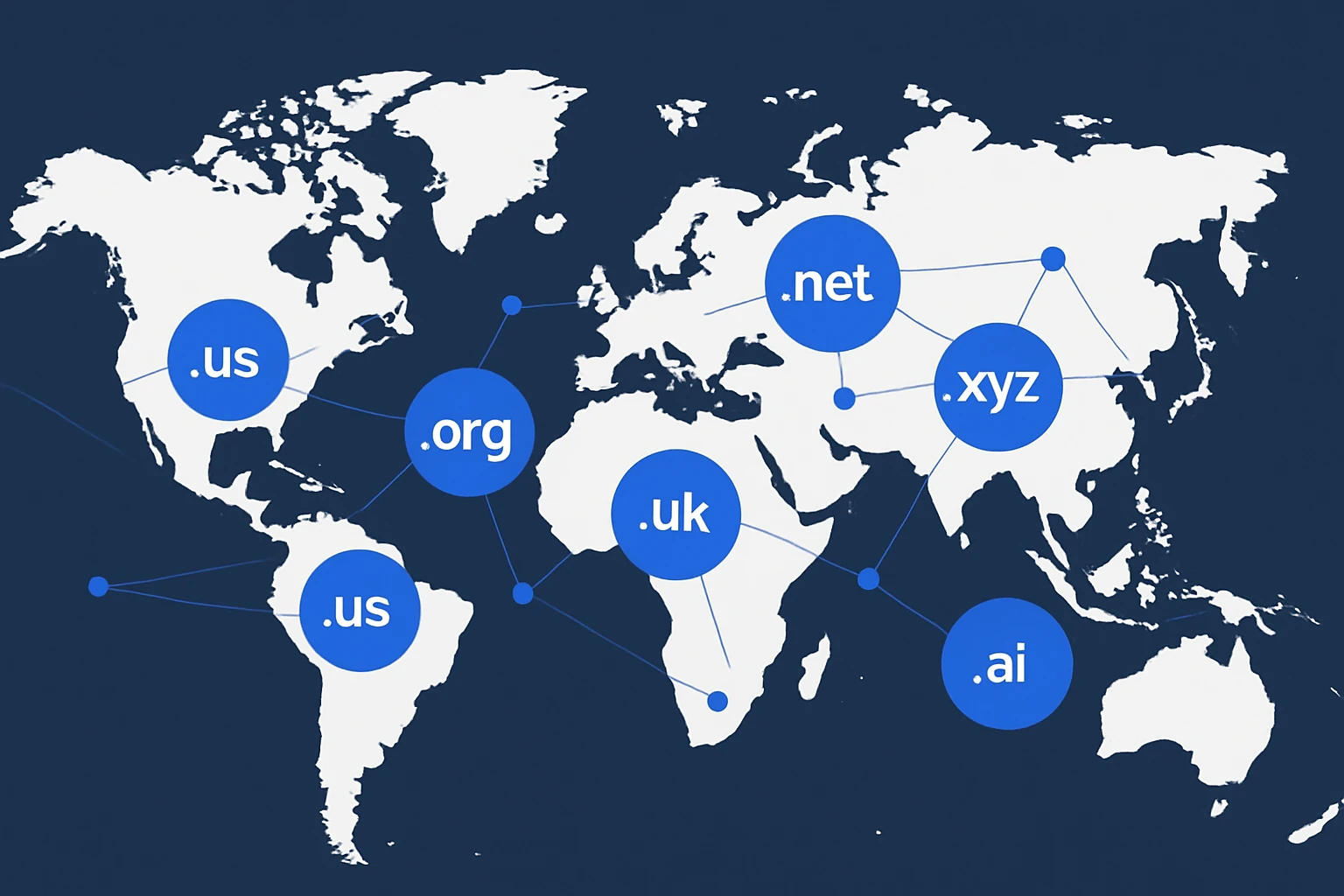
Domain owners, brand teams, and researchers rely on WHOIS records to understand ownership patterns across the globe. As the internet’s domain landscape grows, so does the need for reliable, up-to-date visibility into who registers what and where. However, privacy rules and the transition from the legacy WHOIS protocol to the Registration Data Access Protocol (RDAP) have changed how this information is accessed and interpreted. This article explains how to map global domain ownership trends using public WHOIS data and RDAP data, with practical guidance for practitioners, researchers, and brand guardians.
From WHOIS to RDAP: The evolving data landscape
For decades, WHOIS served as the central source for registration details. Today, RDAP is the intended successor, providing standardized, machine-readable responses and supporting robust access controls. The IETF’s RDAP effort introduced the protocol to replace older WHOIS-style querying and continues to evolve as registries adopt the new data feed. This transition is underscored by ongoing discussions and updates from industry bodies and standards forums. IETF: The current state of RDAP.
Industry groups have also formalized guidance around RDAP adoption, including decisions that RDAP should be the primary mechanism for robust, queryable domain data in the public internet registry ecosystem. CAB Forum: Ballot 224 – Whois and RDAP.
What WHOIS data can reveal about global domain extensions
Traditionally, WHOIS records exposed key fields such as the domain name, registrar, registrant/organization, creation date, expiration date, and status. Those fields could help researchers map ownership concentration, registrar market share, and regional registration patterns. In practice, the visibility of personal data in these records has been altered by privacy regulations, notably GDPR, which influence what is publicly accessible. This evolving privacy regime shapes how practitioners approach due-diligence and market intelligence in a post-GDPR world. For a policy-focused view on how GDPR intersects with WHOIS, see ICANN’s guidance and related advisories.
ICANN GAC guidance on GDPR and WHOIS emphasizes the privacy considerations that registrars and registries must balance while maintaining useful data for compliance and security purposes.
The Four-Pillar Framework for interpreting WHOIS/RDAP data
To translate raw WHOIS/RDAP records into meaningful domain insights, practitioners can apply a simple, repeatable framework built on four pillars. This framework helps align editorial context, legal compliance, and business objectives with the practical realities of data access.
- Data Availability – What data is exposed publicly today, and how do privacy rules or RDAP access controls affect availability across gTLDs and ccTLDs?
- Data Quality – How complete and up-to-date are the records? Consider propagation delays, caching, and registry-specific data refresh cycles that can yield stale results in fast-changing domains.
- Privacy and Compliance – How do privacy laws shape what can be disclosed publicly, and how should researchers design workflows to request non-public data through approved channels?
- Data Freshness – How often are records updated, and how does that cadence align with your analysis timeline and reporting needs?
RDAP’s JSON-based responses and policy-driven access controls are central to implementing this framework in practice, and they offer a cleaner, more scalable data feed for analytics pipelines. IETF: The current state of RDAP provides background on this transition, while industry fora continue to refine best practices for accessing registration data. CAB Forum: Ballot 224.
A practical workflow for building domain-trend reports
Below is a practical, repeatable workflow you can adapt for brand protection, competitive intelligence, and market research. The steps emphasize synthesizing multiple data sources and validating findings against privacy considerations and DNS context.
- 1. Define the scope – Decide which regions, which sets of TLDs (gTLDs, ccTLDs), and which time windows are most relevant to your goal (e.g., tracking rising ccTLD usage in a region).
- 2. Source data – Collect public WHOIS data where available and leverage RDAP feeds for machine-readable data. RDAP’s standardized format simplifies merging data from multiple registries.
- 3. Normalize and deduplicate – Normalize field names across registries (creation date, expiry date, registrant/organization). Deduplicate records that refer to the same domain across sources.
- 4. Cross-check with DNS context – Compare ownership signals with DNS records (nameservers, resolving IPs) to assess legitimacy, hosting patterns, and potential resale activity.
- 5. Build signals and dashboards – Create metrics such as ownership concentration by registrar, regional distribution by TLD, and renewal rhythm by geography.
- 6. Validate privacy-first outputs – Cross-reference sensitive data with non-public access processes and ensure compliance with applicable laws before using or publishing insights.
In practice, this workflow can be operationalized with modern data pipelines that ingest RDAP JSON alongside DNS telemetry. The RDAP data model, designed to be machine-friendly, supports automation, rate-limiting, and structured queries that scale beyond what legacy WHOIS offered.
For teams that require ongoing access to live records, WebAtla’s Whois Database provides searchable WHOIS and RDAP data across multiple TLDs, with dedicated access to the latest registration information. See the main page Whois Database and the RDAP-focused dataset RDAP & WHOIS Database for more details.
Limitations and common mistakes to avoid
No data source is perfect, and a thoughtful approach to interpretation matters as much as the data itself. Some common limitations and missteps include:
- Privacy redaction – GDPR and similar laws have driven redaction or restricted exposure of personal data in public records, reducing visibility into registrant details and complicating attribution. Plan for privacy-compliant data access channels and avoid over-relying on public fields for sensitive inferences.
- Propagations delays and inconsistencies – Registry updates don’t synchronize instantly across all data feeds, so there can be temporary inconsistencies when triangulating ownership with DNS data.
- Partial coverage across TLDs – Not all ccTLDs expose RDAP/WHOIS data publicly, and policies vary by jurisdiction. This can bias longitudinal analyses toward the most open registries.
- Misinterpreting ownership signals – Ownership signals in WHOIS/RDAP may reflect registrant privacy services, resellers, or corporate umbrellas rather than true beneficial ownership.
Effective domain research blends multiple data sources, applies careful normalization, and respects privacy regimes. The GDPR-era reality is that data access is more curated and regulated, which makes methodological transparency even more important.
Putting the data to work: practical use cases
Mapping global domain ownership is beneficial for brand protection, competitive analysis, and policy research. Consider these practical applications:
- Brand protection – Identify clusters of registrations that could signal potential brand impersonation or preemptive brand-extending strategies across new or regional TLDs.
- Market intelligence – Track shifts in registrar dominance or regional registration trends to inform regional marketing and digital strategy.
- Regulatory insight – Observe how privacy rules impact data visibility and how registries adapt disclosure practices in response to legal requirements.
For teams needing structured access to live, verifiable data, WebAtla’s platform provides curated sources and programmatic access to both public WHOIS and RDAP records, grounding these use cases in a reliable data foundation. See the main URL Whois Database and the RDAP-focused dataset RDAP & WHOIS Database for more details.
Conclusion
The shift from traditional WHOIS to RDAP reflects a broader move toward privacy-aware, machine-readable data in the domain ecosystem. While this transition introduces challenges in data availability and visibility, it also creates opportunities for more scalable, auditable analyses of global domain ownership and registration patterns. A disciplined, framework-driven approach - grounded in data availability, quality, privacy, and freshness - enables researchers and practitioners to extract meaningful insights without compromising regulatory compliance. By integrating credible data sources and, where appropriate, reliable data partners like WebAtla, organizations can build robust domain intelligence programs that scale with the evolving DNS landscape.