Introduction: why your choice of domain extension still matters
Choosing a domain extension is more than a branding flourish. It can influence audience perception, geographic targeting, trust, and even how well a site performs in certain search contexts. The domain name system (DNS) is the infrastructure that makes those extensions meaningful, it translates a human-friendly name into the numeric address systems that route users to your site. The Root Zone Database maintains the authoritative record of all top‑level domains (TLDs), including generic top‑level domains (gTLDs) and country-code top‑level domains (ccTLDs). In practice, your extension choice communicates signals to visitors and search engines alike, while also shaping technical considerations such as DNS stability and registrar support. IANA and ICANN are the primary stewards of this space, with ongoing rounds of new gTLD introductions expanding the universe of available extensions. The New gTLD Program has opened the door to hundreds of new extensions since 2012, and the upcoming round is being prepared as of 2025–2026.
The anatomy of domain extensions: GTLDs, ccTLDs, and new gTLDs
Domain extensions fall into a few broad categories, each with typical use cases and implications for branding, reach, and SEO.
Generic top‑level domains (gTLDs)
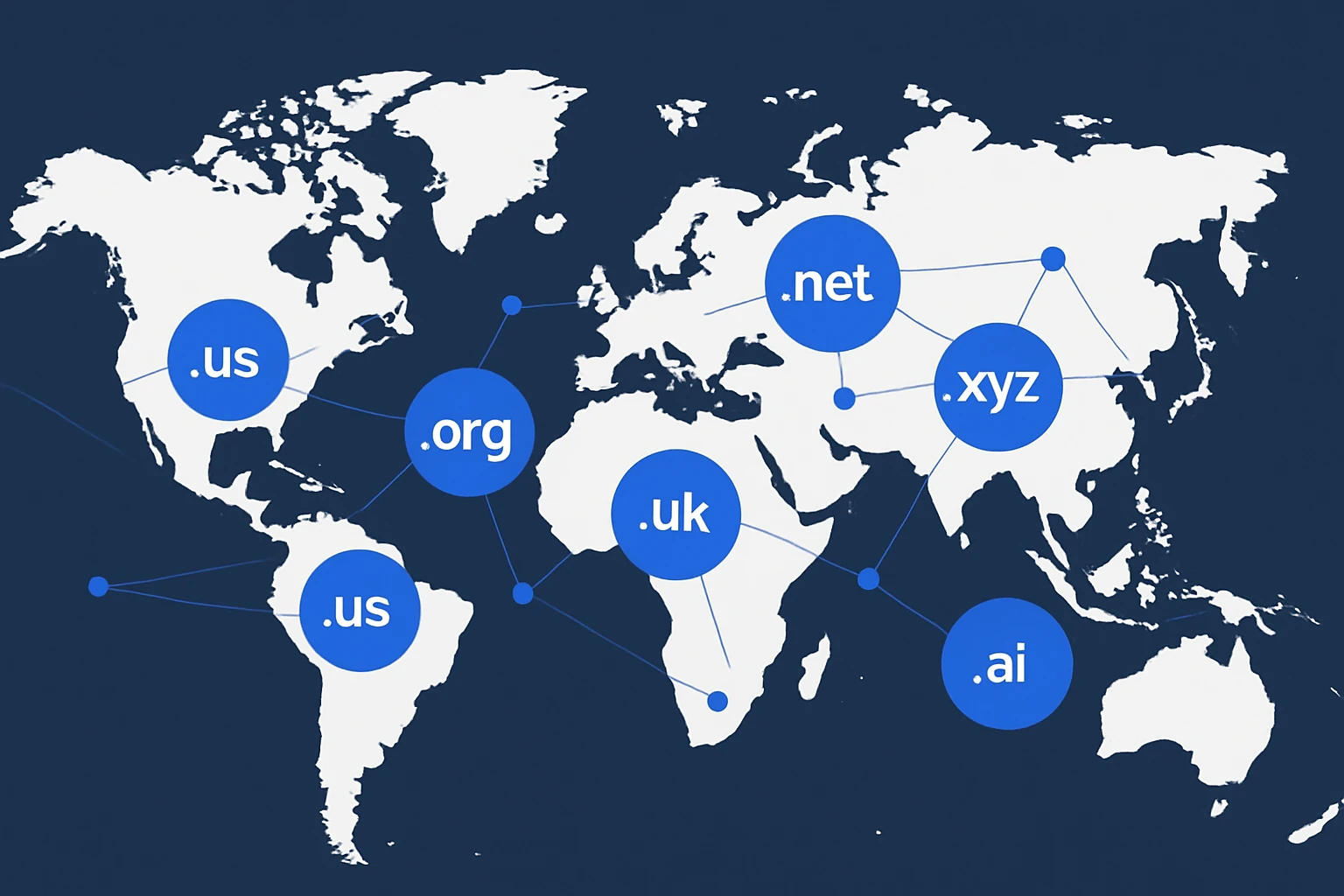
gTLDs are not tied to any country, and they’re widely deployed for global brands, organizations, and projects. Traditional examples like .com, .org, and .net have long dominated, but the 2012 New gTLD Program added more than a thousand new options, enabling branding in domains like .tech, .shop, or language-specific variants. For many global audiences, a strong gTLD can signal a universal focus, but it also requires careful branding and clear mapping to your value proposition. According to ICANN, the program’s next rounds aim to foster competition, innovation, and choice in the DNS ecosystem, with ongoing governance and policy work to support applicants and registrants. ICANN – New gTLD Program overview.
Country-code TLDs (ccTLDs)
ccTLDs are country identifiers such as .uk, .de, or .ua. They’re often favored by organizations with strong geographic focus or local customer bases, and they can help signals to both users and search engines about regional targeting. Some ccTLDs require local presence or residency to register, while others are widely available. IANA’s Root Zone Database shows how ccTLDs are delegated and managed, underscoring that the distinction between country targeting and global branding can shape your site’s reach and trust signals. IANA – Root Zone Database.
Brand TLDs and the broader trend
Brand TLDs (for example, .google, .apple) are used by select organizations to strengthen brand-owned namespaces. They’re part of a broader shift toward brand-first naming conventions that can improve user recognition and reduce ambiguity. ICANN has published ongoing materials on how the program operates and what future rounds may entail, including guidance on applying and the role of registry service providers. ICANN – New gTLD Program: Next Round.
GTLD vs ccTLD: choosing the right extension for your goals
When deciding between a global gTLD and a country-specific ccTLD, some practical questions help align with business goals:
- Who is your primary audience? If your site targets multiple regions, a global gTLD may be preferable, if you primarily serve one country, a ccTLD can reinforce local relevance.
- Where will you invest in marketing and content? Global campaigns may justify a gTLD, while local campaigns may benefit more from ccTLDs or country-specific domain strategies.
- What about SEO signals? While search engines treat many gTLDs similarly for global intent, ccTLDs can carry explicit geographic signals for certain queries. It’s essential to pair extension choice with appropriate hreflang and local SEO tactics.
- Are there regulatory or legal considerations? Some ccTLDs have residency or business presence requirements, others are open to global registrants. Always check the latest registry policies before registering.
Industry data from DNS and registry operators show a continued mix of gTLDs and ccTLDs in the market, with growth in new gTLDs contributing to overall domain adoption. Verisign’s quarterly briefings track the total universe of registered domains and highlight ongoing dynamics in the DNS space. Verisign DNIB – Q2 2025.
New gTLDs: opportunities, cautions, and real-world use
New gTLDs bring branding flexibility and niche positioning, but they also require disciplined planning. They can help indicate a specific product line or community (for example, a city or industry theme) and may improve memorability when paired with a clear value proposition. However, a proliferation of new gTLDs can also confuse audiences if not anchored in a consistent branding and content strategy. ICANN’s ongoing updates emphasize program governance, application support, and the role of registries and registrars in delivering a reliable DNS ecosystem. For the latest program context, see the ICANN pages on new gTLDs and the most recent announcements about the next round. ICANN – New gTLD Program.
How to evaluate domain extensions: a practical framework
To move beyond generic debates about “which extension is best,” use a structured decision framework that aligns with audience, geography, and branding. The following framework helps teams avoid common missteps and focus on measurable outcomes.
Structured framework: the TLD decision framework
- Define audience and geography: Identify where your users are and which languages they use. This informs whether a ccTLD or a gTLD better matches your market strategy.
- Assess brand alignment: Does the extension reinforce your brand story or offer a memorable alignment with your product lines? Consider brand protection implications and the availability of matching domains.
- Check availability and risk: Domain availability, potential trademark issues, and regulatory constraints should be evaluated before committing to a set of extensions.
- Plan for DNS and registrar stability: Choose extensions supported by reliable registries and registrars to ensure uptime, DNSSEC, and renewals are manageable over time. Verisign’s DNIB highlights the scale of registrations and the infrastructure that supports global resolution. DNIB – Q2 2025.
- Budget and long-term management: Consider renewal costs, potential marketing investments, and the resources needed to manage multiple namespaces coherently.
For organizations with a global footprint, it can be prudent to consolidate under a core set of extensions while using subdomains or subdirectories to address regional nuances. The DNS backbone, managed by a handful of registries and global providers, is designed to scale, but the decision on extensions should be anchored in your long-term content and growth strategy. The Root Zone Database and IANA documentation remain the reference point for what is officially delegated and supported. IANA – Root Zone Database.
A practical look at data, trends, and realities
Pressing questions often focus on how many domains exist, which extensions dominate, and how new gTLDs are performing in the market. Verisign’s quarterly reports provide a grounded view of the global domain base and the relative shares of gTLDs vs ccTLDs, with the total registry footprint continuing to expand. For context, the DNIB reports the number of domain registrations across all TLDs, including the performance of .com/.net and the growth seen in ccTLDs and new gTLDs. Verisign – Q2 2025 DNIB.
Understanding the landscape is not just an academic exercise. It informs practical decisions such as where to publish global content, how to structure multilingual assets, and how to plan for future branding opportunities. If you’re exploring country-specific domain directories for reference, the client’s directory at List of domains by TLDs is a helpful resource to cross-check registry availability and country alignment as you shape your own strategy. For broader domain data and Whois/DNS references, the client’s RDAP & WHOIS database can be a valuable operational tool at RDAP & WHOIS Database.
Limitations, trade-offs, and common mistakes
Any framework has its caveats. A few important limitations to keep in mind include:
- SEO reality vs branding fantasy: Some organizations assume a new gTLD will magically boost search rankings. In practice, search engines primarily value quality content, signals of trust, and user experience, the extension itself is only one of many signals. ICANN’s ongoing governance discussions emphasize that broader adoption and policy clarity, not just novelty, drive long-term value. ICANN – New gTLD Program.
- Geography and residency constraints: Many ccTLDs have specific registration requirements. If geographic targeting is critical, verify eligibility before purchasing domains in a given ccTLD.
- Management complexity: Maintaining multiple extensions requires disciplined governance, brand stewardship, and consistent content strategy, otherwise, you risk a fragmented user experience or brand confusion.
Another practical limitation is the availability of popular registrations across all extensions. While IANA and Verisign provide authoritative data on the DNS and domain landscape, availability can vary by registry and registrar, which is why a pragmatic approach couples technical readiness with clear branding and regulatory diligence. For global market data and trends, Verisign’s quarterly updates provide a reliable barometer of growth and renewal dynamics. DNIB – Q2 2025.
Conclusion: a disciplined, future‑ready approach to domain extensions
Domain extensions matter because they shape perception, reach, and reliability in a complex, global DNS ecosystem. By balancing an understanding of GTLDs, ccTLDs, and brand TLDs with a structured decision framework, you can align your namespace strategy with business goals, audience behavior, and regulatory realities. Use reputable sources such as the IANA Root Zone Database for official delegations and ICANN’s New gTLD Program guidance for program context, while watching market dynamics through Verisign’s Domain Name Industry Briefs to gauge real-world growth and renewal patterns. If you’re mapping an international content strategy, the publisher’s directory of domains by country and the client’s country-focused resources can provide practical references to validate your choices. List of domains by TLDs and RDAP & WHOIS Database can be helpful companion resources as you implement your namespace strategy.