Introduction
For modern digital strategy, the choice of a domain extension matters far beyond a simple branding flourish. It’s a data-informed decision that touches geographic reach, user trust, and technical readiness. The global domain landscape has evolved from a few familiar endings into a sprawling ecosystem of generic, country-code, and new generic top-level domains (gTLDs). Recent quarterly data shows that total domain registrations across all TLDs sit in the hundreds of millions, with country-code TLDs (ccTLDs) representing a substantial, regionally distributed base. This article provides a practical, data-driven guide to reading a TLD database, understanding the roles of different TLD families, and using that insight to make smarter branding and DNS decisions.
Why this matters now
Verisign’s Domain Name Industry Brief (DNIB) tracks global domain registrations across all TLDs and reveals a continuing upward trajectory in total domains, alongside a persistent share split between ccTLDs and gTLDs. As of mid-2025, the world saw about 371.7 million domain registrations worldwide, with ccTLDs accounting for roughly 143.4 million of those at the end of Q2 2025. These numbers illustrate that the namespace is both crowded and geographically nuanced, reinforcing the need to consult a robust TLD database when planning your strategy.
Sources and context for the latest counts are summarized below, with the rest of the article offering a buyer’s guide to interpreting those counts for branding, SEO, and DNS readiness. For readers who want to dig deeper into concrete records, check out WebAtla’s TLD resources and the RDAP/WSDB tools linked in the client integrations. List of domains by TLD and RDAP & WHOIS Database provide hands-on access to live domain data and registration details.
1) TLD taxonomy explained: gTLDs, ccTLDs, and new gTLDs
To read a TLD database well, you first need a precise taxonomy. The domain extension landscape is typically divided into three major families, each with distinct purposes, governance, and practical implications for branding and DNS:
- gTLDs (generic top-level domains) - These are the traditional, broadly targeted endings such as .com, .org, .net, and newer branded or industry-specific extensions (e.g., .shop, .bank, .tech). They are generally open to registrants worldwide and are a staple for global brands seeking broad reach.
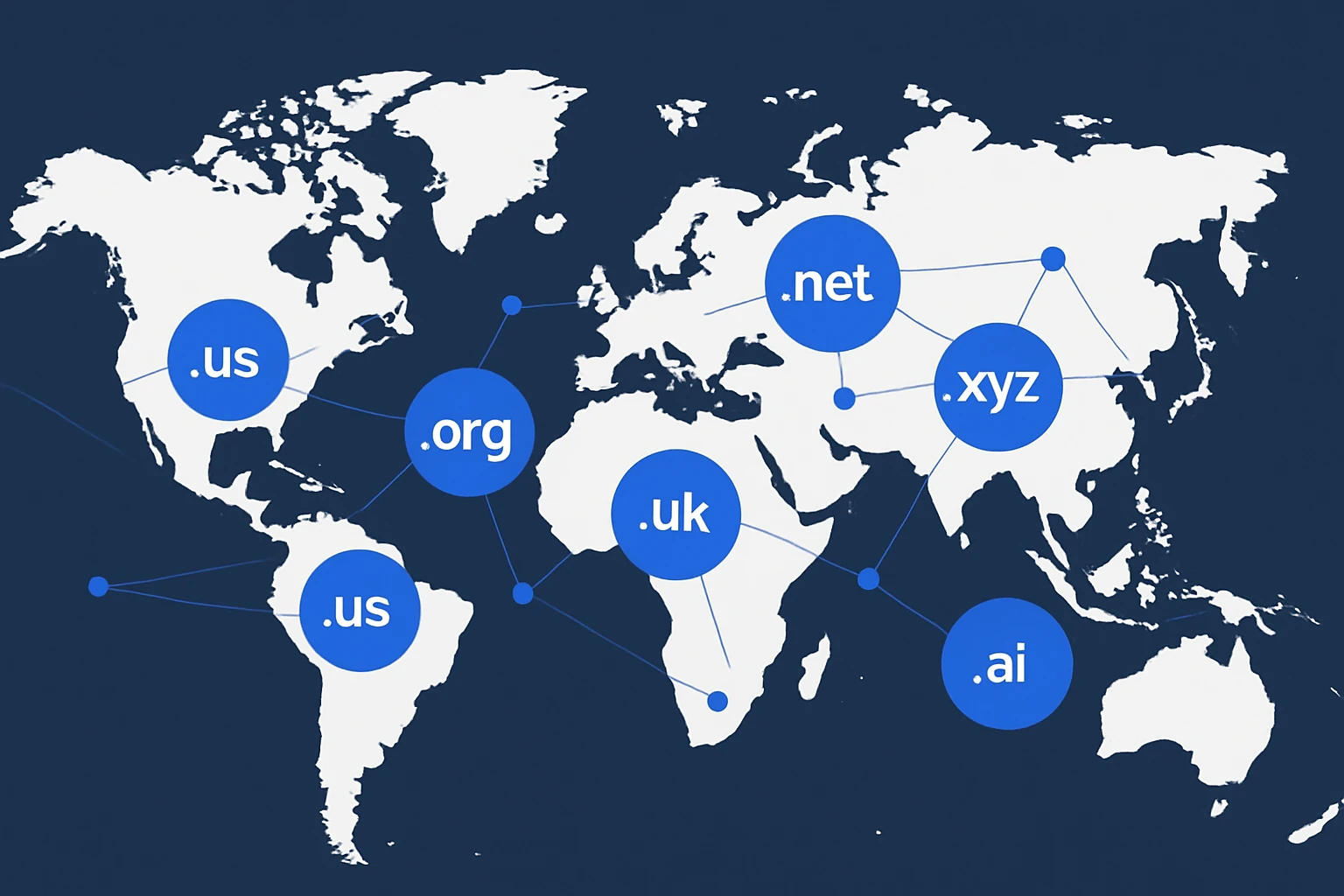
- ccTLDs (country-code top-level domains) - Endings that reflect a country or territory, like .uk, .de, or .jp. ccTLDs are often used to signal local relevance or local SEO intent, though registration rules vary by country. Verisign and other registries emphasize that ccTLDs represent a geographically segmented portion of the namespace and are a dominant feature of the global domain landscape. In mid-2025, ccTLDs represented about 143.4 million registrations out of roughly 371.7 million total.
- New gTLDs - Introduced in waves since the mid-2010s, these include industry- or brand-focused endings like .guru, .xyz, .app, and many others. They expand the universe of options beyond .com and friends and are often used to capture brand storytelling or niche positioning. ICANN and the DNIB track the impact and scale of these new entries as the namespace evolves.
Understanding this taxonomy helps you interpret the numbers in any TLD database - whether you’re evaluating existing domains or forecasting future registrations for regional campaigns. For background on how DNS governance and these extensions are administered, see ICANN and DNSSEC resources below.
2) What a TLD database reveals about the global domain landscape
A high-quality TLD database does more than list endings, it aggregates signals about market demand, geographic focus, and branding opportunities. Three actionable insights emerge from the latest data:
- Geographic signaling matters - ccTLDs are not just nationalist curiosities, they shape user expectation and local trust. In Q2 2025, ccTLDs accounted for about 143.4 million registrations, underscoring their ongoing role in regional branding and local market strategy. Verisign DNIB Q2-2025
- Brand and industry signals drive uptake - new gTLDs and branded TLDs (for example, tech, finance, or region-specific domains) reflect a continued diversification of the namespace as businesses seek memorable, differentiating endings. DNIB coverage and press summaries show sustained growth beyond traditional .com/.net/.org baselines.
- Overall volume climbs, even as mix shifts - total domain registrations across all TLDs reached roughly 371.7 million by the end of Q2 2025, illustrating healthy market demand amid a crowded space. This reinforces the value of consulting a robust TLD database when planning portfolio strategies or multi-market campaigns. Verisign DNIB Q2-2025
Other sources corroborate these trends and provide broader context on the evolving namespace. For example, industry trackers and major hosting providers report modern growth in domain registrations into 2025 and 2026, with ongoing discussion about how ngTLDs and branded TLDs influence branding and user perception. While these counts are useful, the most important takeaway is that the namespace is dynamic and regionally nuanced rather than a single global standard.
3) A practical framework for selecting a domain extension from a TLD database
When you’re deciding which ending to register, use a structured framework that combines market signals with brand strategy and DNS practicality. The following framework helps you translate data into decisions. It is designed to be applied across a portfolio of sites or campaigns rather than as a one-off pick:
- Define your primary market and audience - Are you targeting a specific country or multilingual audience? If geographic relevance matters, ccTLDs can reinforce local authority and search presence in a given region. If you aim for global reach, gTLDs or a mix of gTLDs with a local ccTLD strategy can be effective.
- Evaluate brand clarity and memorability - Does the extension help convey your product or service? New gTLDs and branded TLDs can improve differentiation, but they should align with your brand narrative and user expectations.
- Check availability and cost - Availability often drives the decision. Some popular endings may be sold out or priced at premium levels, your TLD database should be used to filter candidates by availability and total cost of ownership (registration + renewal).
- Assess SEO and user-behavior implications - While major search engines treat generic TLDs similarly in rankings, user trust and click-through can be influenced by the perceived relevance of an ending. Use data to inform branding and local targeting rather than relying on a supposed SEO boost from a given TLD. See expert discussions on SEO implications of domain extensions.
- Consider DNS readiness and security - Ensure your chosen TLD is supported by your DNS provider and that DNSSEC deployment is in place to protect users against DNS spoofing. ICANN notes that DNSSEC has been deployed across all current gTLDs, strengthening the integrity of domain resolution. ICANN: DNSSEC deployed in all gTLDs
- Plan for risk and legal checks - Trademark conflicts, potential brand confusion, and other legal considerations should be vetted prior to registration, especially when exploring less common or new-ended domains.
To put this framework into practice, you can start with a live TLD catalog from the client’s domain data hub and then cross-check with a broader TLD database for alternative endings, especially if you’re assessing regional campaigns or niche product lines. The client integration examples below offer practical gateways to explore such datasets.
Client-aligned integration: for readers who want to explore live domain inventories by TLD or review registration details, use the following resources from WebAtla as practical references: List of domains by TLD | RDAP & WHOIS Database.
4) DNS, user experience, and performance considerations
Beyond branding, the domain extension you select has practical implications for DNS configuration, reliability, and user trust. DNS is the system that translates human-readable names into IP addresses, and a robust DNS setup is essential for fast, secure access to your site. DNSSEC - the security extension for DNS - adds cryptographic signatures to DNS data to detect tampering. All current gTLDs have deployed DNSSEC, which reduces the risk of DNS spoofing for end users. This is a meaningful, technical consideration when evaluating any extension, especially for brands handling sensitive transactions. ICANN: DNSSEC deployment in gTLDs
From a performance perspective, the TLD itself does not directly determine page load speeds, but the DNS path, registrar reliability, and registrar DNS hosting quality do. In practice, choose a registrar with robust DNS infrastructure and consider enabling DNSSEC where possible. This aligns with the broader industry guidance that while the TLD does not confer a direct ranking advantage, a smooth user experience - fast resolution, trust signals, and clear branding - can influence engagement and conversions.
5) Limitations, trade-offs, and common mistakes
Even with a rich TLD database, several caveats deserve attention:
- Don’t overindex on SEO power of a TLD - Major search engines treat generic TLDs the same for rankings, so choosing an extension primarily for SEO is typically misguided. Focus on branding, local targeting, and user trust instead. Domain extensions and SEO
- Avoid ceding global reach to a country-code only strategy - Relying exclusively on ccTLDs can limit global visibility unless you run a multi-domain strategy with proper hreflang and localization.
- Underestimate brand confusion risk - Some new gTLDs are powerful for niche audiences, but others may confuse users if the extension is unfamiliar. Validate with user testing and clear branding.
- Ignore DNS readiness - A domain ending is only as good as the DNS configuration behind it. Ensure DNSSEC support and reliable DNS hosting to avoid outages or spoofing risks.
These trade-offs highlight why a data-driven approach is essential. The TLD database is a tool, but the decision must balance market needs, brand storytelling, and technical readiness.
6) Structured block: a quick framework summary you can reuse
The following compact framework consolidates the steps above into a reusable checklist you can apply to any domain-sourcing project. It’s designed to be embedded in internal briefs, client proposals, or product education materials.
- Goal definition: global vs. local presence, branding story, audience expectations
- Market signal check: review TLD mix in the latest DNIB data and country-market performance
- Availability and cost triage: identify available endings within budget and renewal horizon
- Brand fit and memorability: alignment with product category and user perception
- Technical readiness: DNS hosting, DNSSEC readiness, registrar reliability
- Risk and compliance: trademark checks, regional rules, data privacy considerations
7) Practical takeaways and a path forward
As the domain namespace expands, a data-informed approach to choosing extensions becomes essential for both branding and technical risk management. The key is to leverage a robust TLD database to illuminate how the namespace is evolving, then translate those signals into concrete actions - whether you’re securing a global brand portfolio or a targeted regional presence.
To stay grounded in reality, rely on authoritative data sources for counts and trends, including Verisign’s Domain Name Industry Brief and ICANN’s governance contexts. For hands-on exploration, WebAtla’s live domain lists and RDAP/WIPO data can provide practical reference points.
Conclusion
The world of domain extensions is no longer a simple matter of picking a familiar ending. It’s a strategic decision grounded in data about global registrations, regional dynamics, and the evolving ecosystem of new gTLDs. By using a TLD database as your compass - coupled with a clear branding and DNS readiness plan - you can craft a domain strategy that is both globally credible and locally resonant. The trend lines remain upward, with ongoing growth across both traditional and newer endings, and with DNS security advancing in parallel. In short: read the database, align with your brand story, test with real users, and implement with solid DNS foundations.