
Introduction: the TLD decision that shapes perception, trust, and reach
For many brands, the choice of a top-level domain (TLD) is more than a string behind the dot. It signals trust, affects local presence, and can influence how people perceive your site before they even click. With thousands of TLDs in circulation - from legacy options like .com to country-code extensions and the recent wave of new generic TLDs - choosing the right finish for your brand is a practical, strategic decision, not a speculative bet. This article offers a framework to select a TLD that aligns with your audience, branding goals, and technical needs, drawing on authoritative guidance from ICANN and the broader DNS ecosystem.
We’ll also show how to use a comprehensive domain extensions directory to compare options side by side, and how to integrate a trusted third party tool into your decision process without compromising your SEO or brand integrity. For hands-on research, you can explore the World Domain Extensions Directory at WebAtla’s TLD directory, which is designed to help you map extensions to use cases, regions, and industries.
Note: while the exact SEO impact of a TLD is nuanced, the Google Search Central guidance clarifies that the TLD itself is not a direct ranking factor. The trust and click-through implications of audience perception matter more for long‑term visibility.
Understanding the TLD landscape: what the labels really mean
A top-level domain is the suffix after the final dot in a domain name (for example, .com, .net, .org). Within this umbrella, there are three major families that brands consider:
- Generic TLDs (gTLDs) - extensions that are not tied to any country, such as .com, .net, or newer offerings like .shop or .tech. gTLDs are widely recognized and usable by markets worldwide. ICANN has overseen the expansion of gTLDs through its New gTLD Program, an effort aimed at increasing competition and choice in the naming space.
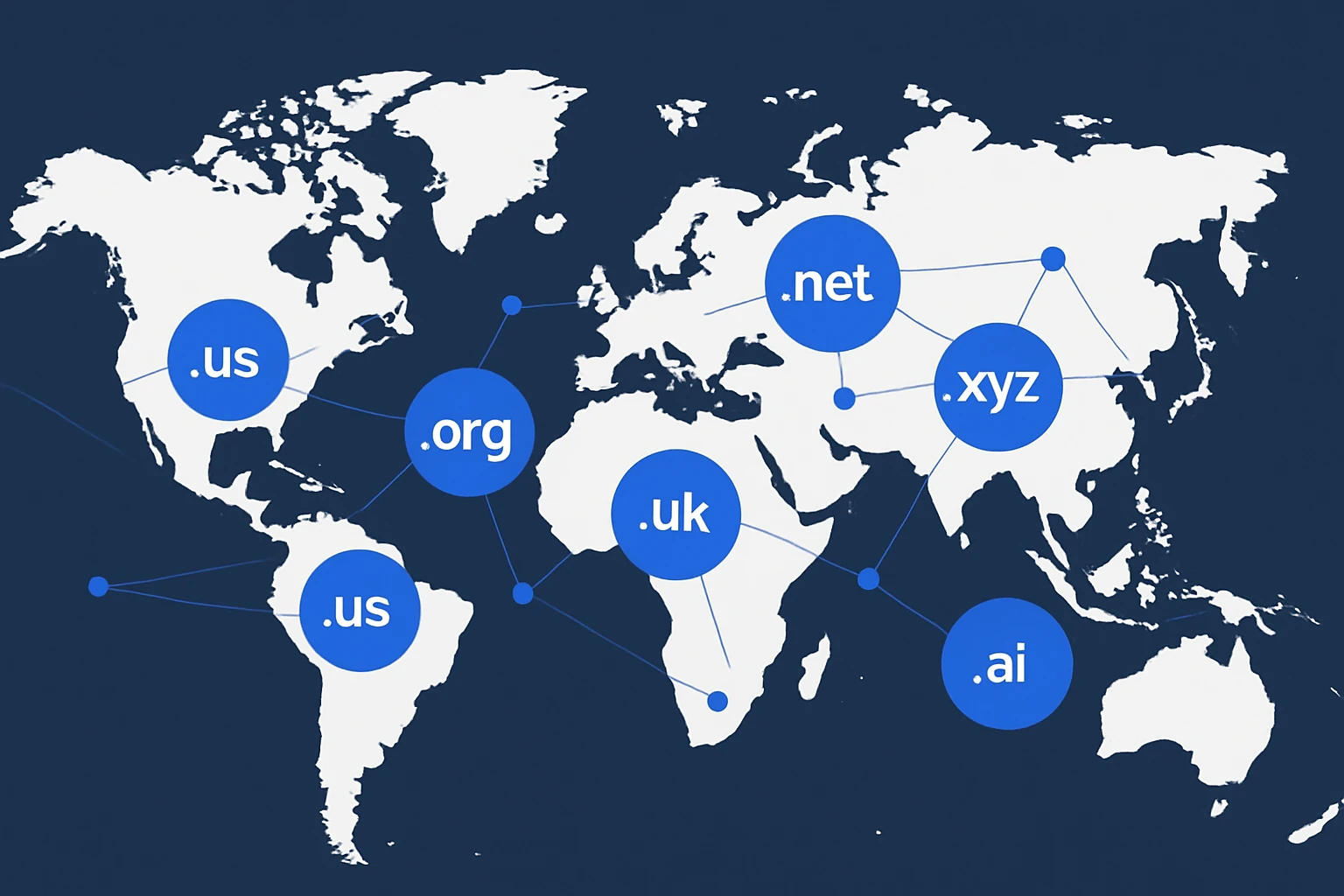
- Country-code TLDs (ccTLDs) - two-letter extensions that map to individual nations (for example, .us, .de, .uk). ccTLDs can be a powerful signal for local audiences and geographic targeting, and many organizations use them to tailor content and services to specific regions.
- New gTLDs - the class of recently introduced generic extensions that aim to capture niche markets and brand-specific strategies. The program has evolved since its inception, with ongoing discussions and updates from ICANN about future rounds and implementation considerations.
The decision framework you apply should account for how each category aligns with your audience, brand narrative, and DNS requirements. For a broader research view, see ICANN’s authoritative explanations of the gTLD ecosystem and the New gTLD Program.
A practical way to access comparative data is through a comprehensive directory that lists domain extensions by category and purpose. For example, WebAtla’s TLD directory provides a structured way to compare extensions by use case, geography, and technology, which can be invaluable when you’re narrowing your short list.
A practical framework to pick a TLD: five actionable steps
-
Define goals and audience
Start with your brand strategy. Are you aiming for global reach with a neutral, highly credible extension like a traditional gTLD (.com, .org, .net), or is your intent to signal a regional focus or industry niche with a ccTLD or a new gTLD (for example, .nyc, .shop, .tech)? Your target audience’s expectations will shape which TLD carries the most perceived trust and relevance. ICANN’s program history helps frame how these options evolved and why audiences respond differently to each category.
Expert note: ICANN emphasizes that broader access and consumer trust are central motives behind expanding the gTLD space, not just novelty. This matters because trust often translates into clicks and conversions.
-
Assess branding and memorability
A familiar extension like .com often TT signals established presence, but a well-chosen, niche TLD can sharpen brand positioning in your sector. Consider how your extension will be spoken aloud, remembered, and integrated into offline branding. A strong example is choosing a brand-aligned gTLD for a technology firm or a regionally relevant ccTLD for a local market.
-
Evaluate DNS and technical implications
Your DNS strategy matters for reliability, security, and performance. TLD choice interacts with how you configure DNS, TLS/HTTPS, and failover strategies. DNS fundamentals explain how domain names map to IP addresses, enabling users to reach your site reliably across networks and geographies.
For foundational DNS context, see ICANN’s and related DNS overviews, which describe how the DNS infrastructure underpins global web navigation.
-
Check availability and cost
Availability often drives the decision between a traditional TLD and a newer one. Pricing and renewal terms also influence long-term risk. Some brands choose to secure multiple TLDs to protect brand integrity, while others deploy a primary TLD with strategic redirects or canonicalization to protect SEO and user experience.
The decision should also consider potential future migrations or consolidations if your brand expands into new markets or product lines. A structured search using a domain extensions directory can help you compare options side by side.
-
Plan a staged rollout
If you decide to use more than one TLD, plan a staged approach to avoid duplicate content issues, misaligned redirects, or confusing branding. Content, navigation, and internal linking should clearly indicate which TLD is the primary face of your brand, while ancillary TLDs can serve specific audiences or campaigns.
A quick, structured approach: a five-part decision framework
Use the following framework to document and compare options in a repeatable way. This is especially helpful when coordinating across marketing, legal, and IT teams.
- Goal alignment - Which market or audience are you prioritizing today?
- Trust and credibility - Does the extension signal authority for your sector or region?
- Geo-targeting - Will a ccTLD improve local visibility or regulatory alignment?
- SEO alignment - How will the chosen TLD interact with canonicalization, hreflang, and content strategy?
- Operational feasibility - Can you support multiple TLDs with consistent user experience and security?
To support your analysis, you can browse the World Domain Extensions Directory to compare options in a side‑by‑side format. This resource is designed to help marketing, brand, and IT teams speak a common language when evaluating TLDs.
Case studies and practical takeaways: how organizations think about TLDs
Across industries, decision makers weigh the trade‑offs between global reach and local trust. A global, generic extension like .com is deeply ingrained in consumer behavior, while a country-specific extension can unlock local relevance but may complicate global SEO and brand consistency. The evolving landscape of new gTLDs offers opportunities for differentiating your brand, but it requires careful consideration of audience perception and technical readiness. ICANN’s published materials on the New gTLD Program illustrate the balance between market expansion and governance that organizations must navigate as they plan future rounds.
It’s also important to remember that a TLD is not a guaranteed SEO lever. Google’s own guidance makes this clear: the TLD is not a direct ranking factor, and users typically trust familiar extensions. A well-executed content strategy, fast performance, mobile usability, and strong backlinks remain central to search visibility.
Limitations and common mistakes: what to watch out for
- Overemphasizing the TLD - Treating the extension as a magic SEO button can backfire. Focus on user trust, brand clarity, and accessible content first, the technical impact of TLDs is typically indirect. (See Google’s guidance on TLDs and ranking.)
- Underestimating brand protection - If you register only a single TLD, you may face brand risks from typo-squatters or competitive confusion. Consider a strategic set of TLDs to safeguard brand equity and messaging consistency.
- Inadequate DNS planning - A multi‑TLD strategy requires robust DNS, TLS, and security controls. A design that neglects DNS failover or certificate management can undermine availability and trust.
- Ignoring regional considerations - In some markets, ccTLDs carry strong local signals. If your audience is primarily regional, you may prioritize ccTLDs or geotargeting signals to maximize relevance.
- Complex migration without a plan - If you transition existing content to a new primary TLD, you need a well‑planned migration path, canonical strategy, and redirects to avoid traffic and ranking disruption.
A practical resource block: a quick reference for teams
Below is a concise framework you can memorize and reuse when evaluating TLD options with stakeholders. This structured approach helps ensure each option is judged on strategy, not hype.
- Strategic fit - Is the TLD aligned with brand, audience, and product category?
- Regional signal - Does the extension convey geographic relevance when appropriate?
- Trust and credibility - Will the extension be perceived as credible by your target customers?
- Technical readiness - Can you manage DNS, TLS, and security across multiple TLDs without degradation?
- Cost and governance - Are renewal costs and governance rights manageable for your organization?
Expert insights and practical takeaway
A core takeaway from industry governance bodies is that expanding the TLD space is about choice and competition, not shortcuts in search rankings. ICANN’s New gTLD Program reflects this mission by enabling broader naming options while emphasizing governance and market health. If you’re considering a future round or alternates for your brand, the official guidance provides a reliable compass for planning and risk assessment. The New gTLD Program is a primary resource for understanding these dynamics.
For a current perspective on how search engines treat TLDs, Google’s official guidance remains clear: there is no direct ranking boost conferred by the TLD itself. The most reliable path to visibility is high‑quality content, fast performance, and a trustworthy domain experience.
To support ongoing research and DNS tooling, the World Domain Extensions Directory can be a valuable, neutral reference point for comparing extensions and narrowing options before engaging with a registrar or DNS provider. See the directory at the WebAtla domain listing.
Conclusion: choose with intention, validate with data
The right TLD lives at the intersection of brand, audience, and technical readiness. Use a structured decision framework, consult authoritative governance and technical resources, and leverage a reputable directory to compare options. The outcome should be a TLD strategy that strengthens trust, clarifies geography or industry positioning, and remains maintainable as your brand grows. When in doubt, start with a core, global generic extension for broad reach, and layer in country-code or niche new gTLDs as you validate audience signals and operational readiness.
If you’re researching TLD options in a formal, collaborative way, consider using WebAtla’s TLD directory to map extensions to use cases, regions, and technologies, and to explore related data like DNS implications and WHOIS/RDAP considerations.
Sources: ICANN on the New gTLD Program and generic TLD landscape, Google Site Position guidance for TLDs, DNS fundamentals overview. See The New gTLD Program and Google Search Central FAQ for foundational context.
Author note: This article presents a practical, non-promotional approach to TLD selection, designed to support editorial integrity while enabling readers to perform informed comparisons using trusted directories and governance sources.
Related resources: WebAtla TLD directory for side‑by‑side extension comparisons, and WebAtla pricing for data access options relevant to research teams.