Introduction: why a TLD choice still matters in 2026
The decision about which top‑level domain (TLD) to use is more than a branding flourish. It influences how audiences perceive your site, how it’s found in local markets, and how you future‑proof your online identity as the domain landscape continues to evolve. While search engines emphasize content quality and user experience over the suffix itself, the TLD you deploy can affect trust, local visibility, and branding consistency across channels. This article lays out a practical framework for selecting the right top‑level domain extensions in 2026, grounded in current industry dynamics and credible technical context.
Understanding the current TLD landscape in 2026
The DNS and global domain ecosystem have grown substantially since ICANN opened the New gTLD program in 2012. As of January 2026, ICANN reports a large, still‑active namespace expansion with 1,930 total gTLD applications submitted for the round’s workflow, and 1,241 delegated to the live DNS, alongside hundreds more in active processing or withdrawal. This continuing evolution shapes what’s possible for brands and projects seeking distinctive, memorable, or geographically tuned addresses. (newgtlds.icann.org)
Separately, the Domain Name System (DNS) maps human‑readable domain names to the numeric addresses that computers use to locate resources on the Internet. This infrastructure - managed in part by Verisign as the operator for the .com/.net namespace - underpins all TLDs and their security posture. Understanding this layer helps explain why the suffix alone rarely determines ranking, load times, or trust, but the underlying DNS health and performance certainly matter.
For readers tracking the technical backbone: the DNS is a hierarchical system that resolves a domain name to an IP address, enabling browsers to retrieve content. This foundational concept is unchanged by the surge of new gTLDs, even as registries experiment with branding and productized services around longer, more creative extensions. (verisign.com)
Key decision factors: branding, audience, geography, and reliability
Choosing a TLD is ultimately a decision about how you want your brand to be discovered and trusted. The dominant, universally recognized suffix (.com, .org, .net) remains a benchmark for credibility, but new and branded TLDs offer opportunities for differentiation and clarity when used thoughtfully. It’s important to balance three broad axes:
- Brand alignment and memorability: A TLD that mirrors your product purpose or brand identity can improve recall and reduce misdirection. Branded TLDs can enhance trust on landing pages and in marketing collateral, though they should be paired with strong content and clear value propositions to avoid perceived risk.
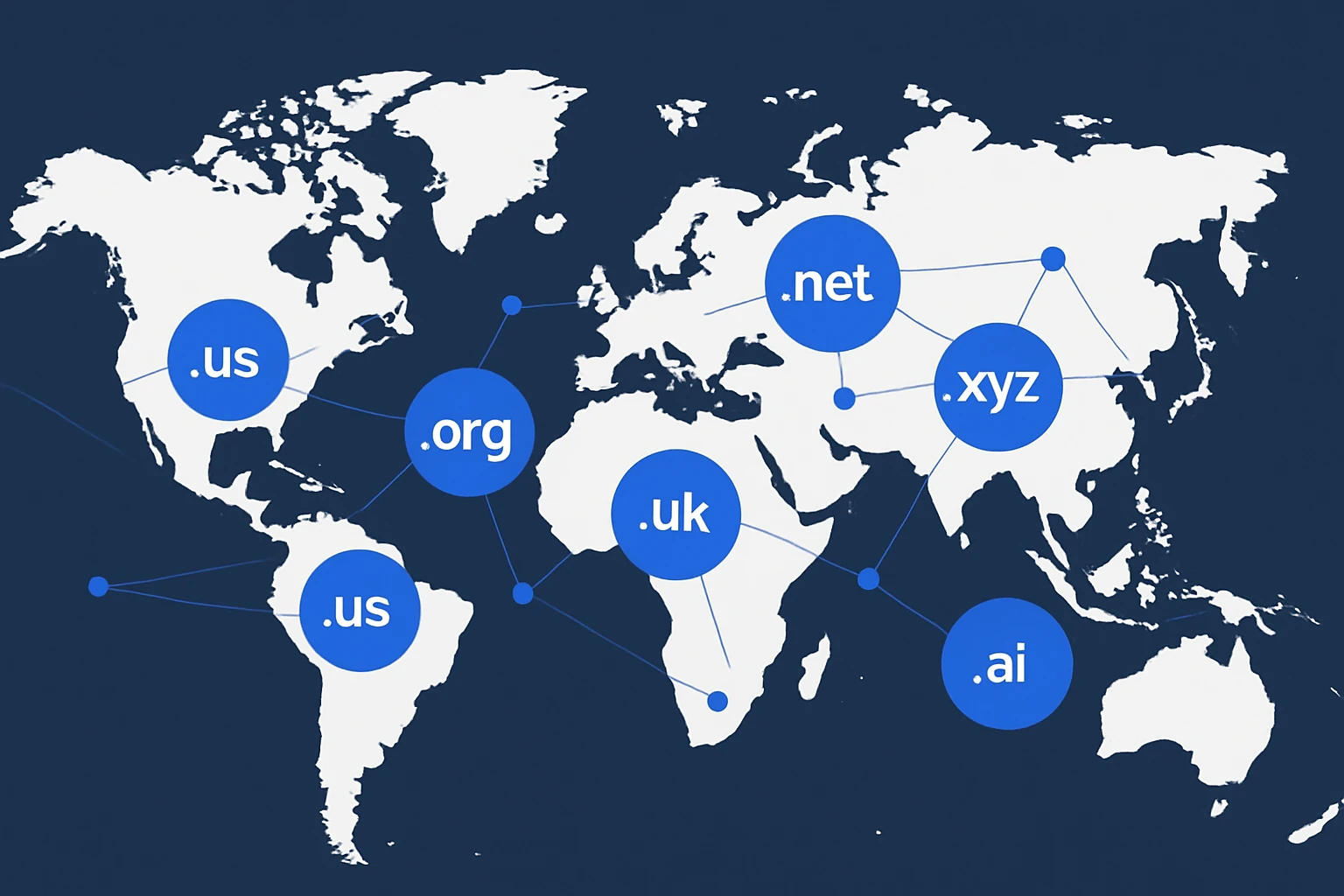
- Geography and audience signals: ccTLDs (country code TLDs such as .us, .de, .jp) can support local targeting and language signaling. They are often used when a project aims to serve a specific country or region and want to leverage local user expectations in search and brand perception.
- Technical readiness and maintenance: All TLDs rely on robust DNS resolution and secure registry practices. The choice of TLD should consider renewal stability, pricing, and the registrant’s ability to maintain consistent branding and redirects across chapters of the user journey. For context, the DNS ecosystem and security practices have matured over the years, including DNSSEC deployment in root zones and ongoing improvements to registry reliability. (verisign.com)
SEO considerations: what Google (and credible authorities) say about TLDs
For many site owners, a critical question is whether the TLD itself will help or hurt search engine rankings. The consensus among major search engines, including Google, is that no direct ranking signal comes from simply using a particular TLD. In other words, a valid, high‑quality site on a new gTLD or a traditional suffix can rank just as well if the content, links, and user experience are strong. This is a reasoned baseline for decision‑making: do not rely on a TLD to boost rankings, instead, pair your choice with strong content strategy and technical health.
In practice, this translates to focusing on content quality, backlink profiles, site speed, and a consistent user experience. While local or regional signals may be stronger with country‑specific domains in certain markets, there is no universal SEO shortcut tied to the TLD itself. This stance is widely reflected in industry coverage and SEO practitioner guidance, which underscores that TLD choice should be aligned with branding and audience expectations rather than expectations of direct SEO advantages. (seroundtable.com)
New gTLDs in the evolution of the namespace - and what it means for you
The 2012 launch of the New gTLD program dramatically expanded the namespace, introducing a broad array of candidate suffixes (from .shop to brand suffixes). The ongoing process has produced a complex ecosystem of registries, registrars, and pricing models, with hundreds of new applications evolving toward Delegated status over time. For brands evaluating a long‑term domain strategy, this means more options, but also greater need for due diligence on brand safety, renewal costs, and market perception. ICANN’s historical review and ongoing status pages document the arc of this program and its implications for registrants and registries alike.
From a practical standpoint, this expansion creates branding opportunities, but it also raises considerations around market clarity, audience trust, and maintenance costs. If you’re weighing a non‑traditional gTLD, it’s essential to pair the extension choice with a robust content strategy and clear branding to maximize user trust and discovery. For a data‑driven view of the namespace’s growth and status, ICANN’s New gTLD Program statistics provide a snapshot of where things stand today. (newgtlds.icann.org)
A practical framework: how to choose your TLD in 3 steps
Use this lightweight framework to guide a fast, evidence‑based decision. It’s designed to be actionable for startups, SMBs, and content creators who want to align their domain with brand strategy without sacrificing technical reliability.
- Step 1 - Brand fit and memorability: Start with brand equity. If your product or service is highly brandable and you want to emphasize innovation or a specific niche, a branded gTLD or a keyword‑rich extension can support an identity. Ensure your domain name remains short, memorable, and free of ambiguity, and plan redirects from older assets to preserve equity.
- Step 2 - Geographic strategy and audience perception: If you primarily serve a single country or region, a ccTLD can signal local relevance and trust in that market. Conversely, if you have a global audience or multilingual strategy, a global gTLD or a widely recognized suffix may offer broader recognition. Consider how local search behavior and brand recognition influence click‑through and perceived relevance.
- Step 3 - technical health and cost considerations: Check DNS health, renewal terms, and security posture (for example, DNSSEC readiness). Budget for potential renewal increases and the cost of protecting your brand across multiple TLDs. Remember: the K‑factor for rankings rests on content and user experience, the TLD alone is not a ranking lever. (verisign.com)
Structured quick‑start framework
- Assessment: Brand alignment, target geographies, and audience expectations
- Experimentation: Reserve candidate domains, run small landing pages, test recall and trust via controlled campaigns
- Implementation: Decide on primary suffix, set up redirects, and launch with a clear branding narrative
Limitations, trade‑offs, and common mistakes to avoid
Every TLD choice carries trade‑offs. A few common missteps to watch for include:
- Overemphasizing SEO advantages from TLDs: Do not expect a non‑traditional suffix to deliver a rankings boost by itself. Google and major search engines have emphasized that TLDs are not a direct ranking signal, success hinges on content quality, backlinks, and user experience. This is a core caveat when evaluating new gTLDs or brand TLDs. (seroundtable.com)
- Underestimating brand risk and memorability: If a nonstandard TLD is difficult to spell, pronounce, or recall, you risk traffic loss from typos and brand confusion. Consider user behavior in your target markets and test recall with real users when possible.
- Ignoring renewal costs and brand protection: New gTLDs can come with price volatility and renewal surprises. A proactive plan to protect your brand across relevant suffixes minimizes the risk of infringement, cybersquatting, or confusion over time.
- Choosing geography without a strategy: A ccTLD without a plan for global reach can constrain international users’ trust and access. A balanced strategy often combines local signals with a globally recognizable presence, depending on market goals.
A practical, editorially grounded framework you can trust
For teams and individuals evaluating domain strategies, a disciplined approach - anchored in branding, audience understanding, and technical reliability - will outperform a purely opportunistic extension choice. The namespace is expanding, but the core principles remain consistent: build trust through quality content, maintain a clean DNS posture, and choose a TLD that communicates your intended market and brand story clearly. ICANN’s ongoing documentation of the New gTLD program and Verisign’s DNS foundations provide a credible backdrop for these decisions. (newgtlds.icann.org)
How WebAtla can help you navigate the TLD decision landscape
For teams who want to ground their decisions in data, WebAtla offers a robust slate of tools and datasets to explore domain extensions, TLD naming options, and global domain statistics. From an exhaustive TLD directory to a broader suite of domains by country, technology, and pricing, WebAtla helps you compare extensions side‑by‑side and assess potential branding and localization outcomes. While the service is one of several viable options, it provides a structured, data‑backed lens on the TLD ecosystem. To learn more about pricing and data resources, see the pricing page or explore the RDAP & WHOIS database for registration history and ownership context.
Key links: WebAtla TLD directory and RDAP & WHOIS Database.
Conclusion: frame your TLD choice as part of a broader brand and market strategy
In 2026, the bandwidth of available TLDs continues to expand, offering more branding and localization options than ever before. But the most durable path to competitive visibility remains rooted in robust content, trustworthy user experiences, and a branding strategy that aligns with your audience’s expectations. Use the three‑step framework above to guide your decision, and use your DNS and security posture to support reliability at scale. If you want a structured starting point and credible data to inform your choice, the combination of industry statistics, DNS fundamentals, and credible SEO guidance can help you make a more confident, future‑proof domain decision.