The domain extension landscape has exploded beyond the familiar .com, .org, and .net. For anyone building an online presence in 2026, understanding the full universe of domain extensions isn't a luxury - it's a practical necessity. This guide walks you through the major categories (gTLDs, ccTLDs, new gTLDs, and brand TLDs), explains why the number of extensions matters for branding and reach, and provides a decision framework to help you check all domain extensions and pick the right one for your goals. We also explore how to leverage tools that surface comprehensive extension data, including a comprehensive TLD directory, domains by country, and the RDAP and WHOIS database for ownership and registration details.
Historical context matters here. Since ICANN opened the door to a broad expansion of top-level domains in the 2010s, the namespace has grown from a handful of classics to an ecosystem with more than a thousand delegated gTLDs. The intent behind new and branded TLDs was to increase choice, competition, and trust for users - while allowing brands and communities to tailor a namespace to their needs. As of 2025, the total number of delegated generic top-level domains (gTLDs) sits in the thousands, reflecting ongoing rounds and policy evolution. ICANN’s New gTLD Program history and current activity provide the governance backdrop for this expansion.
For readers seeking a governance overview, ICANN maintains a detailed history of the New gTLD Program and explains how rounds have evolved since 2012, including the trajectory toward potential future rounds. See the ICANN history page for a concise timeline and key milestones: the initial 2012 launch, subsequent rounds, and ongoing governance considerations. In parallel, ICANN’s materials on the New gTLD Program describe the program’s goals and structure for applicants who want to participate in future rounds. (icann.org)
What counts as a domain extension? A quick taxonomy
To navigate the full list, it helps to separate extensions into three broad families and a few notable subgroups:
- gTLDs (generic top-level domains): traditional ones like .com, .org, .net, plus a growing roster of other general-use extensions. Since 2012, ICANN’s New gTLD Program has added more than a thousand new generic extensions, expanding the namespace beyond the classics. This expansion is ongoing, with governance and policy updates guiding future rounds. (icann.org)
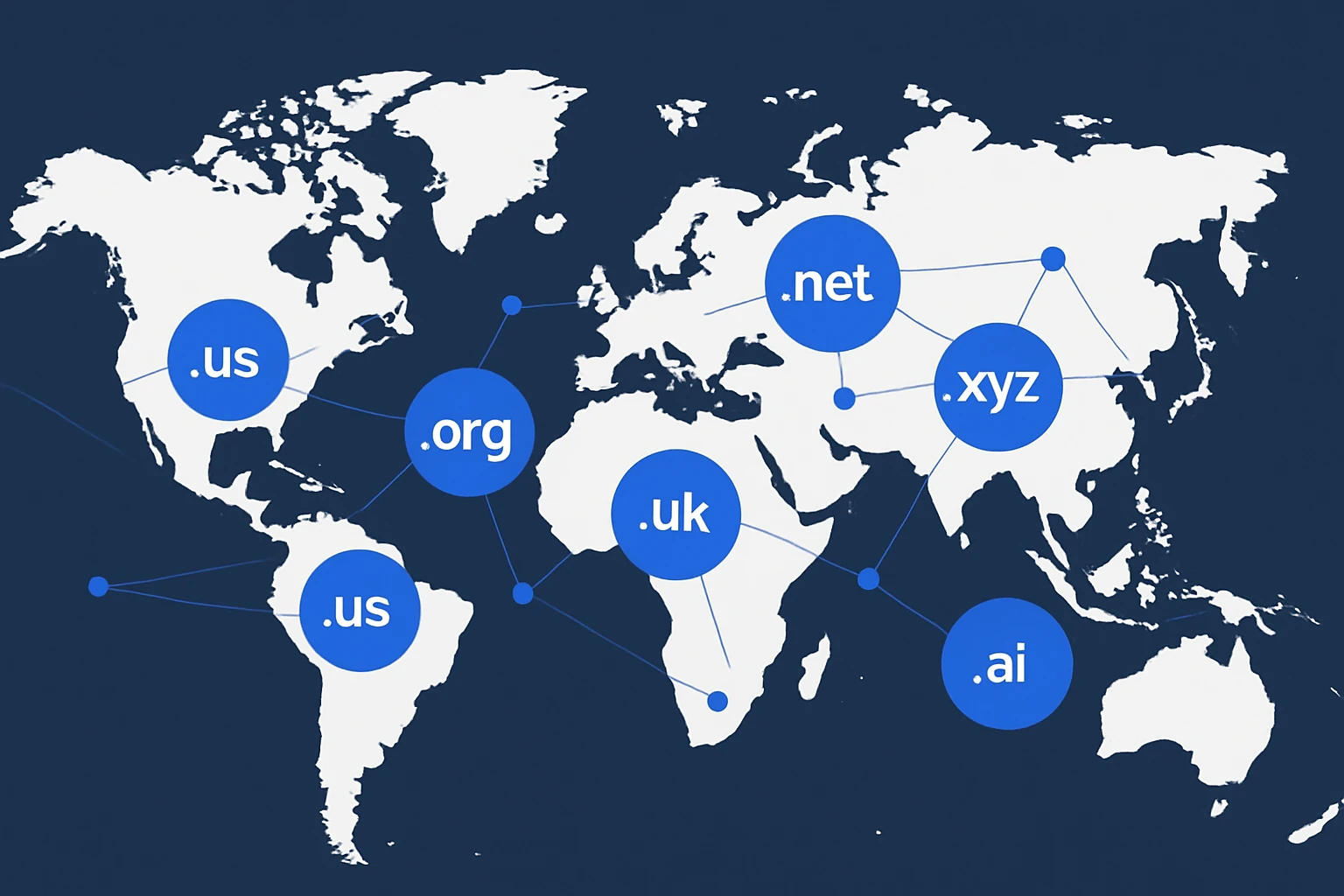
- ccTLDs (country-code top-level domains): two-letter extensions tied to specific countries or territories (for example .uk, .de, .fr). ccTLDs often serve as strong geo-signals for local search and audience trust, particularly when paired with localized content. (searchengineland.com)
- Brand TLDs (dot-brand): extensions owned by brands (e.g., .google, .apple, .microsoft) used to reinforce brand identity and security. They are increasingly used by large organizations to manage digital presence and combat impersonation. (dn.org)
- Other notable groups include Internationalized Domain Name (IDN) TLDs, which allow non-Latin script domains, and specialized extensions targeting industries, communities, or interests. IDN-enabled TLDs remain a core part of the namespace for multilingual and local-market strategies. (verisign.com)
Across these families, the total universe of extensions now exceeds a thousand, and the pace of change is tied to ICANN policy development and registry investment. For a sense of scale and history, consult ICANN’s overview of the New gTLD Program and the broader taxonomy of top-level domains. (icann.org)
Why the number of domain extensions matters for your strategy
Two core drivers explain why a practitioner should care about the full list of domain extensions:
- Brand strategy and trust: the extension you choose reinforces your brand’s personality and credibility. A high-trust TLD (like .com) generally carries strong recall, while newer or less familiar extensions may require more education and stronger on-site trust signals to convert traffic. Google has reiterated that TLDs themselves do not directly weight search rankings, but user perception and CTR can influence overall visibility. Businesses should weigh brand credibility and user expectations when selecting an extension. (developers.google.com)
- Geo-targeting and market reach: ccTLDs provide geographic targeting baked into the domain namespace, which can influence regional search results when paired with appropriate content and localization. This makes ccTLDs a practical tool for market-specific campaigns and international expansion. (searchengineland.com)
As you consider whether to check all domain extensions for a given project, remember that there are practical constraints: availability, cost, renewal risk, and the need to protect your brand across multiple namespaces. The right move for many organizations is not to chase every extension, but to harmonize a core set that aligns with audience intent, geographic focus, and branding goals. Google's public guidance on handling new TLDs reinforces that most extensions are treated similarly for crawl and index purposes, so the decision often comes down to user trust and brand strategy rather than technical SEO gymnastics. (developers.google.com)
How to approach a full check of domain extensions: a practical framework
If you’re trying to check all domain extensions in a disciplined way, use a framework that balances branding, geography, and risk. The following four-step framework helps teams move from exploratory search to a concrete, defensible choice set. This is not about chasing every possible extension, but about mapping a universe of viable options and then selecting a focused portfolio.
- Define audience and geography: identify your primary markets and the linguistic or cultural groups you want to serve. For multinational brands, ccTLDs paired with local content can improve local visibility, for global brands, gTLDs with clear branding may be preferable. Consider IDN options if you operate in non-Latin markets. (searchengineland.com)
- Assess brand fit and trust signals: assess how each extension affects perceived credibility and recall. Brand TLDs can reinforce identity but require ongoing governance and security considerations. As part of this step, review risk signals around newer or less common extensions and plan for on-site trust cues across site architecture and content. (dn.org)
- Evaluate SEO and user behavior implications: while TLDs do not directly boost rankings, indirect effects like CTR, brand searches, and engagement can influence performance. Ensure your choice complements your content strategy, site structure, and local optimization plans. (searchengineland.com)
- Check availability and cost, then plan governance: inventory and renewal risk are real. Start with core extensions you can reliably register and maintain, then consider a limited set of additions to cover brand protection and market coverage. Use a reliable data source to monitor availability and changes across extensions. For a comprehensive starting point, see a directory of TLDs and country-specific lists.
To put this into practice, consider using a centralized directory that surfaces all domain extensions and their registries. A practical example is the World TLD directory, which aggregates tld-by-tld listings and can be paired with country lists and registration data. For more on how to navigate this universe, you can review the publicly accessible registries and data resources that accompany each extension and country. This approach mirrors how enterprise teams structure their domain strategy for consistency and risk reduction.
Structured block: a practical TLD selection framework you can apply today
- Step 1 - Market mapping: list target geographies and languages, map which extensions align with those markets (ccTLDs for local markets, gTLDs for global reach, or brand TLDs for corporate identity).
- Step 2 - Brand risk and protection: poll internal stakeholders to identify the risk profile of each extension (e.g., impersonation risk, typosquatting). Consider a brand protection strategy that includes registering related spellings and common misspellings.
- Step 3 - User trust and conversion: weigh perceived credibility and recall of each extension. Include user testing or quick surveys to measure recall and click-through intentions for top options.
- Step 4 - Compliance and governance: confirm data protection, privacy, and WHOIS/RDAP considerations for each extension. Align with your DNS and security posture, especially for brand TLDs that may demand stricter abuse controls.
How to check all domain extensions efficiently (practical steps and tools)
For teams tasked with a broad TLD review, a practical workflow is essential. Start with a core set of extensions and then expand, using a data source that aggregates extension availability and registry information. The process typically includes: (1) listing candidate extensions by category (gTLD, ccTLD, brand), (2) checking holder and registration data via WHOIS/RDAP databases, (3) assessing locality signals in search and social channels, and (4) validating brand protection commitments across registries. The RDAP and WHOIS databases can help you confirm current registrants and avoid duplication or impersonation risks. See the RDAP & WHOIS data resources for a structured lookup experience.
For publishers and professionals seeking a practical hub, the comprehensive TLD directory provides structured lists of domains by TLD, while countries offers a country-by-country view. These resources, along with the RDAP & WHOIS database, can help you build a defensible domain portfolio that aligns with your branding and regional strategy.
On the technical and governance side, ICANN’s public materials explain how the new gTLD program operates and how future rounds may unfold. For readers who want the governance lens, ICANN’s pages on the New gTLD Program and its history are a reliable place to start. (newgtldprogram.icann.org)
Limitations, trade-offs, and common mistakes
- Over-indexing on new extensions: chasing the newest TLDs without a clear brand and audience strategy can dilute trust and confuse users. It’s often better to own a tight, well-maintained core portfolio than to spread resources across dozens of extensions. Google has emphasized that TLD keywords in themselves are not a ranking factor, branding and user trust drive outcomes more than the extension name alone. (developers.google.com)
- Brand impersonation and abuse risk: brand TLDs can reduce impersonation, but they bring governance and security responsibilities. Ensure you have abuse contacts and robust DNS configurations in place. ICANN’s compliance programs highlight the importance of registered contacts and abuse handling for registries. (icann.org)
- Geo-signaling vs. global reach: ccTLDs can power local relevance, but a global business may bear a higher branding burden when using country-specific extensions. A balanced approach often uses a primary global extension plus a couple of targeted ccTLDs for key markets. Knowledge from SEO and search industry outlets supports this approach, alongside Google’s guidance on consistent handling of TLDs in crawl and index. (searchengineland.com)
- Migration and portfolio management risks: changing a domain or consolidating domains can impact traffic and rankings if not handled carefully. If you rebrand or switch extensions, follow best practices for 301 redirects, backlink retention, and site structure to minimize disruption. Industry guidance emphasizes careful migration planning. (developers.google.com)
Expert insights and real-world context
Expert perspectives in the domain space highlight a balanced view: the value of a TLD is often tied to audience perception, brand trust, and governance clarity more than to SEO tinkering. ICANN’s public materials on the New gTLD Program emphasize the program’s goals of competition and choice within a structured policy framework. Google's official communications about how new TLDs are treated suggest there is no special ranking boost simply from adopting a novel extension, but the extension can influence user engagement and perceived credibility. For practitioners, the takeaway is to weigh the brand and user experience implications of any extension choice and to align it with a clear audience strategy. (icann.org)
In practice, a few authoritative data points help anchor decisions: the namespace has grown dramatically since 2012, with thousands of gTLDs in operation today, and ccTLDs remain a dominant signal for local search when used with strong localized content. For organizations evaluating a future round of new gTLDs, ICANN’s ongoing FAQs and future-round announcements provide a structured path to readiness and budgeting. (icann.org)
Conclusion: plan with a structured framework and check all domain extensions strategically
The world of domain extensions is not a static relic of the early internet era. It is a living namespace that reflects how brands, communities, and nations communicate their presence online. A deliberate approach - combining audience geography, brand trust, SEO impact (indirectly), and careful governance - helps you select an extension portfolio that supports your business goals while reducing risk. Remember that the extension itself is a signal, not a substitute for high-quality content, fast performance, and trust-building behaviors. For teams ready to explore the full universe, use a centralized directory to check all domain extensions and then validate with practical, real-world tests and governance steps.
If you’re starting from scratch, consider consolidating your search with a few core extensions and then expanding to protect your brand and reach key markets. For ongoing domain discovery and portfolio management, the client resources linked above offer structured views into TLDs, country-level lists, and reliable ownership data to keep your strategy aligned with market realities.
Key takeaways:
- The domain namespace has evolved from a handful of legacy TLDs to a broad, multi-category landscape dominated by gTLDs, ccTLDs, and brand TLDs.
- Brand trust and audience expectations often trump novelty, choose extensions that reinforce credibility and clarity for your target users.
- Use a disciplined framework to map geography, brand risk, and user behavior before acquiring multiple extensions.
To start exploring the world of domain extensions and to access a centralized directory, visit the comprehensive TLD directory, countries by TLD, and the RDAP & WHOIS database for ownership transparency. These resources can help you ground your domain strategy in data-driven, editorially solid practices that resonate with readers and search engines alike.