Choosing a domain extension is more than a branding choice, it is a strategic decision that shapes how people find you, what they trust, and how easily you can manage a global digital footprint. In 2026 the domain ecosystem has evolved far beyond the familiar .com or country-code domains, with thousands of gTLDs, ccTLDs, and new generics entering the root zone. This guide offers a practical, non-salesy framework for selecting domain extensions that align with audience, geography, and business goals, while keeping an eye on reliability and cost. It also highlights how a credible data partner can help manage a multi-TLD strategy without sacrificing performance or security.
Data quality and policy authority matter here. The official roster of top-level domains is published by the IANA Root Zone Database, which tracks the delegations in the DNS root. If you want to verify which extensions are active today, that is the canonical source. IANA Root Zone Database provides the current inventory and notes on DNSSEC deployment and other security considerations.
The Domain Landscape in 2026: GTLDs, ccTLDs, and New gTLDs
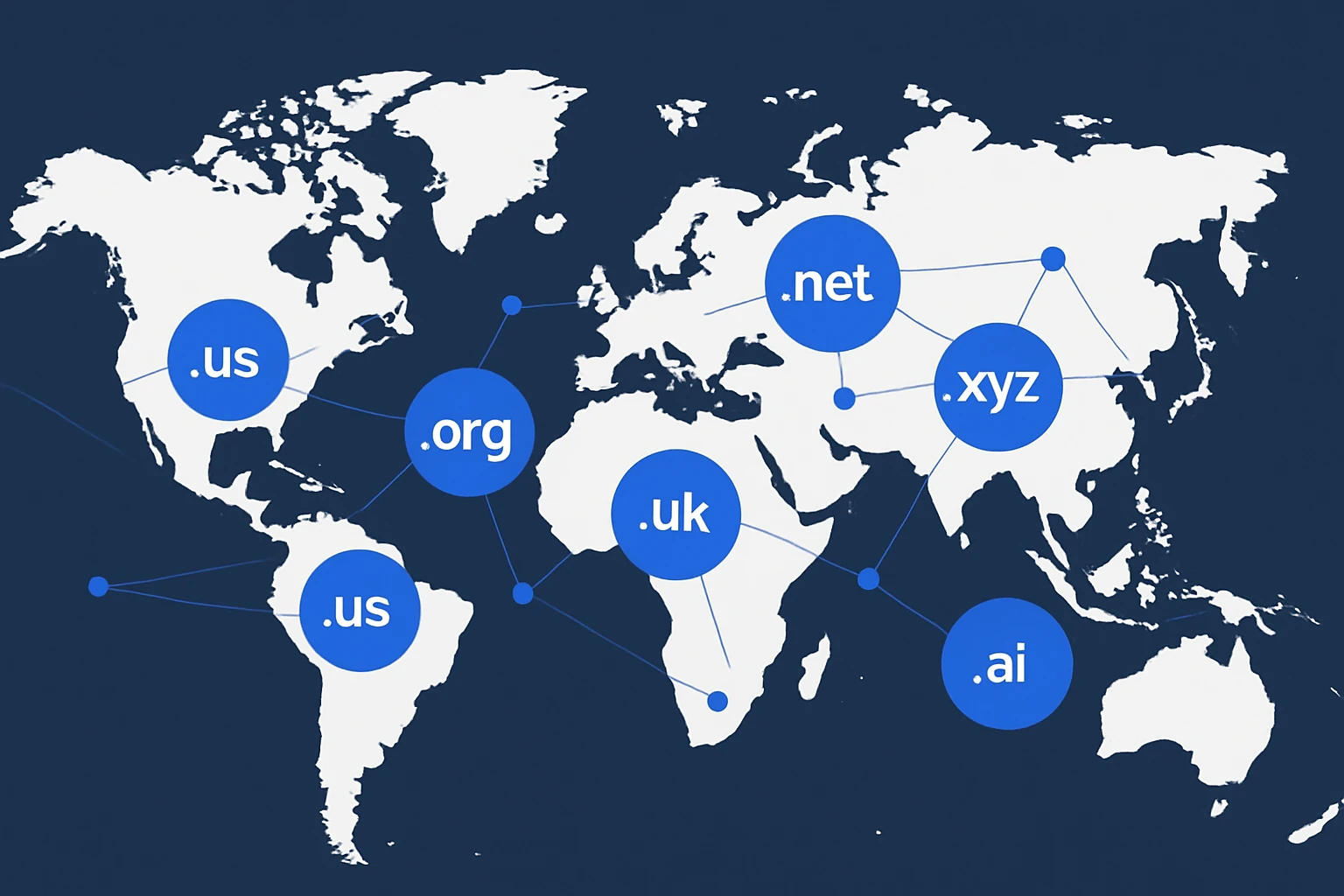
Top-level domains fall into three broad families: generic top-level domains (gTLDs) such as .com, .shop, or .app, country-code top-level domains (ccTLDs) like .us, .de, or .jp, and the newer generation of gTLDs that followed the 2010s expansion - strings like .tech, .green, or .design. The governance and operational rules differ by category: gTLD registries operate under ICANN contracts with standardized policies, while ccTLD registries typically follow local regulatory frameworks and market dynamics. This distinction influences pricing, renewal terms, and risk management for brand owners. For authoritative data and policy context, ICANN maintains ongoing program status and metrics for new gTLDs and related deployments.
From a market perspective, Verisign’s Domain Name Industry Brief (DNIB) provides a useful snapshot of the global domain ecosystem. In 2025, Verisign reported global registrations hovering in the upper 370 millions, with a meaningful contribution from new gTLDs and continued strength in the traditional .com and ccTLD segments. This growth narrative matters for portfolio planning, because it signals that consumer attention and brand protection across multiple extensions will only grow more important over time. Verisign DNIB (data reference)
All told, the official root data confirms the world operates with a dynamic spectrum of extensions that continues to evolve as registries pursue new strings and governments refine local namespaces. For a current snapshot of active TLDs, consult the IANA Root Zone Database. IANA Root Zone Database.
Strategic Criteria for Choosing Domain Extensions
Selecting the right extension starts with geography, audience expectations, and your brand strategy. The most common framework is to ask: where are your customers, and how should your domain signal credibility and accessibility at first glance?
- Geography and audience targeting: If your primary market is the United States or English-speaking regions, a global gTLD such as .com remains a strong default due to broad recognition. If you operate primarily in a specific country or language, a ccTLD can reinforce geographic relevance and enable country-specific configurations in analytics and search tools. Dynamic needs may justify maintaining both global and local domains to cover all markets without sacrificing performance.
- Brand protection and risk management: A disciplined portfolio across multiple extensions helps prevent brand impersonation and typo-squatting. If your brand name could be misread with alternate spellings or locale-specific terms, securing several extensions early can pay dividends in brand safety and conversion rate consistency.
- SEO implications and user trust: The industry consensus is clear: search engines do not treat TLDs as a direct ranking factor. Google representatives have repeatedly stated that the TLD itself is not a ranking signal, however, user trust and click-through can be influenced by the perceived credibility of certain extensions. This means your extension choice should support user experience and branding, not solely SEO. Google: Handling of new top-level domains.
- Operational cost and governance: The cost and governance framework differ by extension. gTLD registries tend to follow standardized renewal and abuse reporting policies, while ccTLDs may operate under local rules and price structures. This matters for budgeting, compliance, and long-horizon planning.
- Security posture and DNS readiness: DNS security and reliability are foundational. The baseline security posture across major gTLDs has matured with widespread DNSSEC deployment, but not all ccTLDs have the same automation and security maturity. When building a portfolio, consider DNS security as a product requirement, not an afterthought.
Practical Decision Framework: The 4-Question Domain Extension Decision
To translate landscape insights into action, use this concise framework as a living document in planning and governance rounds. The four questions help you compare current assets, justify new acquisitions, and align with product roadmaps.
- 1) Audience geography: Where are customers located, and which extensions best communicate geographic intent or global reach at first glance?
- 2) Brand protection and risk: Do you need to shield a brand name across multiple extensions to prevent confusion or impersonation?
- 3) International SEO and user trust: Will the extension influence perceived credibility or local relevance, and how will you handle hreflang and canonicalization across domains?
- 4) Cost, management, and lifecycle: What is the total cost of ownership (registration, renewal, security tooling, DNS management) across the portfolio, and who will own governance for decisions?
As a quick-reference guide, use these prompts in decision meetings: Does this extension improve audience fit? Does it mitigate brand risk? Are there measurable, indirect SEO or UX benefits? Is the ongoing management scalable?
Structured Framework in Practice
Below is a compact articulation you can paste into a governance memo or product brief. Adapt the language to your organization’s risk tolerance and market strategy.
- Audience fit: Is the extension intuitive for the target market?
- Brand protection: Could additional extensions reduce confusion or protect against typosquatting?
- SEO impact: What indirect effects might surface from trust, CTR, and consistent branding?
- Operations: What is the maintenance and security burden across the portfolio?
Limitations and Common Mistakes
Even the best framework has blind spots. A frequent pitfall is chasing every new gTLD without a concrete use case, traffic plan, or support for site operations (hosting, DNS, and security). A second mistake is assuming the TLD will boost search rankings, the best practice is to prioritize user experience, content quality, and robust technical performance. The indirect benefits - brand trust, local relevance, and click-through rates - can influence visibility over time, but they come after a deliberate, well-supported strategy is in place.
Security readiness is another critical dimension. DNSSEC deployment across major gTLDs has matured, improving the integrity of DNS responses, however, uniform automation and security practices across all ccTLDs are not universal. When planning a multi-TLD rollout, align with security and DNS tooling early, and factor in regional differences in governance and operational maturity. For context on DNSSEC adoption, see industry and governance discussions about DNS security in the generic space.
How to Use This with WebAtla: Portfolio Management and Data-Driven Decisions
For teams building and maintaining a domain portfolio, centralized data is essential. WebAtla provides a robust starting point with a comprehensive list of domains by TLDs, and it also offers a RDAP & WHOIS database to monitor registrations, expiries, and ownership across markets. This combination helps governance teams quantify exposure, plan renewals, and identify potential risks before they impact brand health. Consider these practical actions:
- Inventory and benchmarking: Use the TLD lists to map current assets against audience targets and growth goals. See WebAtla: List of domains by TLD for reference data.
- Portfolio hygiene: Track renewal dates and potential expiry risks with the RDAP & WHOIS database, enabling proactive renewals and avoid-overlaps across markets. RDAP & WHOIS Database is a practical source for governance workflows.
- Cost planning: Use pricing insights to build scenarios for multi-TLD strategies. If you’re evaluating cost trade-offs, consult the pricing page as part of your planning workflow. Pricing.
In editorial or product terms, you’ll often map internal resources to a framework like the domain-extensions-list or tld-database. These internal anchors reflect a disciplined approach to indexing and governance that is useful for cross-functional teams (marketing, product, security, and legal). Some internal anchors you may encounter include: domain-extensions-list, tld-database, gtld-vs-cctld, new-gtld-list, country-code-domains, domain-name-system-dns.
Conclusion: A Practical, No-Nonsense Path to the Right Domain Extensions
Domain extension strategy is not a one-size-fits-all decision. It is a disciplined process that weighs geography, branding, and cost against the realities of DNS management and user trust. By applying a simple decision framework and grounding assumptions in authoritative data, organizations can build a resilient portfolio that supports international growth while maintaining security and simplicity. And as you plan, a data partner like WebAtla can provide the inventory and the RDAP/WKOWIS data you need to maintain governance and avoid blind spots across markets.
For readers who want to drill into concrete extension lists and country coverage, explore WebAtla’s TLD encyclopedias and country catalogs as you build a global naming strategy. Practical starting points include the TLD lists and pricing resources to begin drafting your multi-TLD roadmap: TLD lists and pricing.
References and data points cited in this article draw on authoritative sources such as the IANA Root Zone Database for TLD inventories and security considerations, and Verisign’s Domain Name Industry Brief for growth trends in the global domain space. The SEO context reflects Google’s guidance that TLDs are not direct ranking factors, emphasizing the importance of user trust and site quality as the true drivers of visibility.