Global businesses increasingly fight for digital presence across multiple markets. The sheer variety of domain extensions - country code top-level domains (ccTLDs), generic top-level domains (gTLDs), and the newer wave of gTLDs - adds both opportunity and complexity. This guide offers a practical framework to navigate the world of domain extensions, understand DNS implications, and build a global strategy that scales. It draws on industry research, regulatory context from ICANN, and reliable DNS infrastructure principles to help decisions that stick across regions and devices.
The Landscape of Domain Extensions: gTLDs, ccTLDs, and New gTLDs
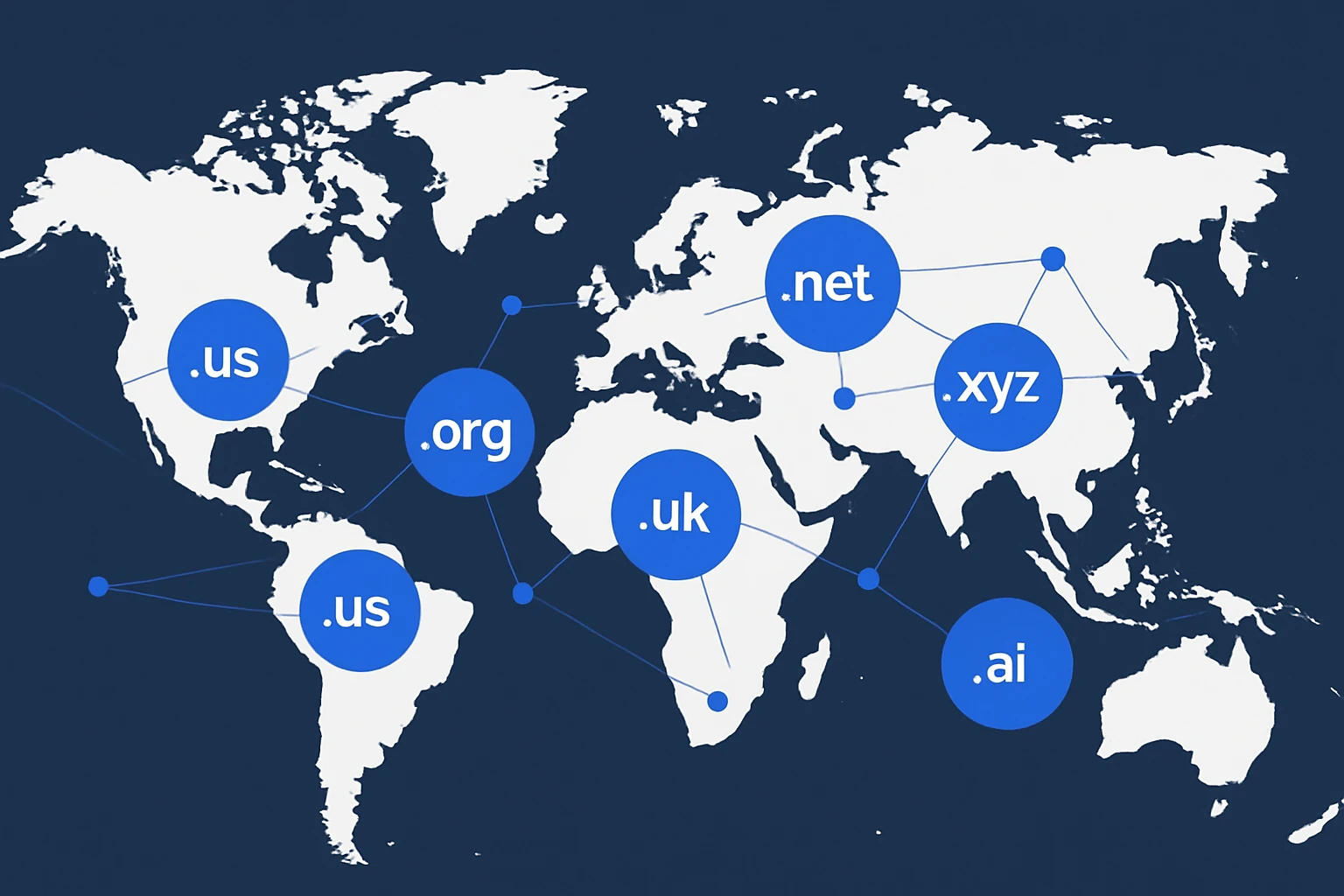
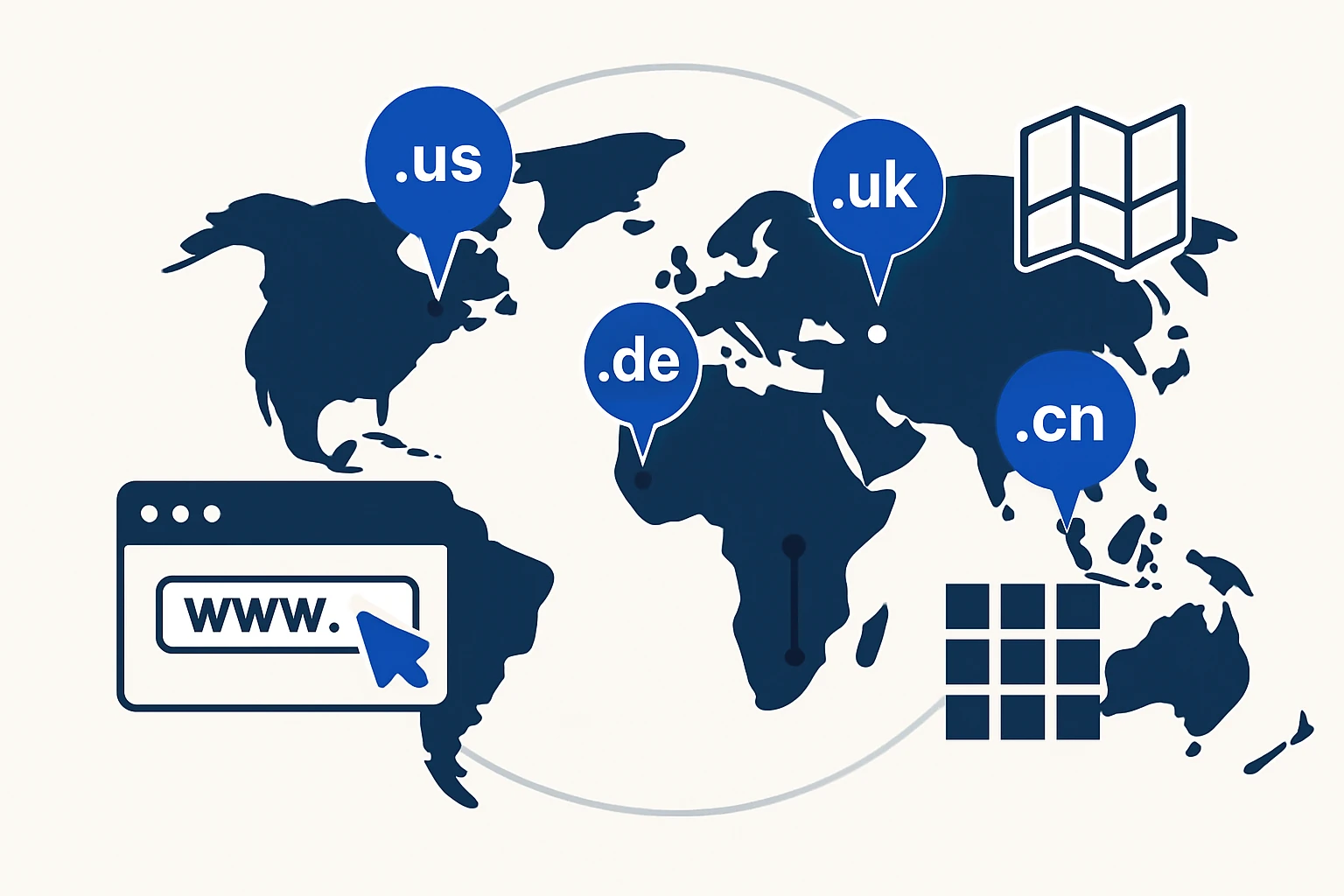
At a high level, domain extensions fall into three broad families. ccTLDs are tied to countries or territories (for example, .us, .de, .jp) and are often favored in local markets for branding and SEO signals tied to geography. gTLDs are generic extensions (such as .com, .org, .app) that historically dominated global presence, while the program of new gTLDs expands the namespace with extensions in multiple languages and fields of interest. ICANN’s New gTLD Program is explicitly designed to increase consumer choice, competition, and innovation in the domain space, and it continues to influence how brands think about global naming strategies.
Key takeaway: the expansion of the domain namespace invites more precise branding and regional targeting, but it also raises questions about memorability, SEO signals, and cross-border consistency. ICANN’s own materials underscore the intent to broaden the Internet’s naming options while ensuring orderly operation of the domain system. (newgtlds.icann.org)
Market data shows that the global domain landscape remains dominated by a small number of extensions, with .com consistently representing a sizable share of registrations, even as new gTLDs gain ground. CENTR’s market insights provide a sense of the global mix, regional dynamics, and the ongoing evolution of both gTLDs and ccTLDs across markets. This backdrop matters because it informs how a global site should weigh consistency, local trust signals, and distribution of registrations across TLDs. (centr.org)
DNS and Domain Strategy: How the DNS Shapes Choices Across TLDs
The Domain Name System (DNS) is the backbone that translates human-friendly domain names into the numeric addresses computers use to locate resources on the Internet. DNS reliability, performance, and security (for example, DNSSEC and resilient resolver infrastructure) influence user experience and operational risk more than many marketers expect. When you host a global site or deploy multiple country-focused domains, you’re also depending on a robust DNS network to ensure fast, consistent access worldwide. This is why DNS considerations often guide how a brand distributes its TLD portfolio, where it locates authoritative name servers, and how it plans for failover and redundancy. (verisign.com)
For teams evaluating DNS implications, plain-English explanations from trusted providers can help translate theory into practice. The DNS is a standards-based, hierarchical system that underpins how domains resolve to IP addresses, and hosting strategies must account for latency, regional routing, and resilience. A reminder from the broader tech community is that DNS is central to uptime and performance, not merely a routing detail. (ibm.com)
A Practical Framework for Picking TLDs: The TLD Decision Matrix
Choosing domain extensions is not only a branding exercise, it’s a strategic decision that touches audience reach, SEO signals, and operational cost. The following framework is designed to help teams evaluate TLDs in a structured way and align choices with business goals, regulatory realities, and technical requirements.
TLD Decision Matrix (how to apply)
- Region reach and market intent: Do you primarily target a regional audience or a global audience? ccTLDs can strengthen local trust and search signals in specific markets, while gTLDs may signal global scope. Consider whether a single national domain suffices or a multi-country approach is warranted.
- Brand protection and risk management: Will multiple variants (branding across languages, potential typos, and close domain names) create risk of brand confusion or cybersquatting? A plan should include monitoring and, if needed, registration across relevant TLDs.
- SEO and user behavior: Are you optimizing for local search in particular regions, or aiming for broad international visibility? SEO signals historically rely on a mix of factors, including regional targeting and site structure, rather than the TLD alone. (See note below about evolving signals from new gTLDs.)
- DNS and infrastructure reliability: Does your DNS provider support global performance, fast failover, and security features across all planned domains? This often drives consolidation around robust resolvers and backup plans rather than relying on a single TLD for performance reasons.
- Cost and renewal risk: Renewal costs and price volatility can differ widely across TLDs. As new gTLDs mature, renewal rates and pricing dynamics may change. Budgeting for long-term ownership is essential.
- Compliance and policy considerations: Some ccTLDs have local regulatory or local-language requirements for registration. Verify any local compliance needs before portfolio expansion.
How to use the matrix in practice: start with a regional map of target markets, note which geographies matter most, and list potential TLDs for each region. Then map each TLD to branding goals, expected traffic, and annual costs. The outcome should be a prioritized, risk-aware portfolio rather than a single-dominant TLD strategy. Expert guidance from policy and governance sources supports a measured approach to the namespace and the business aims embedded in it. ICANN and industry analyses emphasize consumer choice and market dynamics as you plan, not simply branding once. (newgtlds.icann.org)
This framework folds in practical data sources to ground decisions. For example, the global domain count and regional performance data help you calibrate expectations about market share by TLD family, while expert commentary from ICANN clarifies policy context around new gTLDs. The approach is intentionally iterative: reassess regional impact, traffic shifts, and renewal economics on a regular cadence as markets evolve.
Monetizing and Managing a Global TLD Portfolio: What to Watch
Beyond selection, sustaining a portfolio requires disciplined management. Consider the following realities:
- New gTLDs are not a silver bullet for SEO. While they offer branding opportunities and niche utility, their share of registrations remains a minority portion of the overall market, and SEO signals depend on many factors beyond TLD choice. Recent industry analyses place new gTLDs at roughly the 10% range of total registrations in late 2024, underscoring the need for a balanced portfolio. (hoganlovells.com)
- ccTLDs often deliver local trust and country-relevant SEO advantages, but require attention to regional branding, language, and regulatory considerations. Global market intelligence reports show regional variation in ccTLD adoption and performance, which should influence country-by-country decisions. (centr.org)
- Renewal costs and long-term pricing dynamics can diverge significantly across TLDs, especially as market competition intensifies among registries. Budget conservatism and renewal risk management are prudent parts of any global strategy. (hoganlovells.com)
Limitations and Common Mistakes
Even with a strong framework, teams frequently stumble on a few recurring pitfalls:
- Overinvesting in new gTLDs for SEO. New gTLDs offer branding flexibility but SEO impact is not guaranteed and tends to be incremental. As noted in industry briefs, new gTLDs represented a minority share of total registrations for years, making it risky to rely solely on them for organic search growth. (hoganlovells.com)
- Underweighting ccTLD strategies for local markets. Local domains often correlate with trust and click-through behavior in regional searches, so a geo-targeted portfolio can be crucial for market entry, expansion, and regulatory alignment. (centr.org)
- Neglecting renewal risk and cost tangents. Renewal prices can drift, and some portfolios fail when renewal economics become unsustainable. Planning for multi-year ownership helps avoid sudden costs that derail a global plan. (hoganlovells.com)
- DNS resilience overlooked in portfolio design. Across geographies, DNS performance and reliability affect user experience more than the mere presence of a given TLD, so ensure your DNS infrastructure scales with your strategy. (verisign.com)
Data-Driven Monitoring: The Role of RDAP & WHOIS in Global Domain Strategy
Portfolio governance benefits from visibility into registrations, ownership changes, and policy compliance across all selected TLDs. This is where data tools that aggregate registration data, WHOIS attributes, and registrar metadata become valuable. For teams that require a scalable, auditable dataset, WebAtla offers a RDAP & WHOIS database that helps you verify registrations, monitor brand exposure, and surface risk signals across TLDs. See the WebAtla RDAP & WHOIS Database for global domain visibility, and explore the broader directory of domains organized by TLD for benchmarking and decision support. WebAtla RDAP & WHOIS Database and WebAtla TLD directory.
Conclusion: A Cohesive, Global TLD Strategy
In a world with hundreds or thousands of domain extensions, the core challenge is not simply picking a single TLD but weaving a coherent, auditable portfolio that aligns with regional priorities, brand protections, and DNS reliability. A practical, data-informed approach - grounded in the DNS reality, informed by global market insights, and augmented by vigilant monitoring - helps teams move from reaction to strategy. By combining authoritative policy context (ICANN), industry data (CENTR and DNIB-style reporting), and reliable operational data (RDAP/WHOIS tools), organizations can design a TLD strategy that scales with ambition and evolves with markets. This is the essence of domain strategy in a global digital economy.