Introduction: Why the world of domain extensions matters in 2026
The Domain Name System (DNS) sits at the intersection of branding, user experience, and technical reliability. While the classic .com/.org/.net era remains dominant, the space has expanded dramatically: hundreds of new generic top‑level domains (gTLDs), countless country-code top‑level domains (ccTLDs), and even brand-specific TLDs introduced through ICANN’s New gTLD Program. For publishers, retailers, and global brands alike, selecting the right TLD is less about chasing a trend and more about aligning with audience, geography, and long‑term resilience. Recent data show continued growth across the namespace, even as the rate of new TLD introductions accelerates thanks to policy programs aimed at 2026 and beyond. Verisign’s Q1 2025 Domain Name Industry Brief highlights ongoing global registrations and the namespace expansion that new extensions promise.
To navigate this effectively, you need a framework that weighs market dynamics, technical fundamentals, and practical constraints. This article offers a practical model for evaluating domain extensions, with a focus on how DNS data, registry policies, and real-world usage influence decision making. We’ll also point to credible data sources and show how to leverage available tools for due diligence, including WebAtla’s Whois and RDAP resources as a pragmatic supplement to research.
Section 1: The TLD landscape in 2026 - what’s changed and why it matters
First, a quick view of the scale. As of early 2025, global domain registrations hovered around the 368–370 million range, with growth continuing in the wake of new gTLD introductions. This namespace expansion is not just a vanity metric, it reflects ongoing demand for brand protection, regional targeting, and innovative naming opportunities that help websites stand out in crowded markets. For context, ICANN has outlined a multi‑year path toward a new round of the New gTLD Program, with the next application window projected for April 2026, following policy and operational preparations. Verisign DNIB – Q1 2025 • ICANN: program statistics • ICANN: The Domain Name System (DNS).
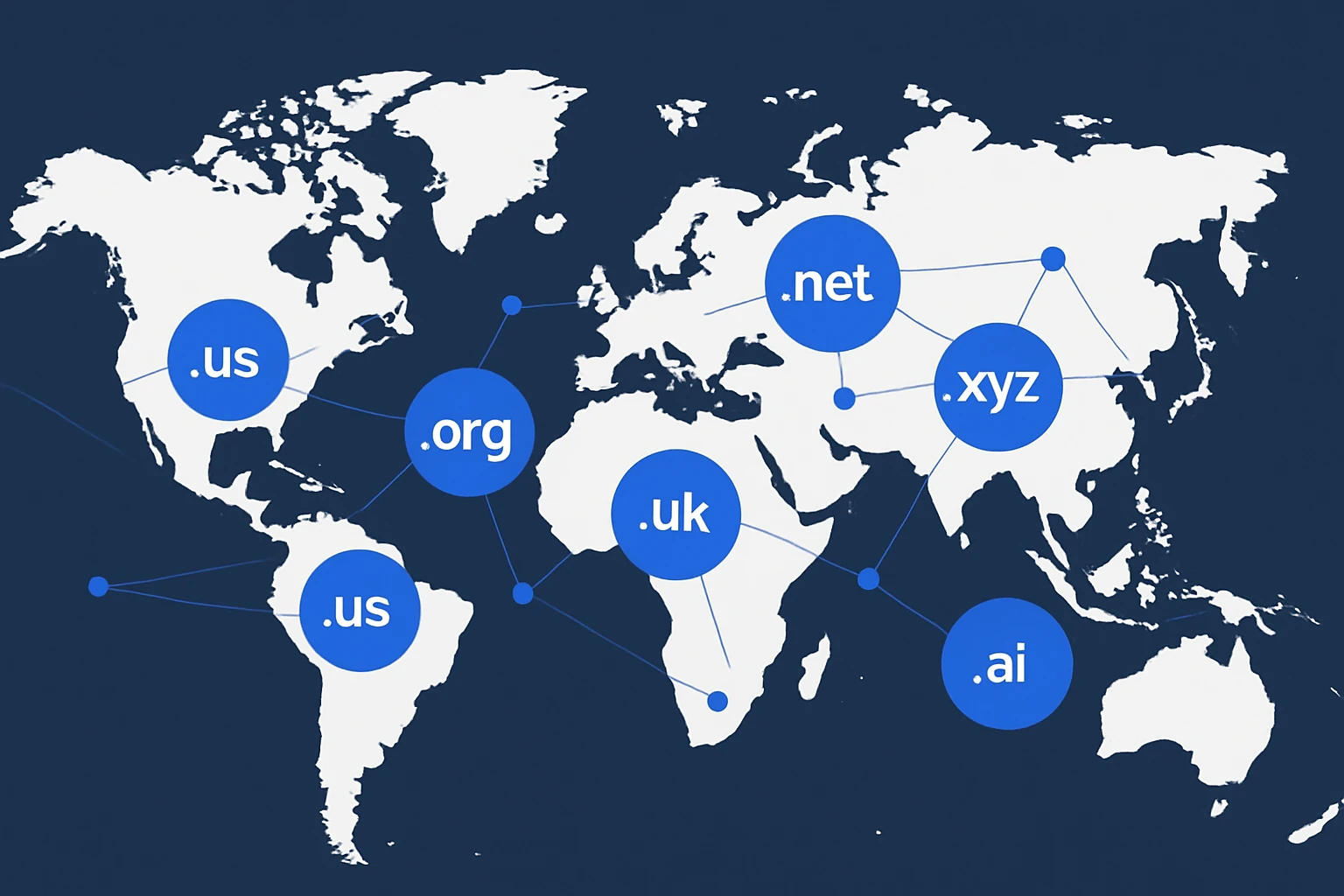
Beyond numbers, the architecture of the namespace matters: gTLDs are globally accessible extensions, while ccTLDs carry geographic signals that can influence how users perceive relevance and trust. The DNS root zone, maintained by IANA in coordination with ICANN, remains the authoritative master list of all delegated TLDs, ensuring consistent global resolution. For researchers and long‑range planning, that root zone database is a critical reference point. IANA Root Zone Database and Root Zone Database overview.
In short, the TLD landscape in 2026 is defined by continued namespace growth, a policy roadmap toward a 2026 round for new gTLDs, and a broad spectrum of extensions that support both local and global reach. For decision makers, the question isn’t simply which TLD is cheapest, it’s how the extension aligns with audience signals, brand strategy, and operational realities in a world where DNS-level data and compliance considerations matter more than ever. ICANN: A Year of Progress for New gTLDs.
Section 2: Core TLD categories - gTLDs, ccTLDs, and the new generation
Generic Top-Level Domains (gTLDs)
GTL Ds are global by design, with examples like .com, .org, and .net continuing to anchor the most widely used domains. New gTLDs have proliferated since the early 2000s to accommodate industry sectors, brands, and innovative naming concepts, creating a broader spectrum of naming possibilities for businesses and creators. As ICANN continues to prepare for another round of gTLD applications, the practical takeaway is to evaluate whether a generic extension better signals your offering or a particular audience. ICANN’s program status pages and 2024–2025 updates outline how the 2026 window is shaping up for prospective applicants. ICANN – New gTLD Program Statistics • ICANN – A Year of Progress.
Country-code TLDs (ccTLDs)
ccTLDs carry geographic signals - often used when a business or audience is region-specific. Their strength lies in search and brand perception within a country or language group, but many global brands use ccTLDs creatively for marketing purposes where appropriate. Importantly, search engines treat ccTLDs as signals of location, which can influence local search presence when paired with language and content targeting. For a global strategy, it’s essential to balance local signals with global reach. See IANA’s Root Zone Database for authoritative TLD delegation and country mappings. IANA Root Zone Database.
New gTLDs and Brand TLDs
The 2026 round is anticipated to open after policy finalization and procurement processes. For brands and sectors seeking distinctive naming, new gTLDs (and branded TLDs) offer opportunities to craft memorable assets and protect brand names online. While the lure of novelty is strong, it’s critical to weigh how these extensions perform in real-world use and how they fit with your brand architecture and global reach. ICANN’s ongoing reporting and industry updates provide guidance on the regulatory and operational path to launching new gTLDs. ICANN – 2026 Round FAQs • ICANN – Progress in 2024.
Section 3: A practical decision framework for choosing TLDs
Use the following structured framework to guide your TLD selection. It prioritizes audience signals, brand alignment, and operational practicality over price alone. Each step includes a guiding question and concrete considerations.
-
Step 1 - Who is your audience and where are they located?
Use audience geography and language targets to decide between ccTLDs (strong local signals) versus global gTLDs (broader reach). Consider whether a country-specific domain would improve trust or crawlability in target markets.
-
Step 2 - How does the extension align with your brand?
Brand-first extensions (including brand TLDs) can reinforce identity, while generic extensions may signal familiarity across markets. Evaluate brand recall and potential misinterpretations in key markets.
-
Step 3 - What about DNS stability and operational costs?
Assess renewal rates, registry reliability, and registrar support. DNS reliability is critical for user trust and uptime, which in turn impacts user engagement and conversions.
Supporting data on the growing namespace and the ongoing policy roadmap can be found in Verisign’s DNIB and ICANN’s program notes. Verisign DNIB • ICANN – DNS Overview.
-
Step 4 - What are the SEO and UX implications?
Direct SEO signals from TLDs are generally not guaranteed, search engines treat TLDs as signals rather than ranking levers. Focus on high-quality content, authority building, and clear geographic targeting through language and content rather than relying on a TLD to boost rankings. Evidence and consensus in industry discussions emphasize that no TLD inherently improves rankings, though local signals via ccTLDs can aid local relevance. See credible summaries of this perspective in industry reporting. SEJ – Domain Names and Rankings.
-
Step 5 - How do you plan for growth and risk?
Consider registries’ roadmaps, potential for future expansion, and the cost of multiple registrations. Maintain flexibility to adapt if market signals shift or if a new round of policies opens new opportunities.
Section 4: DNS and data realities behind every domain
Domain choices sit atop a data foundation that includes DNS routing, registration data, and the governance of the root zone. The DNS translates human-friendly domain names into machine addresses, enabling fast and reliable access to websites. This system is overseen globally to ensure stability, with the root zone managed by IANA in coordination with ICANN. Understanding this layer helps explain why certain TLDs succeed in practice and how to evaluate the risk of new extensions. ICANN – The DNS • IANA – Root Zone Database.
For organizations performing due diligence on domains - especially when evaluating brand safety and ownership history - the Whois and newer RDAP protocols provide essential visibility. While Whois remains widely used, RDAP is increasingly the standard for registration data access. The WebAtla Whois database pages offer practical access to lookup data and related services for researchers and decision makers. WebAtla Whois Database.
Section 5: Limitations and common mistakes to avoid
Choosing a TLD is not a silver bullet for visibility or ranking. The most credible industry guidance indicates that TLDs themselves do not provide direct SEO advantages or penalties. Instead, user trust, brand perception, and quality content drive performance. This means that over-focusing on a new TLD at the expense of product-market fit and content strategy is a common mistake. SEJ – Domain Names and Rankings highlights the consensus that keywords in the domain name and the TLD are not primary ranking factors, the focus should be on authority signals, relevance, and user experience.
Other frequent missteps include: assuming a ccTLD guarantees local traffic without local content, underestimating the maintenance cost of multi‑TLD portfolios, and bypassing due diligence on registry policies and downstream DNS performance. In addition, new gTLDs carry a policy timeline that can affect timing and deployment, for example, ICANN’s 2026 round window is the subject of ongoing program updates and forecasts. ICANN – 2026 Round FAQs • ICANN – Progress in 2024.
Section 6: A quick, practical framework in action - a brief case study
Consider a mid-sized software company expanding its global reach. The company already uses a global .com and a regional ccTLD for its flagship market. To support localization without diluting brand coherence, it evaluates three options: (1) a global gTLD that aligns with product naming, (2) a country‑specific ccTLD for the primary target country, and (3) a branded TLD if available. Applying the decision framework, the team weighs audience signals (local vs global), brand consistency, DNS reliability, and cost. They also review Whois/RDAP data for risk checks and ensure they have a plan for monitoring and renewing multiple domains over time. The result: a portfolio that balances accessibility, trust, and growth potential rather than chasing novelty. For researchers and practitioners, this approach echoes industry guidance on DNS data governance and namespace dynamics.
For ongoing reference and data, you can explore the World TLD landscape via authoritative sources and trusted registries, including ICANN and IANA, and supplement with practical lookups using WebAtla’s lookup tools as part of a due‑diligence workflow.
Section 7: How WebAtla can help - practical resources you can rely on
WebAtla offers a suite of tools to support due‑diligence, research, and ongoing monitoring of domain assets. Start with the primary Whois database for historical ownership and registrar information, then expand to broader DNS data and per‑TLD insights as needed. Contextual links below point to core resources and pages you’re likely to use in a decision process:
- WebAtla Whois Database - core lookup data for ownership and registration history.
- List of domains by TLDs - per‑TLD availability and portfolio views.
- RDAP & WHOIS Database (RDAP) - modern registration data access for compliance and risk assessment.
These resources complement the broader DNS and TLD discussion in this article and can be used to back‑test portfolio strategies, monitor brand exposure, and validate ownership status during domain acquisitions or renewals.